A glass standoff stud must provide the engagement required by its approved connection design without bottoming out. Overall stud length, threaded length and effective engagement are different measurements. Buyers should order from a dimensioned assembly section rather than choosing a stud by the visible projection alone.
For glass balustrade hardware, the purchasing question is straightforward: does this exact stud connect the specified body and supporting structure in the approved assembled position? A longer stud is not automatically a safer substitute.
Read the assembly from both ends
Separate the thread entering the standoff body from the connection entering the substrate or anchor. The two ends may have different requirements. List thread system, diameter, pitch, tolerance class, material and finish for each end; include an unthreaded shoulder where present.
BOSSARD’s engagement calculator illustrates why joint type and material properties matter. It is a theoretical engineering aid, not a universal minimum length for Elim fittings. Its result cannot replace the selected assembly’s design review.
| Drawing entry | What the buyer needs |
|---|---|
| Overall length | End-to-end dimension and tolerance |
| Threaded length | Usable threaded portion at each end |
| Engagement | Required mating-thread contact in the assembled position |
| Hole depth | Space available, including non-effective portions |
| Projection | Installed position measured from a named face |
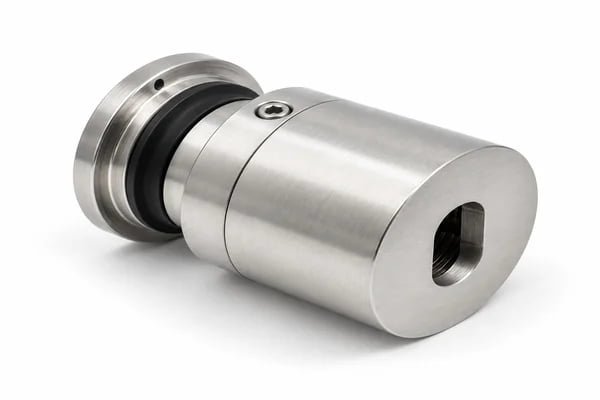
Catalogue illustration: Set-Screw Glass Pool Fence Standoff. Shown as a component reference, not an installation drawing or test result.
A nominal designation is only the beginning
For illustration, an order reading M10 x 1.5 identifies a nominal metric thread and pitch. It does not define the stud length, strength, engagement or anchor capacity. This is an example of notation, not a specification for the pictured product.
Use the metric thread reference to check terminology. For inch components, ASME’s Unified thread gauging standard identifies a different system. Do not accept a supplier’s statement that two threads are close enough because they appear to screw together for a few turns.
An adjustable standoff adds another assembly position to review. Define the permissible adjustment range and verify engagement at its limiting positions. Purchasing should not change projection to compensate for an unexpected site build-up without approval.
Avoid the bottoming-out trap
A stud can stop against the bottom of a blind hole before the intended faces seat. Apparent resistance during assembly does not establish that the joint has clamped correctly. Likewise, a drilled depth includes geometry that may not provide usable full threads.
Request a section showing these conditions. Ask the responsible designer to resolve tolerance accumulation across the stud, body, wall finish and anchor position. Anchor technical guidance applies to the substrate connection; it should not be confused with the internal thread of a decorative or structural fitting body.
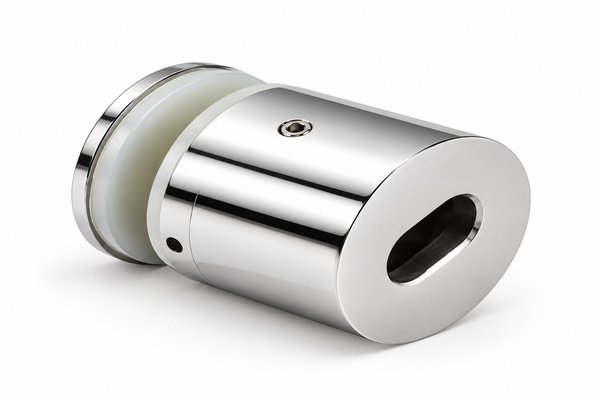
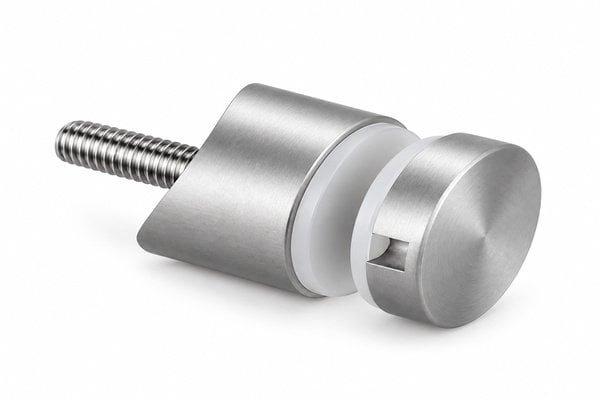
Catalogue illustration: Slotted-Face Glass Pool Fence Standoff — Polished silver appearance concept. Shown as a component reference, not an installation drawing or test result.
Specify the complete contact assembly
Check the bushing and glass-protection kit at the same review. Stud projection must accommodate the specified assembly without exposing glass to unintended metal contact. Keep the drawing revision, gasket code and stud code together in the purchase record.
ASSDA’s galling guidance explains a separate stainless-thread issue. Seizure is not a reliable sign of full engagement. Lubrication, locking and installation procedures must follow the approved assembly instructions, not an improvised receiving test. Our screw torque discussion explains why tightening values belong to a defined connection.
Five checks before shipment release
- Match the stud identification to the approved drawing revision.
- Verify thread type and designated gauge results.
- Record lengths from the specified reference faces.
- Confirm assembly position and clearance with an approved sample.
- Keep the inspection record linked to the delivered batch.
Use a documented measurement method consistent with NIST traceability principles. Agree the lot and decision rules using an appropriate acceptance-sampling plan; testing one convenient stud does not establish the conformity of mixed cartons.
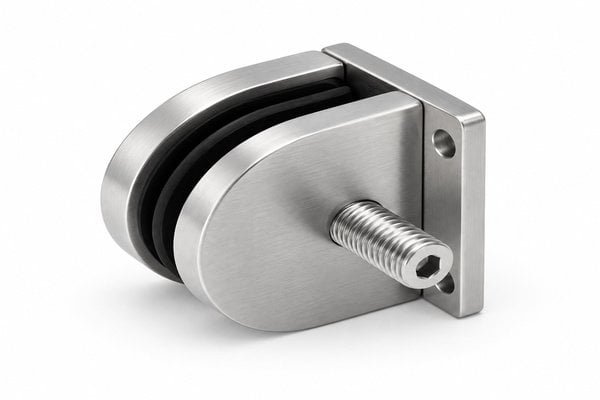
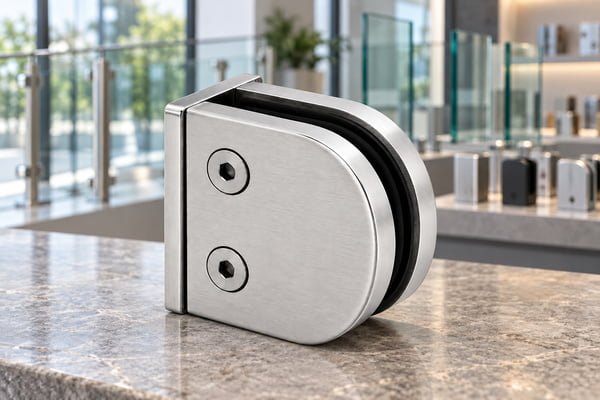
Catalogue illustration: Flanged D-shaped Glass Clamp. Shown as a component reference, not an installation drawing or test result.
Questions buyers should resolve
Can a longer stud replace a shorter one? Only after checking both mating connections, clearances and the approved load path. Extra length may create interference rather than additional usable engagement.
Does a successful hand assembly prove capacity? No. Fit checks and structural performance address different requirements. Conformity assessment helps frame the evidence needed for each claim.
Send the assembled section to OEM engineering review, identify the relevant manufacturing process, and request a quotation with quantities for each stud variant. That produces comparable offers and a useful receiving checklist.