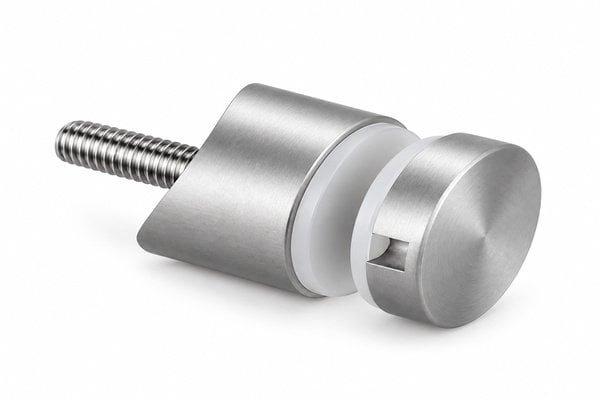
Choose fixed-offset standoffs when the supporting face is sufficiently consistent and the required glass plane is known. Consider adjustable offsets when the selected system permits controlled projection changes. Adjustment capacity is a model-specific feature, not permission to compensate for any site error.
For procurement teams, the useful comparison is between complete mounting assemblies. Start with the glass balustrade hardware range, then define the substrate, glass construction and required clearance before comparing quotations.
What does offset actually measure?
An offset dimension is meaningless without its reference faces. A drawing might measure from the structural surface to the back of the glass, its centreline or its outer face. Those dimensions differ by the glass thickness and any intervening finishes.
Ask suppliers to mark both reference faces on a section drawing. Include cladding, washers, mounting plates and other layers that affect the assembled position. Standoff spacing is a separate design variable; matching projection does not establish acceptable support spacing.
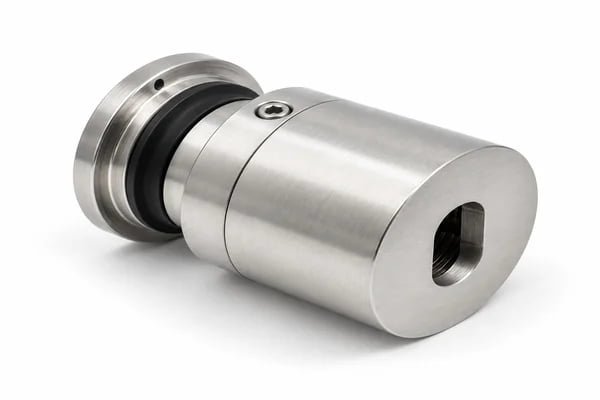
Catalogue illustration: Set-Screw Glass Pool Fence Standoff. Shown as a component reference, not an installation drawing or test result.
Compare the purchasing consequences
| Decision | Fixed offset | Adjustable offset |
|---|---|---|
| Dimensional control | Select the correct body projection | Specify usable adjustment limits |
| Assembly access | Access for fixing and caps | Access for adjustment and locking |
| Stock planning | Separate projections may need separate SKUs | More parts or interfaces may be involved |
| Acceptance | Check assembled projection | Check projection and locking condition |
As a documented market example, CRL’s adjustable standoff system describes up to 12 mm of projection adjustment. That value belongs to the named CRL system; it is not an Elim specification or a universal allowance. CRL also lists fixed projection options, illustrating why buyers should compare actual part numbers rather than appearance.
Use a datum-based survey
Create a schedule with three columns: measured mounting-face position, target glass plane and required assembled projection. For example, if a project drawing requires a glass face 60 mm from a common datum and a mounting face lies 8 mm beyond that datum, the geometric difference is 52 mm. This example only demonstrates subtraction; it does not select an approved standoff.
Record the highest and lowest required projections. Check whether the proposed assembly covers the entire range while retaining its specified thread engagement and locking arrangement. Never assume washers can extend the permitted range.
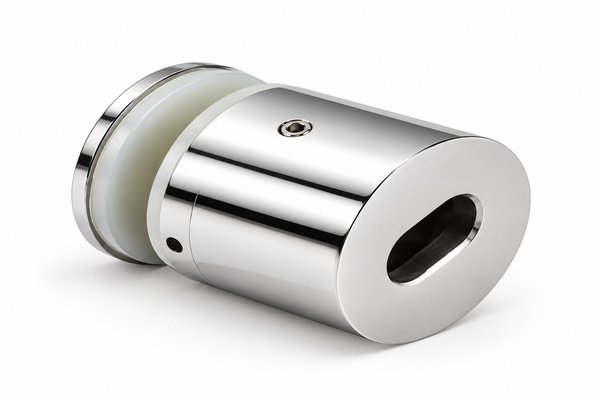
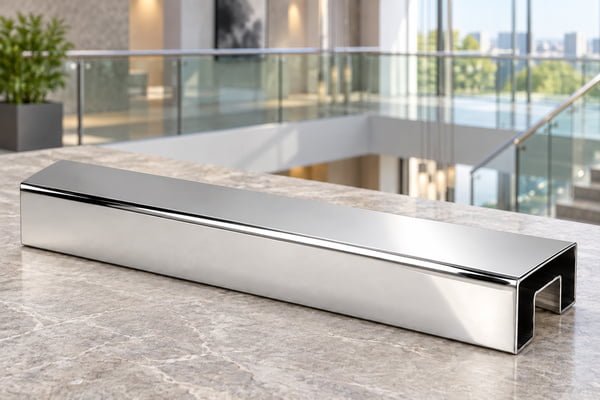
Catalogue illustration: Slotted-Face Glass Pool Fence Standoff — Polished silver appearance concept. Shown as a component reference, not an installation drawing or test result.
Four documents to request before purchase
- An assembly section identifying the projection reference faces.
- The exact glass preparation drawing and gasket set.
- The substrate fixing specification and access requirements.
- The applicable system performance evidence.
Anchor technical guidance addresses the substrate connection, while ASTM E2353 concerns testing of glass railing systems. Neither is a substitute for evidence covering the proposed assembly. The CPSC glass safety alert and interlayer manufacturer’s information help frame glass-related questions without establishing hardware compatibility.
Check cap tool access before approving a recess or tight corner. For side-mounted layouts, the same drawing should show access from the safe working side. A component that can be installed only before adjacent construction is complete may create a future replacement problem.
How should samples be accepted?
Measure a complete sample assembly, not just the decorative body. Identify the instrument and reference surfaces; NIST’s traceability explanation is useful when defining measurement records. Apply an agreed acceptance procedure, drawing revision and inspection responsibility, consistent with the distinction between evidence and claims in conformity assessment guidance.
A useful bid comparison
Request separate prices for the body, cap, gasket set and substrate fixing where they are not supplied as one assembly. Ask whether the quoted projection is the nominal position or a limit position. Keep the approved drawing attached to the order acknowledgement. This prevents a purchasing team from approving one geometry while the production team works from another version of the same-looking component.
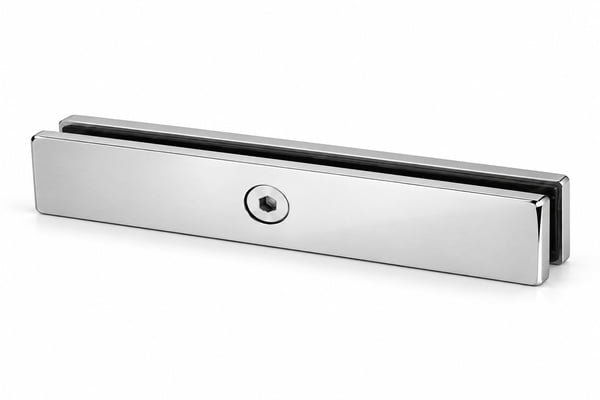
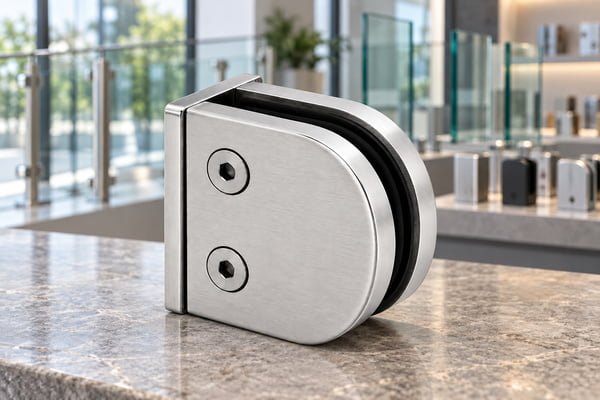
Catalogue illustration: Long Flat Glass Pool Fence Joiner — Polished silver appearance concept. Shown as a component reference, not an installation drawing or test result.
Buyer questions
Does adjustable mean stronger? No. Adjustment describes geometry. Capacity depends on the complete design and supporting evidence.
Can one adjustable SKU replace every fixed version? Only if its documented range, glass interfaces and application limits cover those requirements.
What should accompany an enquiry? Send a section, glass specification, substrate description, quantity and required finish. Use OEM drawing review for unusual interfaces and review manufacturing capabilities when specifying inspection records. Request a quotation with a projection schedule so alternatives can be compared on the same basis.