Order phased green wall cable deliveries as complete, revision-controlled zone kits. Each phase should contain the parts needed for its approved installation stage, with clear identification of deferred components. Splitting a total bill of materials into equal cartons rarely produces useful site packages. This logistics plan is for contractors coordinating procurement and installation.
Divide by installation sequence
Start with the elevation and programme. Define zones by the real sequence of work, access and readiness of the supporting structure. Select components from the green wall system and identify which items belong to each zone.
The Jakob GreenSolutions overview and technical catalogue provide examples of system components. Use the actual project design for quantities and interfaces. Our service-access coordination guide helps identify areas that may need a different installation or maintenance sequence.
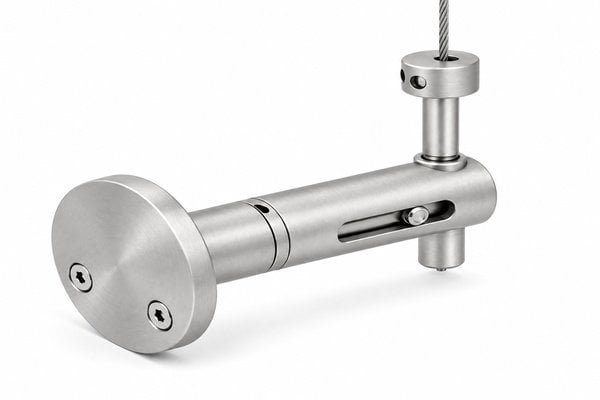
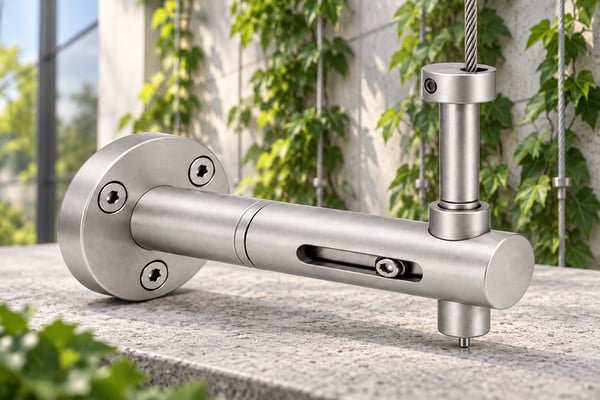
Catalogue illustration: Slotted Adjustable Cable Support — Matte silver appearance. Shown as a component reference, not an installation drawing or test result.
Give every kit a clear identity
| Kit field | Example of useful information |
|---|---|
| Zone | Elevation and level reference |
| Revision | Approved drawing and bill-of-materials revision |
| Contents | Cable, supports, connectors and defined small parts |
| Dependencies | Substrate or preceding work required |
| Deferred items | Explicitly listed later supply |
| Handling | Storage and unpacking instructions |
The examples describe label fields, not a universal kit composition. Relevant GS1 traceability principles can help maintain identity from manufacturing through site delivery. A carton number should lead to a content list rather than force the installer to count and identify every part.
Avoid the equal-split mistake
Suppose an illustrative project has three zones requiring 40, 25 and 35 cable assemblies. Dividing 100 assemblies into three roughly equal deliveries would not support that sequence. Pack against the zone schedules, including the different fittings and lengths associated with each zone.
Allowances and spare quantities should be agreed separately. Do not hide unidentified extras in a carton and expect the site to determine whether they are spares or missing items from another phase. Keep substitutions and shortages visible before dispatch.
Protect the parts between phases
Agree how long materials may remain stored and under what conditions. Packaging should protect finishes, cable geometry and small-component identity. Choose relevant ISTA procedures where transport evaluation is needed; the test should reflect the shipment being assessed.
The GreenBlock technical sheet illustrates why a support component needs its own identification and instructions. Do not mix visually similar brackets from different configurations. Retain labels during unpacking until the components have been assigned to their installation locations.

Catalogue illustration: Female Threaded Standoff Foot — Matte silver appearance. Shown as a component reference, not an installation drawing or test result.
Coordinate planting with hardware readiness
The hardware sequence and planting programme should be coordinated by the project team. RHS tying-in guidance offers plant-training context. It does not establish that an unfinished or partly supplied support system is ready to carry plants.
Our wind and mature-plant load guide explains the design information needed for the completed system. Temporary stages also need the responsible review where they affect support or access. Do not assume a partially installed kit has the intended completed-system behaviour.
Keep changes out of the wrong phase
When a drawing changes, identify which delivered and undelivered zones are affected. Record whether stock can be used, needs rework or must be replaced under the approved change process. A revised PDF sent by email is not enough if the warehouse is still packing to an older schedule.
Our installed-cost comparison helps include handling and repeated delivery costs in the quotation. Review shipment paperwork using the relevant export-document overview, while confirming the destination-specific requirements for the actual order. Documentation and carton identity should agree.
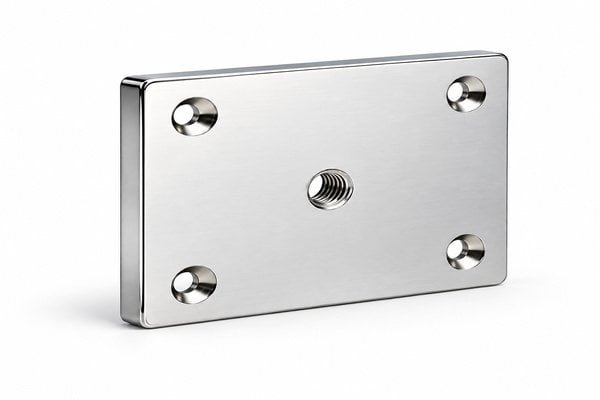
Catalogue illustration: Rectangular Threaded Mounting Plate — Polished silver appearance. Shown as a component reference, not an installation drawing or test result.
Handover each phase deliberately
Record what was delivered, what was accepted and what remains outstanding. NIST conformity-assessment guidance helps distinguish a quantity receipt from a technical acceptance or installation inspection. Do not mark a zone complete solely because its cartons arrived.
Should all spares arrive in the final shipment? Agree their timing with the programme. Installation-stage needs and long-term maintenance stock may be different.
Can several phases share unlabelled small parts? Avoid arrangements that make kit completion difficult to verify. Define and label any common stock deliberately.
Discuss phased packages through OEM kit development, review manufacturing capabilities, and send a zone-based delivery enquiry. Include elevations, revisions, phase dates and storage conditions so the supplier can quote a workable delivery plan.