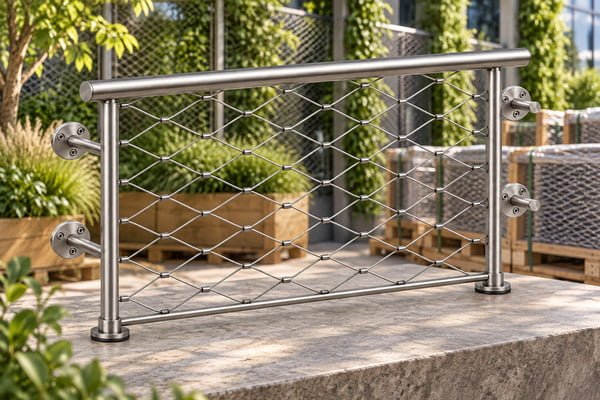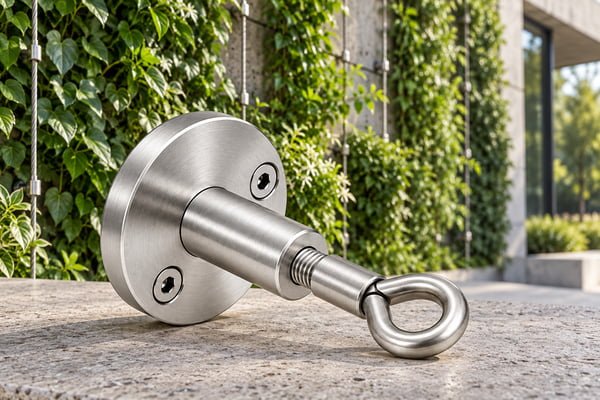
Coordinate green wall cable anchors with the facade’s waterproofing detail before ordering hardware. A structurally suitable fixing does not automatically provide a weatherproof penetration. Define the membrane interface, water path, sealing method and responsibility for inspection as part of the complete connection.
For facade contractors sourcing green wall systems, the most useful deliverable is a coordinated section drawing. It should show how the plant-support hardware and the building envelope meet without leaving an unassigned gap between trades.
Draw the entire penetration
Include the structural substrate, insulation, cavity, cladding, membrane and bracket. Identify which layer performs the water-control function. Do not assume that sealing the visible outer face addresses every route through the assembly.
Jakob’s GreenBlock technical sheet is an example of system-specific facade-fixing information. Its details belong to that product and application scope. A broader green facade catalogue can help identify components, but neither automatically approves a different project penetration.
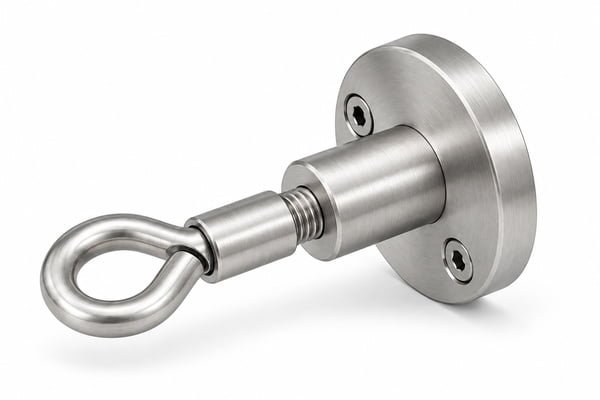
Catalogue illustration: Round Flange Eye Cable Anchor — Fine brushed silver appearance. Shown as a component reference, not an installation drawing or test result.
Assign each interface to an owner
| Interface | Decision to document |
|---|---|
| Anchor to substrate | Approved structural fixing detail |
| Bracket through facade | Geometry and construction sequence |
| Membrane connection | Compatible system detail and responsible trade |
| External water path | Drainage and exposure considerations |
| Inspection access | What must remain visible before closure |
| Maintenance | How the detail is inspected or repaired later |
Agree the sequence before the facade closes. A component delivered after the membrane is concealed may require a different approved installation approach. Do not leave that decision to an installer with only a product photograph.
Review structure and envelope together
Use the selected anchor technical guidance for the fixing connection. Relevant EOTA assessment resources can help identify the scope of applicable evidence. Neither structural anchorage documentation nor a sealant label alone establishes the performance of the whole facade detail.
Our thermal-bridge guide covers another building-envelope question. Adding a spacer or thermal component can alter the penetration geometry, so waterproofing should be reviewed against the same drawing revision.
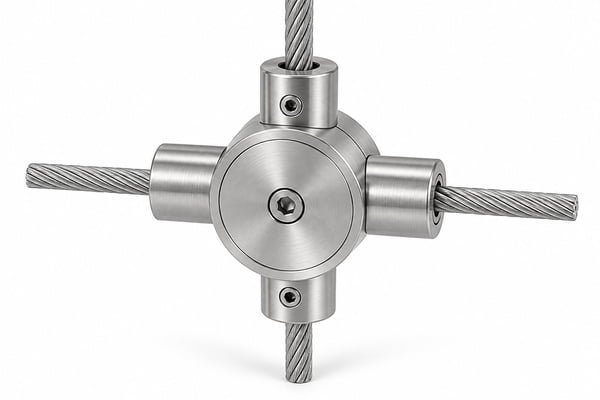
Catalogue illustration: Four Way Cable Cross Connector — Silver appearance. Shown as a component reference, not an installation drawing or test result.
Specify compatibility without inventing a sealant recipe
Ask the membrane or waterproofing-system provider to identify the approved connection method and preparation requirements. Include the actual contacting materials and environmental conditions. Do not prescribe a generic bead of silicone as a universal solution.
Dissimilar-metal corrosion guidance addresses a separate compatibility risk. It does not select a waterproofing product. Keep material isolation, water sealing and structural load transfer distinct, even where one detail coordinates all three.
The insulated-facade anchor guide helps define the wall build-up and fixing position. Check that the accepted sealing detail matches that position rather than an earlier design sketch.
Plan the inspection hold point
Identify the stage when the critical work can be inspected before covers or cladding conceal it. Record product identity, preparation, installation conditions and the required inspection evidence. Any water testing should follow the approved project procedure with competent supervision.
Schock’s thermal-insulation information explains another effect of facade penetrations, but it is not a water-test method. Where regulations apply, the responsible team should identify the relevant jurisdiction and adopted requirements; ICC resources are one reference point within that process.
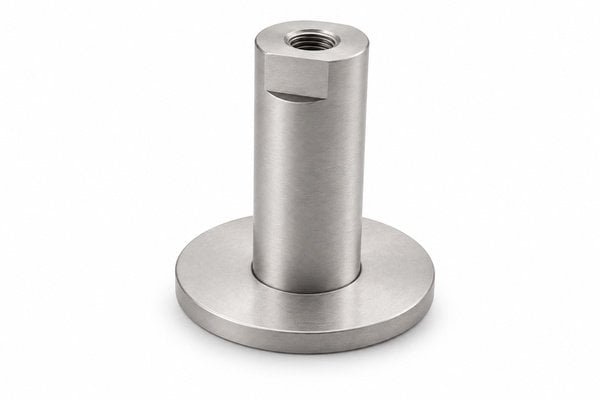
Catalogue illustration: Female Threaded Standoff Foot — Matte silver appearance. Shown as a component reference, not an installation drawing or test result.
Include irrigation and maintenance
The irrigation-corrosion guide addresses repeated wetting near the hardware. Coordinate irrigation routes and leakage access with the facade detail. A service problem should not require damaging the membrane to reach a routine adjustment point.
Ask how a bracket or cable can be replaced while preserving or reinstating the approved water-control detail. Retain the as-built location and repair instructions. A successful initial inspection does not remove the need for appropriate maintenance.
Can the hardware supplier guarantee the whole facade remains dry? Only make a claim supported by the agreed scope and evidence. Multiple trades may control different parts of the assembly.
Can an anchor be moved after waterproofing is complete? Use the project’s change process. A new penetration and the abandoned location both need an approved disposition.
Conformity-assessment principles help separate product information from whole-assembly claims. Send the coordinated section for OEM review, check manufacturing capabilities, and request a quotation with clear interface responsibilities. That prevents a complete hardware delivery from arriving with an incomplete envelope detail.