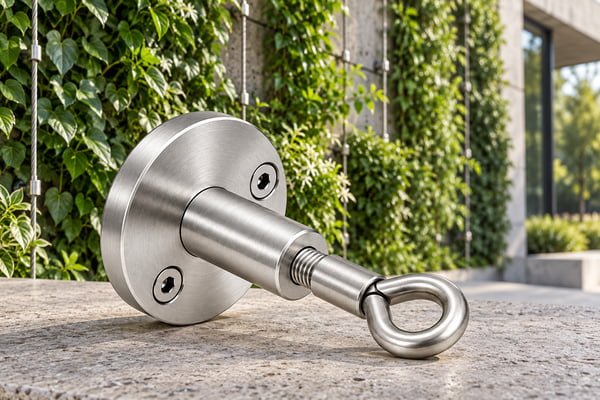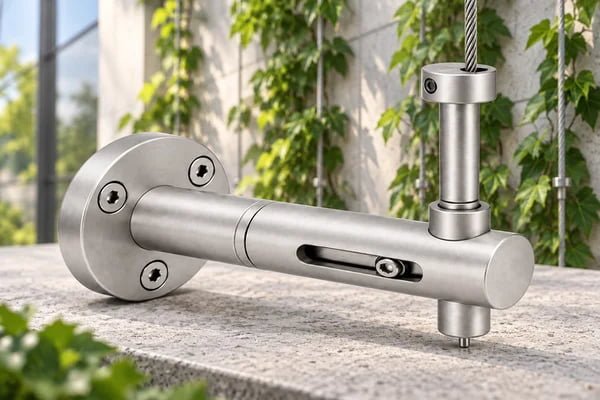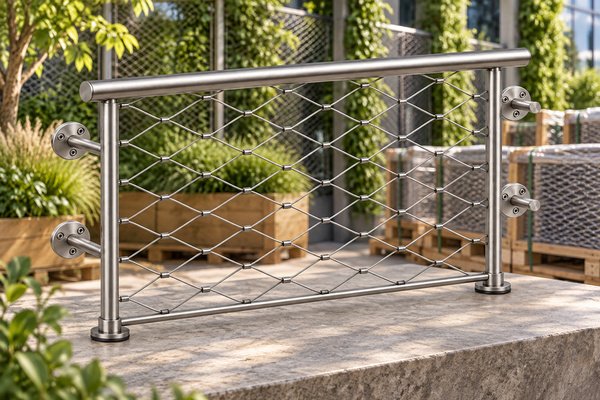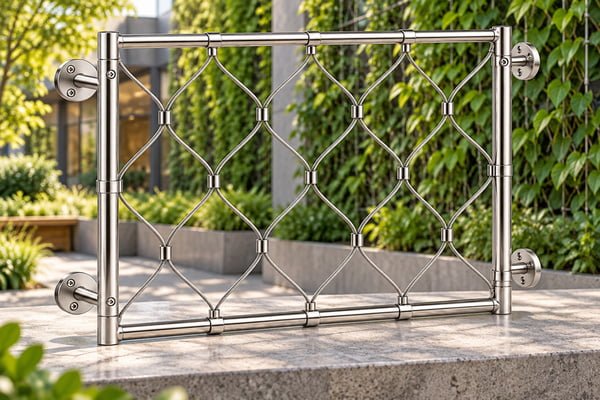
Coordinate the wet zones first: Green wall hardware near irrigation should be selected and detailed around actual water exposure, drainage, deposits and maintenance access. Stainless steel is not a substitute for a layout that allows inspection and cleaning. Identify where water reaches fittings and where it can remain trapped.
This maintenance-first guide is for landscape contractors purchasing green wall cable systems. It treats the irrigation designer, hardware supplier and building operator as partners. The practical outcome is a marked elevation and a care plan that staff can actually follow.
Walk the water path on paper
Mark emitters, supply lines, drainage outlets and the hardware below them. Consider normal operation, leaks and cleaning. Record whether fertilizers or treatment products may contact the fittings and obtain their product information. Do not assume every part experiences the same exposure because it belongs to one facade.
Compare the interfaces of a cable mesh frame and a trellis support. Plant growth and water can reach their joints differently. Use the plant and maintenance planning guide to consider the mature planting, not only the open structure shown at installation.
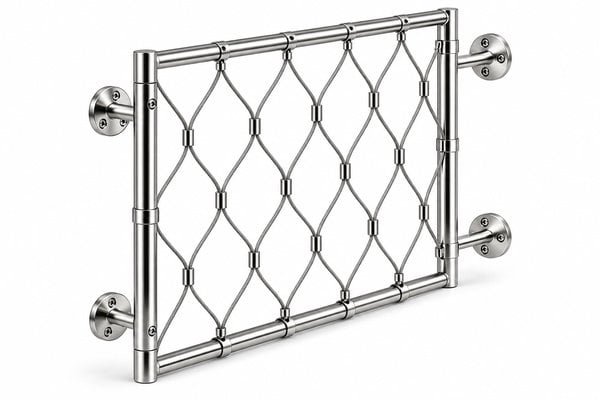
Product reference: Ferruled Cable Mesh Frame — Polished silver appearance. Match the supplied configuration to the approved drawing.
Create an exposure map the maintenance team understands
| Zone | Question | Record for the handover |
|---|---|---|
| Directly below irrigation | What normally wets the fitting? | Water source and operating pattern |
| Sheltered joints | Can deposits accumulate? | Inspection and cleaning access |
| Near planting media | Can debris bridge the connection? | Accessible clearance and removal method |
| At the facade | Where does water go? | Drainage and penetration details |
| High-level hardware | How will staff reach it? | Approved access arrangement |
The purpose is not to assign an invented corrosion rate. It is to identify different conditions that require a supplier and project-specific review. ASSDA’s tea-staining guidance and IMOA’s coastal-exposure discussion explain why environment, deposits and maintenance influence stainless performance.
Specify the complete material and finish schedule
List supports, cables, connectors and fasteners separately. Ask which parts use different materials or treatments. A generic “stainless system” description leaves too much undefined. Use grade-confirmation guidance when agreeing material verification and preserve the records with the component references.
Surface condition after fabrication also matters. Pickling and passivation guidance explains relevant stainless finishing processes, but any treatment must be appropriate for the actual product and manufacturing route. Do not substitute a general surface-treatment label for an agreed finished specification.
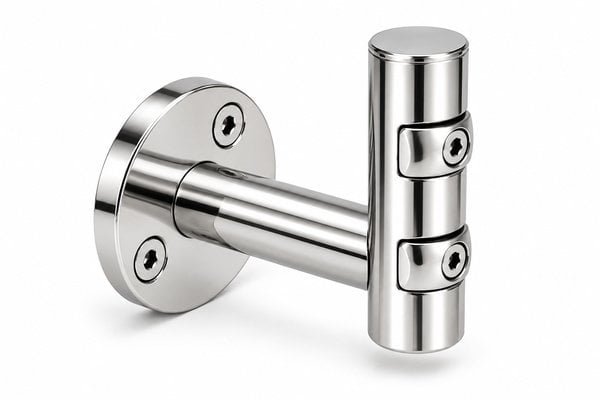
Product reference: Dual Cable Trellis Support — Polished silver appearance. Match the supplied configuration to the approved drawing.
Design cleaning access before the plants conceal it
Picture a maintenance operative reaching the fitting after several seasons of growth. Can the connection be seen? Can plant material be moved without damaging the support? Can the area be cleaned and inspected using an approved access method? If not, change the detail while design changes are still practical.
The repairable cable-section guide helps separate maintainable zones. Manufacturer examples such as Jakob’s greening applications and the University of Washington’s green-wall construction resource offer context, but their details do not certify a different proprietary system.
Use a simple location code on the elevation. For example, zones A1 to A6 can correspond to six accessible inspection areas. Record the hardware and irrigation equipment serving each zone. These example codes make reporting clearer without imposing a maintenance interval on an unknown installation.
Write the care instruction around the actual finish
Identify permitted cleaning products, application methods and rinsing requirements with the component supplier. Stainless cleaning guidance is a starting point for uncoated stainless, not blanket permission to use the same method on every coating, seal or adjacent facade material.
Ask the operator to record changes to irrigation settings and treatment products. If staining appears, photograph the affected location, note the exposure and preserve the relevant maintenance history. Avoid polishing away the evidence before the cause has been reviewed, particularly if the surface may be coated.
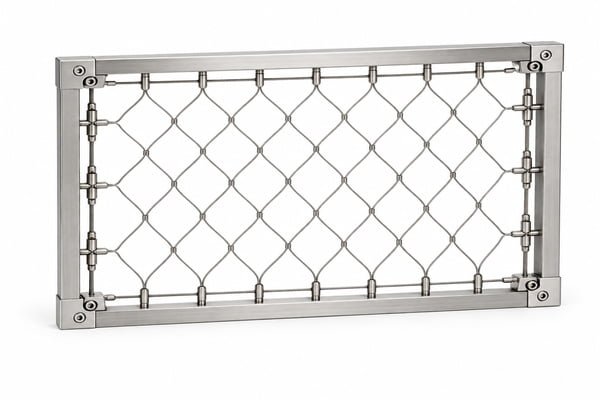
Product reference: Perimeter Tensioned Cable Net Panel — Fine brushed silver appearance. Match the supplied configuration to the approved drawing.
Close the purchasing loop
Keep labels and location records traceable using the principles in GS1’s traceability standard, scaled to the project. Confirm who supplies the final maintenance document and who reviews irrigation changes that affect hardware exposure.
Does a higher stainless grade remove the need for cleaning? No. Select materials and maintenance together for the actual environment.
Can irrigation hardware be attached anywhere on the cable grid? Additional attachments and loads require approval from the system designer.
Review component options through Elim’s manufacturing capabilities, then send the irrigation overlay and planting elevation. Request a documented material, finish and access proposal rather than an unsupported promise of maintenance-free service.