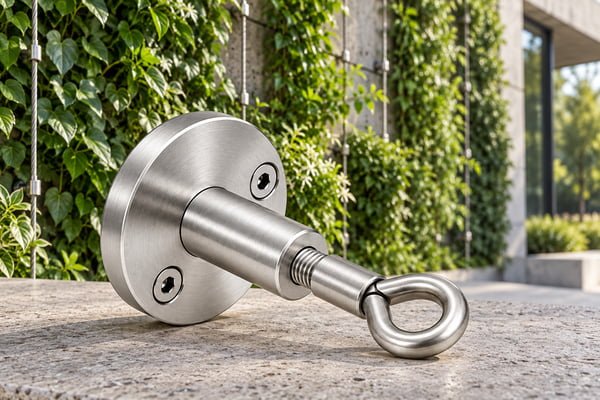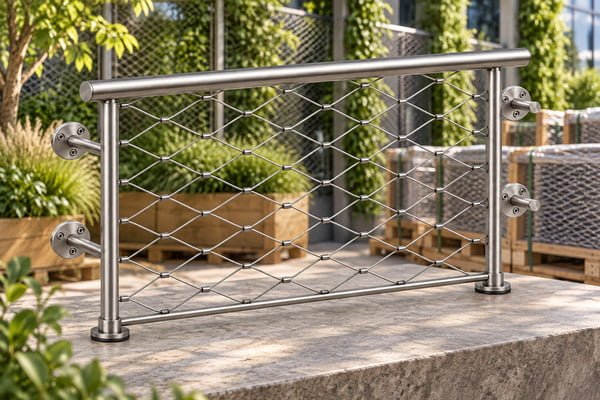
Coordination answer: Set green wall hardware clearances from the actual irrigation components and maintenance tasks. Allow for connectors, valve operation, tubing movement and tool access—not just the outside diameter of an empty pipe. Keep irrigation supports and structural cable supports explicitly identified.
This interface checklist is for landscape contractors coordinating green wall cable systems with irrigation installers. It helps prevent a cable grid that fits the elevation drawing but blocks a valve or traps a replaceable tube behind permanent hardware.
Hold a combined layout review
Place the cable layout and irrigation drawing on the same elevation and section. Identify crossings, valve locations, flushing points and access panels. Rain Bird’s drip design guides and product support documents provide irrigation-side references; use the documents for the actual installed equipment.
On the hardware side, the Jakob green systems technical catalogue illustrates support geometry. Keep the roles clear: a cable anchor selected for plant support is not automatically an approved support for a loaded irrigation pipe.
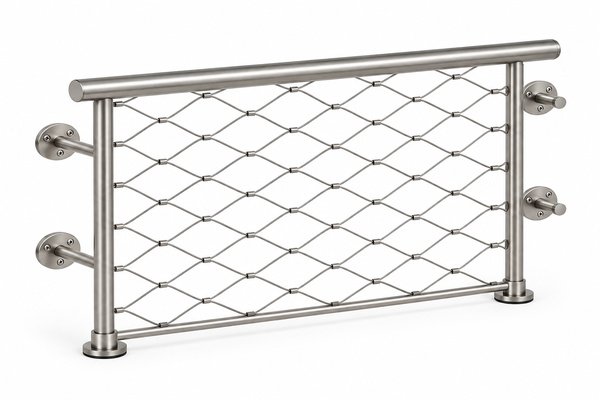
Catalogue illustration: Tubular Rail Cable Mesh Panel — Matte silver appearance. Shown as a component reference, not an installation drawing or test result.
Specify an access envelope
| Interface | Include in the clearance review |
|---|---|
| Straight tubing | Outside size, movement and replacement path |
| Connector | Full fitting envelope and removal direction |
| Valve | Handle movement and technician access |
| Flush point | Discharge route and maintenance space |
| Cable tensioner | Adjustment tool and working approach |
| Plant ties | Growth allowance and future removal |
An access envelope describes the space needed to use or remove the item, not merely its static outline. Mark that envelope on the coordinated drawing and verify it with the chosen components.
Read the irrigation corrosion guide alongside this layout review. It addresses exposure; this article addresses physical access and separation. Both need to be resolved before hardware quantities are finalized.
Account for planting over time
An empty frame can appear generous while mature growth makes access difficult. Discuss pruning and tie replacement with the landscape team. The RHS guidance on tying climbers provides horticultural context, but plant requirements must be coordinated with the engineered support system.
Avoid routing a replaceable tube through a closed hardware assembly unless the replacement method has been considered. Also avoid using plant growth as the only means of concealing an unresolved clash: access usually becomes harder after establishment.
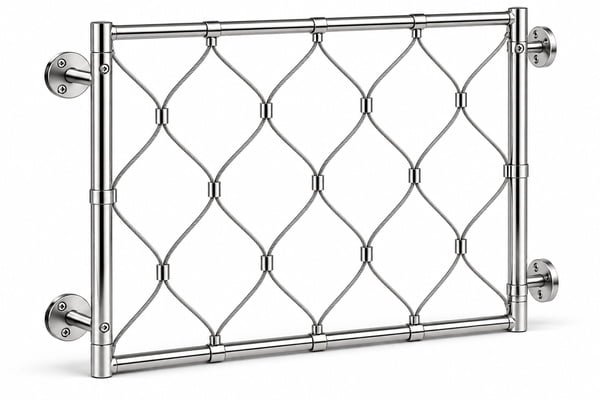
Catalogue illustration: Ferruled Cable Mesh Frame — Polished silver appearance. Shown as a component reference, not an installation drawing or test result.
Keep wet interfaces inspectable
Leaks and persistent wetting should be visible enough to investigate. Crevice corrosion guidance explains why retained moisture at metal interfaces deserves attention. Do not wrap a suspect joint permanently just to keep water away from an adjacent finish.
Review service access planning and facade waterproofing coordination. The GreenBlock technical information is an example of a defined facade connection system; it does not mean every penetration is waterproof simply because a cable bracket is stainless steel.
Use a mockup for the difficult crossing
Select the busiest interface rather than the easiest one. Fit the intended bracket, cable connector, tube and valve on a representative support. Demonstrate the maintenance task with the tools that will actually be used.
For mesh installations, review the applicable mesh assembly instructions before deciding the installation sequence. Record which trade works first and which components must remain removable. A sequence note can prevent an otherwise correct component from becoming inaccessible.
For repeated facade bays, distinguish the standard bay from bays containing valves, corners or service connections. A single repeated spacing rule may work for the standard bay while creating clashes in the exceptions. Mark these exceptions on the hardware schedule and give them identifiable kit labels. During delivery checking, confirm that the special brackets and access components are present before the standard bays are installed. This keeps a small missing component from delaying an entire irrigation commissioning sequence.
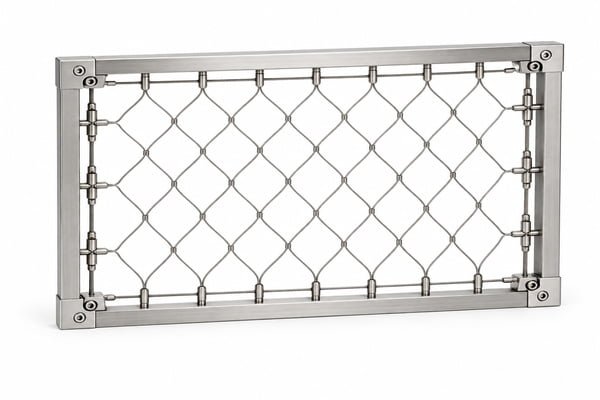
Catalogue illustration: Perimeter Tensioned Cable Net Panel — Fine brushed silver appearance. Shown as a component reference, not an installation drawing or test result.
Questions to settle before procurement
What is the universal pipe-to-cable clearance? There is no single value suitable for all these interfaces. Derive the clearance from the selected components, movement and maintenance operation, then document it.
Can tubing be tied directly to the cable? Only where both the irrigation and structural designs allow that arrangement. Do not assume a convenient shared route is an approved support method.
What evidence should the mockup produce? Keep the coordinated drawing, component list and photographs showing access. Conformity assessment guidance helps define what that review demonstrates and what still needs separate verification.
Send the layout through the OEM enquiry route, review manufacturing capabilities, and request a coordinated hardware schedule. Include quantities, facade zones and the difficult interfaces so the quotation reflects the real installation.