Design for the repair, not just the opening photograph. A maintainable green wall cable system needs identifiable sections, accessible connections and a documented replacement sequence. “Modular” should describe a verified arrangement that can be serviced safely, not simply a drawing divided into rectangles.
For facilities teams procuring green wall hardware, the useful starting question is: what must happen when one section needs attention after the plants have matured? Resolve that question before committing to a large continuous assembly.
Imagine a repair in year five
A section is damaged and must be reviewed. Can the maintenance team identify its parts and reach the connections? Does disturbing it affect neighbouring sections? Is temporary support needed for vegetation or hardware? Who has the instructions and authority to carry out the work?
This is a planning scenario, not a report of an Elim installation. A safe replacement method must be developed for the actual system by the responsible professionals. Do not release tension or remove a loaded cable based on a generic blog description.
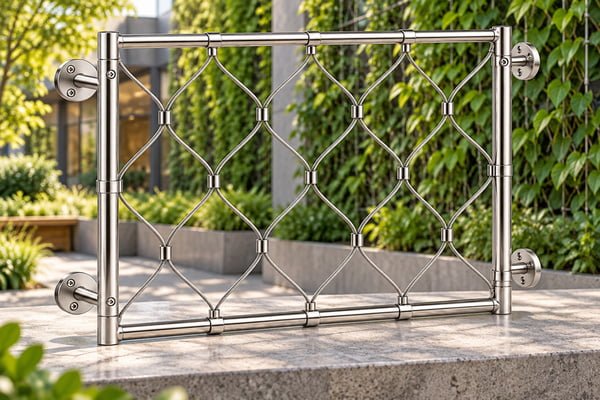
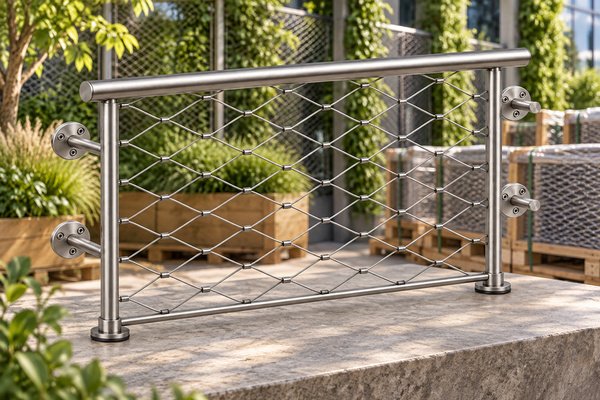
Review the difference between a tubular-rail mesh panel and a perimeter-tensioned cable net panel. Their catalogue forms suggest different interfaces, but independent replacement must be established from the complete design. The mesh and trellis comparison gives related purchasing context.
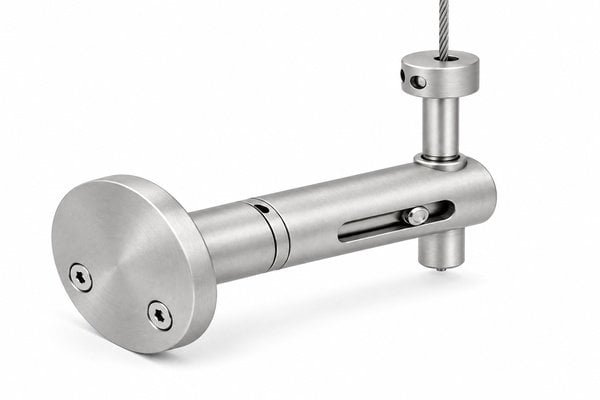
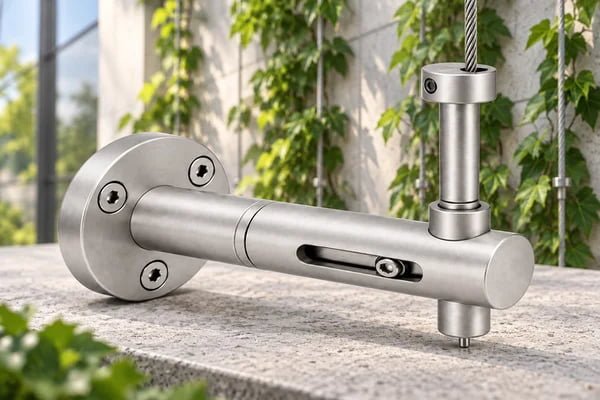
Product reference: Slotted Adjustable Cable Support — Matte silver appearance. Confirm the ordered configuration against its drawing.
Four design questions that change the repair bill
| Question | Evidence to request |
|---|---|
| Is the section independently serviceable? | Approved connection and load-path review |
| Can the connection be reached? | Access drawing including mature vegetation |
| Can the correct part be identified later? | Model, drawing revision and location register |
| Can the section pass through the access route? | Handling dimensions and replacement plan |
For example, splitting a nominal six-metre elevation into three drawing zones does not prove there are three independently removable assemblies. Continuous cables, shared supports or connected vegetation may link them. State the desired service outcome, then ask the system designer to develop the arrangement.
Jakob’s greening examples and the University of Washington construction resource help frame system questions. A manufacturer-specific document such as the GreenBlock technical sheet illustrates why the exact hardware and instructions matter; its details cannot be transferred to unrelated components.
Put access in the procurement scope
Record access equipment, approach routes and working clearances before the facade becomes occupied. Coordinate connections around windows, service panels and irrigation. Ask whether protective finishes or waterproofing would be disturbed during replacement, and who is responsible for reinstatement.
Where a support connects to the building, retain the approved fixing detail and relevant manufacturer data. Anchor technical guides are a reference category for that work, not permission to select an anchor from appearance. The green-wall RFQ guide helps collect the supplier information needed before design release.
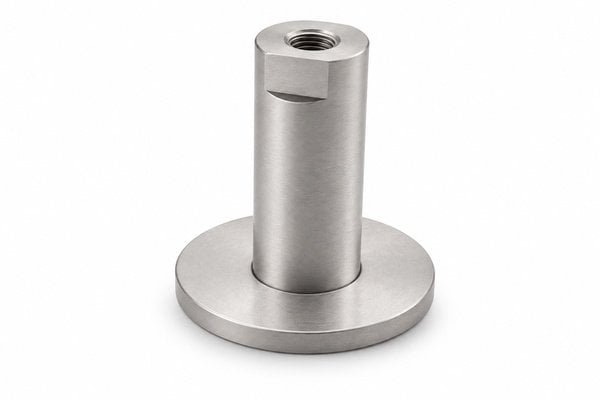
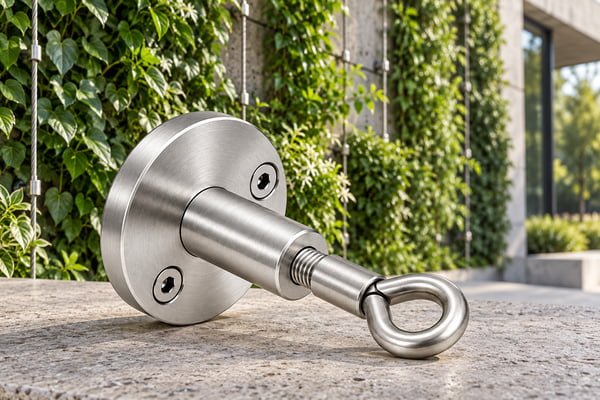
Product reference: Female Threaded Standoff Foot — Matte silver appearance. Confirm the ordered configuration against its drawing.
Build an asset register that survives personnel changes
Give each serviceable section a permanent location code. Record components, rope identification, finish, installation revision and approved replacement references. Store an overall photograph and detail images that show the connection before vegetation obscures it.
Use GS1’s traceability principles as a general model for linking identity with maintenance events. A small site can use a controlled spreadsheet, provided changes are recorded and old revisions remain understandable. Do not rely on a supplier’s current catalogue page as the only record of what was installed years earlier.
Discuss part identification and future supply through Elim’s manufacturing capabilities. Ask what can be retained in the order record and what information would be needed to quote a replacement. Avoid promising indefinite availability without a specific agreement.
Budget for care, access and replacement together
A replacement fitting price is only one line in a repair budget. Include access equipment, plant management, temporary measures, inspection and any facade reinstatement. Compare these scope items when reviewing alternative section arrangements.
Adapt stainless cleaning guidance and tea-staining advice to the actual exposure and finish. Maintenance records should distinguish cosmetic observations from movement, damage or connection concerns that require technical assessment.
Protect retained spares and label them with the compatible revision. Use ISTA’s packaging overview when discussing shipment protection for replacement parts; a spare that arrives bent or unidentified does not improve serviceability.
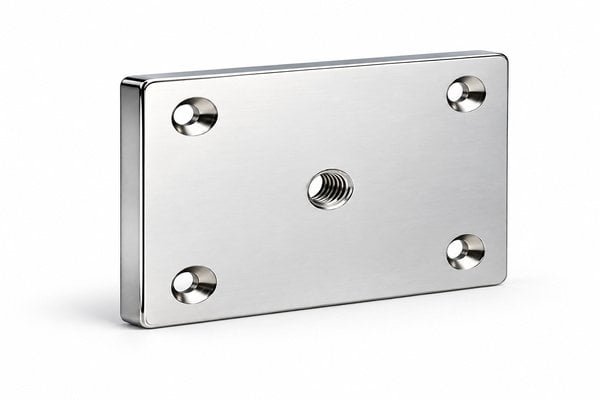
Product reference: Rectangular Threaded Mounting Plate — Polished silver appearance. Confirm the ordered configuration against its drawing.
Questions before approval
Does a modular panel guarantee easy replacement? No. Shared supports, access and vegetation can still complicate the work.
How many spare parts should be purchased? Base the decision on the installed component register, procurement lead times and maintenance plan, not a universal percentage.
What is the best acceptance check? Walk through a documented replacement scenario with the designer, installer and maintenance representative before final approval.
Send Elim the proposed section register and service requirements. Request clearly identified hardware scope while the project team develops and approves the complete maintenance arrangement.