Specify a slotted handrail-bracket mounting hole by its orientation, geometry and approved fixing arrangement. The slot may provide adjustment, but it does not automatically increase capacity or permit arbitrary movement after installation. The complete bracket, washer, fastener and substrate detail must be reviewed together.
This drawing-review guide is for contractors buying handrail brackets. Its purpose is to turn an adjustment request into a clear purchase specification.
Name the adjustment direction
Show the slot on an elevation or section and state which movement it is intended to accommodate during installation. A vertical slot and a horizontal slot solve different alignment problems. Identify the bracket’s final position and the applicable limits.
The handrail projection guide covers the installed relationship to the wall. Check whether adjustment changes that relationship or affects another component. A slot should not become an undocumented method for moving the complete handrail outside its approved layout.
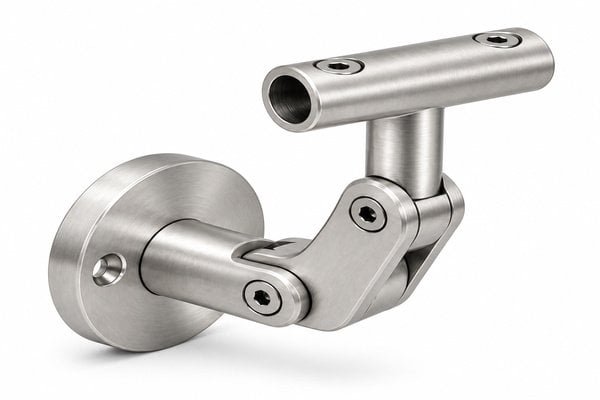
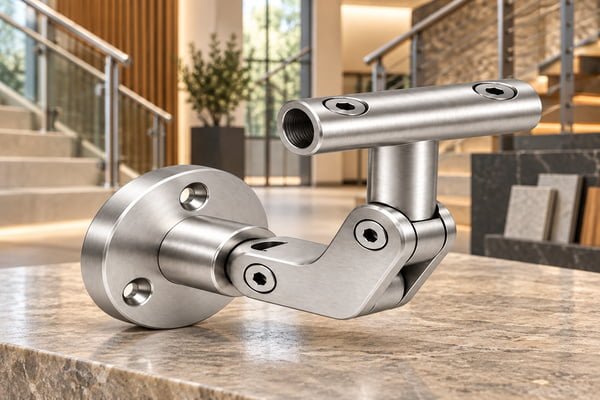
Catalogue illustration: Articulated Wall Handrail Sleeve Bracket — Satin silver appearance concept. Shown as a component reference, not an installation drawing or test result.
Complete the hole detail
| Drawing entry | Information needed |
|---|---|
| Width | Nominal dimension and tolerance |
| Overall length | End-to-end dimension and tolerance |
| Orientation | Direction relative to a named datum |
| End shape | Specified geometry and edge condition |
| Location | Relationship to bracket faces and other holes |
| Fixing stack | Approved fastener and washer arrangement |
Do not confuse total slot length with usable adjustment. The fastener, washer and allowable installed position can restrict movement. Calculate the usable range from the approved assembly rather than subtracting an assumed bolt diameter from a sketch.
Review the substrate connection
Consult the selected anchor technical guidance and relevant assessment documents where applicable. Slotted fixture holes may have conditions that differ from round holes. The responsible designer should resolve the specific detail.
Check thread engagement and the approved clamping arrangement where the fixing stack changes. A thicker washer or additional spacer can affect the connection. Do not make those substitutions solely to cover an unexpectedly large slot.
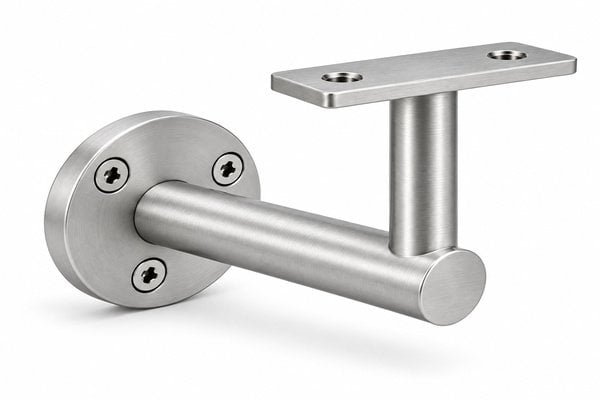
Catalogue illustration: Rectangular Flat Saddle Handrail Bracket — Matte silver appearance concept. Shown as a component reference, not an installation drawing or test result.
Define how the final position is retained
Use the specified tightening procedure and installation conditions. Torque and preload tools illustrate the variables involved, but they do not create a generic tightening value for a particular bracket. The assembly instructions must govern the actual connection.
Our bolt-pattern guide helps distinguish hole location from overall alignment. A pattern that matches on paper still needs the correct fixture geometry and support condition. Review the base-plate flatness discussion where a similar bearing issue arises.
Check the finished handrail requirements
Adjustment should preserve the required handrail arrangement. The US Access Board stairway guide is a reference for applicable US accessibility requirements; it is not a universal specification for every project. Confirm the jurisdiction and the approved design before releasing fabrication dimensions.
A field installer should receive the permissible adjustment information, not an open-ended instruction to align as needed. Document any location where the standard bracket cannot achieve the required position.
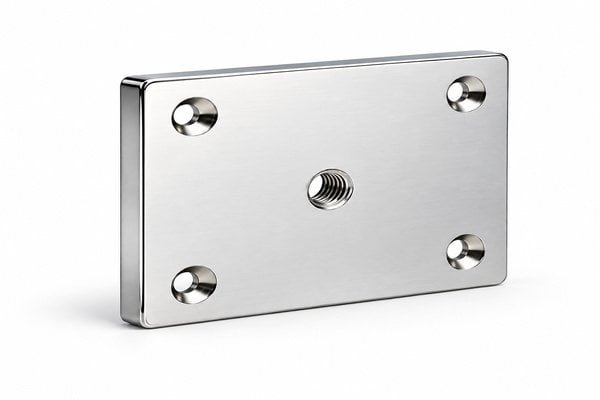
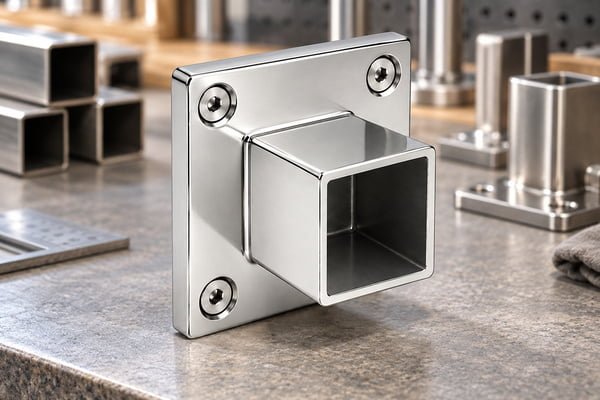
Catalogue illustration: Rectangular Threaded Mounting Plate — Polished silver appearance. Shown as a component reference, not an installation drawing or test result.
Keep variants identifiable
For example, a distributor can assign separate kit codes to vertical-slot and horizontal-slot brackets even when the outer body is identical. Record the compatible fixing pack under each code. This is an inventory example, not a recommendation for a particular slot dimension. Include orientation on the carton label so that site teams do not discover the difference only after unpacking.
Inspect the right features
Use a defined measurement method for slot width, length and location. NIST traceability guidance supports meaningful records. Include edge condition where burrs could interfere with seating or handling.
Apply an agreed sampling plan to the relevant lot. A trial bolt that passes through one slot is not a full dimensional inspection. Record the actual features required by the drawing and the disposition of any nonconforming parts.
Can a round hole be lengthened on site? Only through an approved change. Site alteration may affect geometry, coating and the intended connection.
Does a larger washer make any slot acceptable? No. Washer coverage alone does not establish the suitability of the assembly.
Use conformity-assessment principles to define what evidence supports the final detail. Keep inspection results and structural design acceptance as separate records with clear scopes.
Submit special mounting patterns through OEM review, check manufacturing capabilities, and request a quotation using the complete slot drawing. That avoids pricing a nominal bracket while leaving the critical fixing detail unresolved.