Decision in brief: A tapped hole creates the screw thread directly in the fitting body. A threaded insert adds a separate engineered thread component. Choose between them using available material, installation control, service needs and verified joint requirements—not the assumption that an insert automatically makes a joint stronger.
Buyers comparing stainless railing fittings often receive quotations that look identical externally. The internal thread construction can change tooling, inspection and replacement costs. Ask the supplier to show it in section before comparing prices.
Compare the manufacturing routes
| Question | Direct tapped hole | Threaded insert |
|---|---|---|
| Components | Thread formed in body | Body plus specified insert |
| Production controls | Hole, tap and thread inspection | Host hole plus insert installation |
| Service replacement | Body thread condition matters | Replacement depends on insert design |
| Drawing detail | Thread and usable depth | Insert code, host geometry and depth |
| Purchasing risk | Insufficient usable thread | Wrong insert or incomplete installation |
Böllhoff’s thread insert documentation shows that insert systems have their own installation requirements. It should be used to understand the selected insert family, not as evidence that an unspecified railing fitting has the same performance.
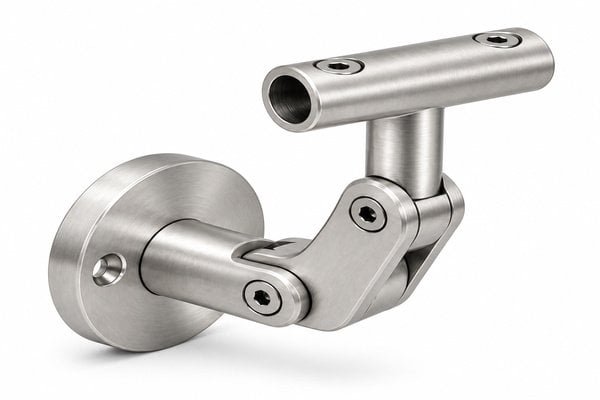
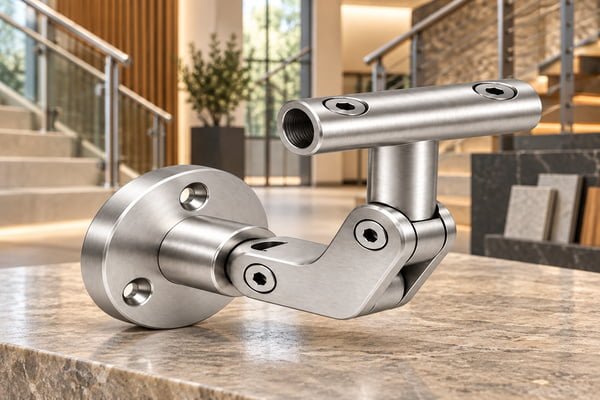
Catalogue illustration: Articulated Wall Handrail Sleeve Bracket — Satin silver appearance concept. Shown as a component reference, not an installation drawing or test result.
Ask for usable depth, not just hole depth
A blind drilled hole includes geometry that may not provide usable thread. The screw also needs clearance from the bottom. Identify the fastening stack and the fully formed engagement length separately.
The railing fastener matching guide is a useful starting point. Bossard’s engagement calculator and metric thread reference support technical review, but their inputs must match the actual materials and joint. Do not apply a single diameter multiplier to every casting, tube wall and insert.
For example, an M6 designation identifies a nominal thread size; it does not state the fitting’s wall thickness, usable depth or permitted assembly torque. Those belong on the drawing or controlled assembly specification.
What changes in receiving inspection?
For a direct thread, inspect the specified size, condition and usable depth. For an insert, add identity, installation position and any design-specific retention checks. Establish whether a protruding insert, damaged first thread or retained installation feature is permitted before shipment.
Use the appropriate thread standard and gauge system. ASME’s unified thread gauging standard has a defined scope and should not be casually substituted for metric gauging instructions. Also review deburring requirements, since a burr at the entry can be mistaken for a wrong thread.
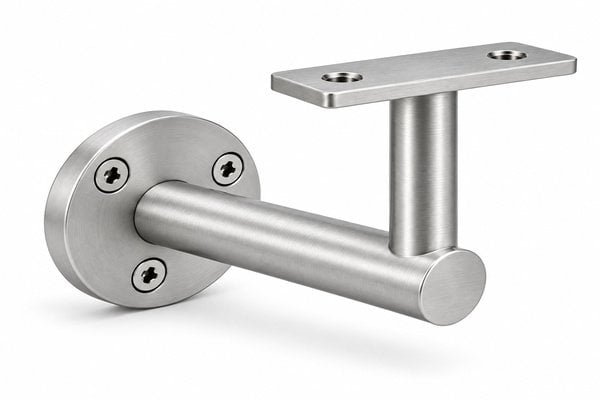
Catalogue illustration: Rectangular Flat Saddle Handrail Bracket — Matte silver appearance concept. Shown as a component reference, not an installation drawing or test result.
Serviceability has a price
A maintenance team may prefer a replaceable thread component, but only where replacement tools and instructions are available. A concealed insert that cannot be serviced after installation may offer little practical maintenance advantage.
Ask whether removal damages the host fitting, whether an approved oversize repair exists, and who may perform it. Do not authorize field drilling on a load-bearing railing component merely because a generic repair insert is available.
ASSDA’s galling guidance explains a separate fastening problem: sticking or seizure during assembly. An insert does not eliminate every galling mechanism. Lubrication, materials and tightening procedures need to be reviewed together with the specified screw.
Build a comparable quotation
Request two prices only when both proposals satisfy the same design requirements. Include prototype cost, tooling, inspection, replacement parts and installation equipment. Stainless fastener material guidance helps separate material designation from the completed joint’s capacity.
Check material certificate requirements, then send the section drawing through the OEM enquiry route. Require the supplier to identify any change to the original fitting envelope.
For repeat service applications, compare the cost of replacing the entire fitting with the cost of an authorized insert replacement, including labour and access. The cheaper loose component may not create the cheaper repair. Ask the supplier to identify the expected replacement sequence and any parts that cannot be reused. This is a commercial comparison based on an approved design, not a reason to introduce a repair feature into an existing structural fitting without review.
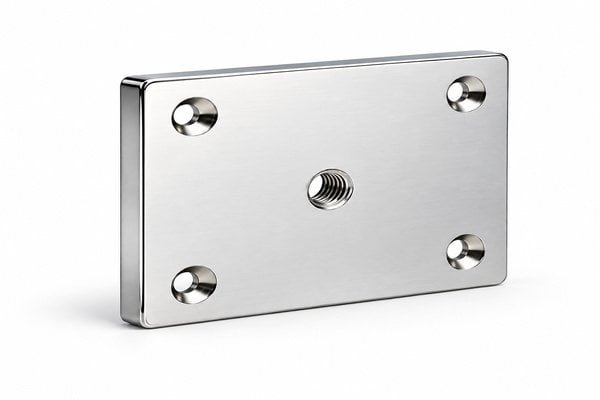
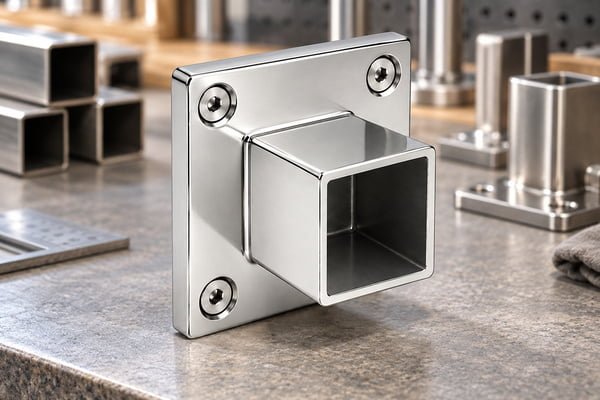
Catalogue illustration: Rectangular Threaded Mounting Plate — Polished silver appearance. Shown as a component reference, not an installation drawing or test result.
Three questions before release
Is the thread measurable with the fitting assembled? If not, inspection must occur at an earlier controlled stage. Record that stage and equipment; NIST traceability guidance explains the measurement-record principle.
Does a thread gauge prove joint strength? No. It addresses thread geometry within its scope. Conformity assessment guidance helps distinguish dimensional inspection from performance verification.
Can the factory change the insert brand later? Treat a change in insert geometry, material or installation method as a controlled substitution requiring review.
Review the available manufacturing capabilities, then request a drawing-based quotation. Specify order quantities and service expectations so the chosen thread construction remains practical throughout the product lifecycle.