Measure shower door sag against defined reference points and a recorded baseline during sample approval. A door that appears aligned immediately after assembly has not necessarily demonstrated acceptable behaviour over the agreed test. Record the whole installation condition rather than judging the hinge alone.
For hotel buyers and distributors of shower hardware, this is a practical sample-review topic. The aim is to identify movement and its cause before repeating the same assembly across a bulk order.
Define what you mean by sag
Sag may be observed as a change in the lower free corner, an altered gap or a shift in the door’s relationship to its supporting panel. Those observations can have different causes. Select reference points that distinguish door movement from movement of the wall, fixed panel or test fixture.
Use the chosen model’s instructions and specifications. A shower hardware catalogue can help identify series and application limits; it is not a universal test procedure. The manufacturer’s technical FAQ is another starting point for model-specific clarification.
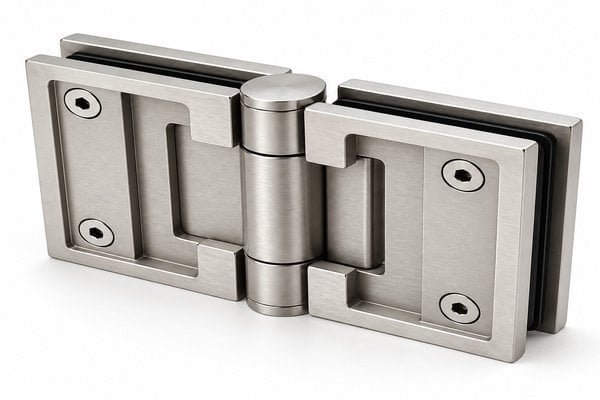
Catalogue illustration: Heavy-Duty Shower Door Hinge. Shown as a component reference, not an installation drawing or test result.
Record the baseline before cycling
| Record | Why it is needed |
|---|---|
| Door dimensions and construction | Identifies the sample being evaluated |
| Hinge codes and locations | Defines the actual support arrangement |
| Gaskets and glass preparation | Captures the contact interface |
| Reference gaps and points | Allows the same measurement to be repeated |
| Fixture and supporting panel | Separates support movement from hinge movement |
| Assembly procedure | Makes setup reproducible |
Take measurements after the assembly steps and settling conditions specified by the approved procedure. Record whether seals or other accessories are installed, because changes to the test setup can affect operation and the interpretation of results.
Keep the test safe and relevant
Glass handling and testing need appropriate facilities and competent personnel. The CPSC tempered-glass alert provides background on glass hazards. ASTM C1048 concerns heat-strengthened and tempered flat glass; it does not by itself establish a hinge-assembly sag criterion.
Use the approved test plan for the actual door and hardware combination. Our hinge cycle-test guide explains why cycle count, operating conditions and acceptance rules should be defined before testing. Do not choose a pass limit after seeing the measurements.
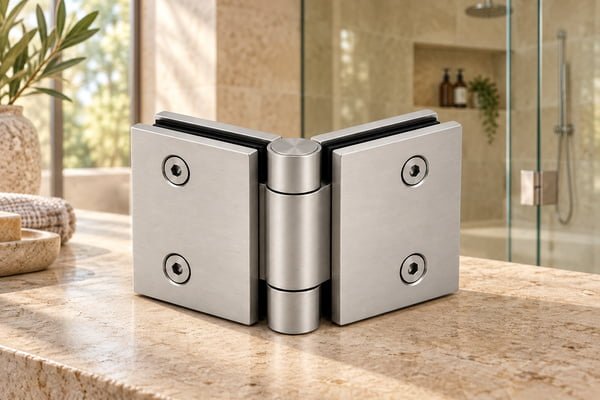
Catalogue illustration: Matte Silver 90 Degree Glass-to-Glass Shower Door Hinge — Finish Concept. Shown as a component reference, not an installation drawing or test result.
An illustrative record, not a performance claim
A worksheet might record the free-corner height at baseline, at agreed intermediate stages and after the final stage. It should also record the supporting panel’s reference position at those times. This allows a reviewer to see whether the door, support or both have moved.
The numerical limits and intervals belong to the approved procedure; there is no universal value supplied by this article. NIST traceability guidance supports recording the instrument and measurement chain. State resolution and repeatability needs appropriate to the acceptance limit.
For larger procurement programmes, use acceptance-sampling concepts and a documented sampling plan where suitable. One successful prototype does not establish the condition of every production hinge or glass preparation.
Investigate before adjusting away the evidence
If a gap changes, preserve the original readings and photographs. Review fixation, gasket position, supporting structure and the specified assembly procedure. An adjustment may restore appearance while concealing a recurring setup or component problem.
The hotel hinge selection guide connects the sample to the actual door width, weight and clearance requirements. The glass-cutout revision guide addresses another common source of mismatch. Do not treat every alignment problem as a defective hinge without examining the complete assembly.
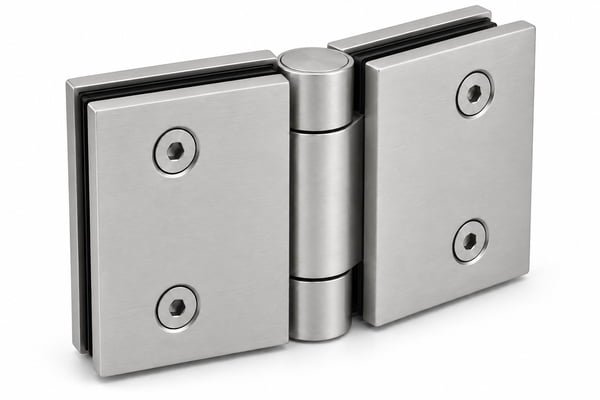
Catalogue illustration: Matte Silver 90 Degree Glass-to-Glass Shower Door Hinge — Finish Concept. Shown as a component reference, not an installation drawing or test result.
Release the bulk order with a clear scope
A useful report identifies the tested configuration, procedure, observations, acceptance decision and any limitations. Conformity-assessment guidance helps separate a supplier’s observation from independently verified certification. Only make performance claims supported by the actual evidence.
Does a closing test also measure sag? Not necessarily. A door can still close while its alignment changes. Include both observations where the approved plan requires them.
Can tightening fix the sample? Follow only the specified procedure. Any corrective action should be recorded and the relevant checks repeated before acceptance.
Send the complete sample specification to OEM review, discuss manufacturing controls, and request a bulk quotation tied to the accepted revision. That connects sample approval to the parts eventually delivered.