Full and short shower hinge backplates are different mounting configurations, not automatic quality grades. Compare their fixing footprint, wall support, glass template and installation access within the selected hinge series. A shorter plate is not interchangeable with a full plate merely because the hinge body looks familiar.
This comparison helps distributors build an accurate shower hardware range. It focuses on the ordering information that prevents installers receiving a similar-looking but unsuitable hinge.
What the names tell you—and what they do not
A full backplate and a short backplate describe the wall-side plate arrangement within a manufacturer’s product family. The names alone do not establish load rating, glass thickness or screw locations. Obtain the exact drawing and application limits for each model.
For external examples, CRL lists a Vienna full backplate model and a Vienna short backplate model. These identified products illustrate the distinction; their specifications should not be assigned to another manufacturer’s hinge. The CRL shower hardware catalogue provides further model context.
| Comparison point | Question for both versions |
|---|---|
| Wall-side footprint | Does the plate fit the available support area? |
| Fixing positions | Can each fixing engage the intended substrate? |
| Glass preparation | Which exact template and revision apply? |
| Installation access | Can tools reach the specified fasteners? |
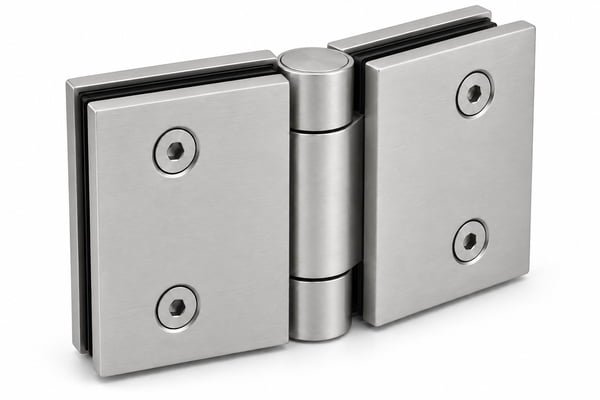
Catalogue illustration: Matte Silver 90 Degree Glass-to-Glass Shower Door Hinge — Finish Concept. Shown as a component reference, not an installation drawing or test result.
Compare the support behind the finish
A plate can fit neatly on a tile while the fixing behind it remains unsuitable. Identify the structural support and the approved fixing method. Our wall-to-glass hinge guide addresses this interface. Do not choose the short plate simply to avoid investigating the substrate.
Also check the plate’s relationship with corners, trims and adjacent glass. A small change in the footprint can alter access, but only the actual drawing shows whether it solves the project constraint. Avoid reducing the comparison to “large is stronger” or “small is more modern.”
Keep glass templates tied to model codes
The glass preparation must follow the identified hinge instructions. The CPSC glass safety alert provides useful safety context, while the CRL shower hardware FAQ offers manufacturer guidance within its scope. Neither permits substituting an approximately similar cutout.
Use our glass template revision guide to label the drawing supplied to the glass fabricator. The purchase order should repeat the hinge model, template reference and finish code. Where a supplier proposes a substitute, review the glass preparation before accepting it.

Catalogue illustration: 135 Degree Glass-to-Glass Shower Door Hinge. Shown as a component reference, not an installation drawing or test result.
Build a distributor stock matrix
Separate stock codes by plate configuration, handing where applicable, finish and compatible glass preparation. Store the relevant instructions with each code. A photograph is useful for picking, but it should not be the only identifying record.
Keep service parts linked to the same series. Our replacement gasket guide explains why gaskets should be selected by the intended assembly rather than thickness alone. For custom packaging or component identification, discuss OEM/ODM options without changing the technical identity of the hinge.
Approve a representative assembly
Check the hinge, plate, supplied fixings and contact parts as a kit. Agree dimensional checks and record the inspected revision. NIST measurement traceability guidance supports that measurement discussion. ASSDA finish resources can help describe stainless finishes where applicable; brass and coated products need their relevant process specifications.
Review the appropriate manufacturing capabilities and distinguish appearance approval from functional verification. The NIST conformity assessment overview explains these different evidence types. A successful sample fit does not justify inventing a cycle-test result or weight rating.
For mixed deliveries, add a configuration photograph to the packing record while keeping the written model code authoritative. Ask the receiver to check the first kit of each configuration against the order before distributing cartons to installers. This is a practical picking check, not a substitute for the agreed quality inspection.
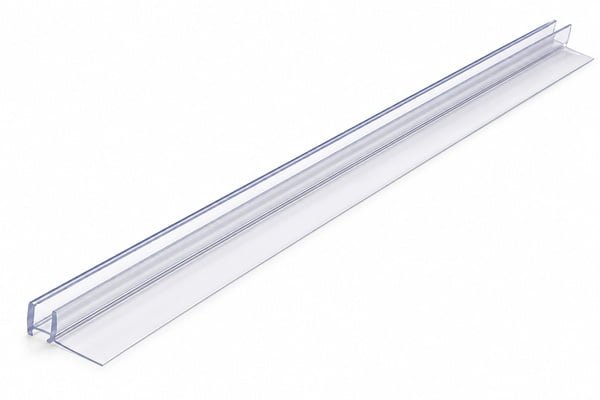
Catalogue illustration: Shower Door Side Seal Strip. Shown as a component reference, not an installation drawing or test result.
Buyer questions
Is a full plate always preferable? No. Selection depends on the documented mounting arrangement and application, not the name alone.
Can existing glass be reused? Only after the actual glass preparation and condition are checked against the selected hinge requirements.
Can both versions share one catalogue listing? They can be presented together for comparison, but keep their technical codes and drawings distinct.
For pricing, send the required configurations, glass details, quantities and finish schedule. Ask the quotation to identify the matching template and included service parts so purchasing, glass fabrication and installation all work from the same information.