Measure an out-of-plumb shower wall before selecting the hardware. Then distinguish a wall correction from an adjustment that the chosen system actually permits. Hinges, channels and seals should not be used to disguise an unsupported geometry change or force glass into position.
This troubleshooting guide is for installers and project buyers selecting shower hardware. It starts with the survey because an accurate drawing can prevent both an incorrect glass order and an unsuitable hardware substitution.
Symptom: the opening changes from bottom to top
Record the opening at defined heights and note the finished surfaces used as datums. Also record local tile irregularities separately from the overall lean. These conditions may require different responses.
The CRL out-of-plumb measuring reference illustrates the value of dedicated measurement tools. The shower hardware catalogue provides product context, but the permitted accommodation must be checked for the actual system. A general catalogue is not a licence to extend a fitting beyond its documented range.
| Survey entry | Why it matters |
|---|---|
| Width at named heights | Shows how the opening varies |
| Wall lean and direction | Distinguishes inward and outward deviation |
| Local surface condition | Identifies uneven bearing areas |
| Finished floor or curb | Establishes the lower glass and seal datum |
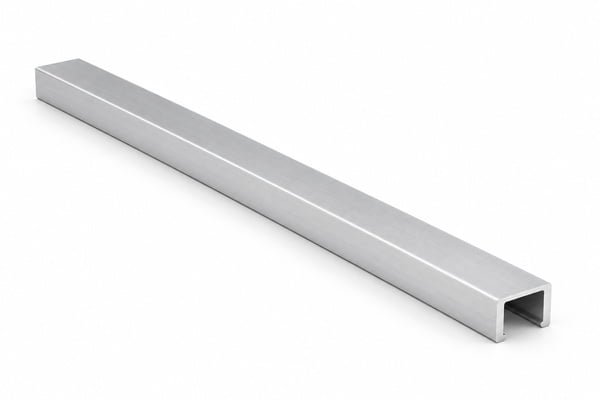
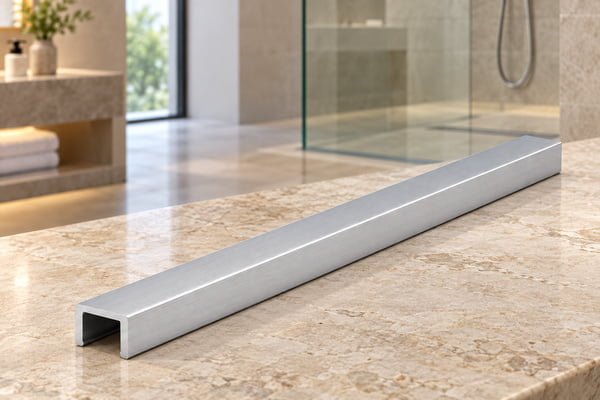
Catalogue illustration: Aluminum U-Channel for Shower Glass. Shown as a component reference, not an installation drawing or test result.
Decision: correct the wall or select a suitable system?
Ask the responsible installer or designer to determine the appropriate route. Some systems have documented adjustment features; others require the opening to meet tighter conditions. Do not assume an adjustment available in one product family exists in another.
Our U-channel versus clamp guide helps compare support approaches. The CRL shower hardware FAQ is a useful manufacturer reference, while the CPSC glass safety alert provides safety context. Neither replaces the installation instructions for the chosen assembly.
Avoid site modifications to glass or improvised packing that conflict with those instructions. If the wall must be corrected, update the survey after the work and before releasing final glass dimensions.
Symptom: a seal hides the gap but operation is poor
A seal has a defined profile and working relationship with the glass. It is not a structural correction for a leaning wall. Use the shower seal selection guide to identify the intended glass attachment and gap conditions.
As a hypothetical survey example, record a lower opening of 900 mm and an upper opening of 892 mm against named measurement heights. The 8 mm difference describes that survey only; it is not an acceptable tolerance or a recommendation for a particular hinge. Include enough detail for the receiving team to interpret the numbers correctly.
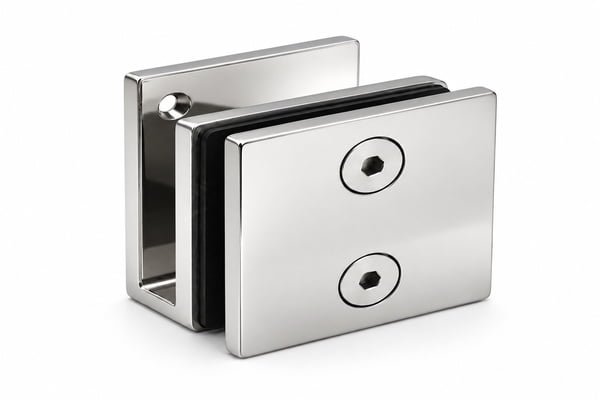
Catalogue illustration: Polished Silver Square Wall-to-Glass Shower Clamp — Finish Concept. Shown as a component reference, not an installation drawing or test result.
Decision: freeze the dimensions at a clear hold point
Use the mockup and fit-check guide to establish what must be demonstrated before manufacture. Record the finished-wall survey, hardware model and template revision together. NIST traceability guidance helps frame a dependable dimensional record.
Where accessibility applies, review the US Access Board bathing-room guide within the relevant jurisdictional context. Clearances and operation must remain compliant after the geometry is resolved; a hardware change should not be considered in isolation.
Submit special interfaces through OEM/ODM development with the survey and proposed arrangement. Mark unresolved dimensions explicitly instead of allowing a provisional sketch to become a production instruction.
Check the rest of the enclosure
Changing the wall-side arrangement can affect fixed-panel support and the top connection. The CRL support hardware range illustrates different component categories, but support selection must follow the actual enclosure design. Check tool access and the assembly sequence as well as the final appearance.
Review the relevant manufacturing capabilities, then agree the inspection scope. The NIST conformity assessment overview distinguishes a dimensional fit check from testing or certification. Keep those descriptions accurate in the handover file.
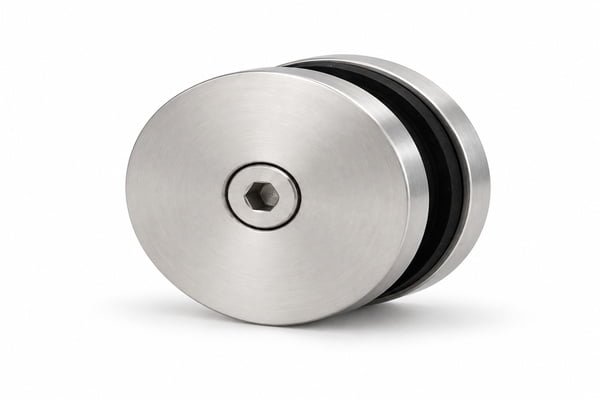
Catalogue illustration: Round Shower Glass Clamp. Shown as a component reference, not an installation drawing or test result.
Installer questions
Can a hinge compensate for any wall lean? No. Use only its documented adjustment or mounting provisions.
Should the survey be taken before tiling? Final ordering dimensions should reflect the finished surfaces required by the selected system; earlier surveys should be labelled provisional.
What should accompany a quotation request? The measured opening, deviation direction, glass layout, chosen hardware and quantities. Send the survey for review before ordering replacement parts. This gives the supplier a specific geometry to assess and reduces repeated guesses on site.