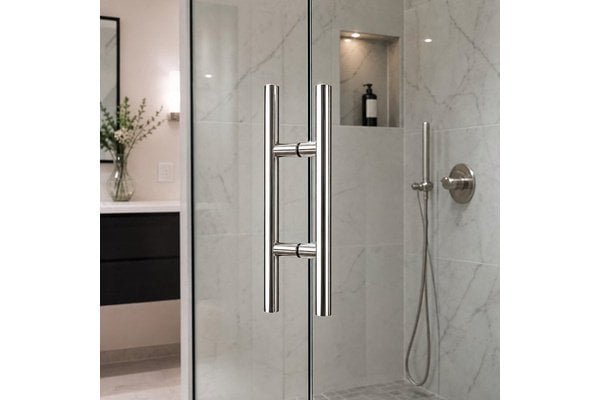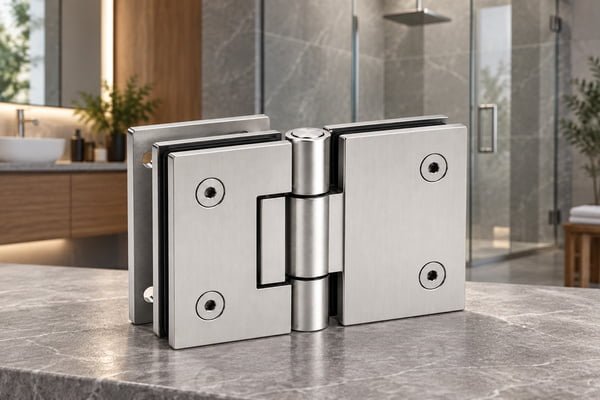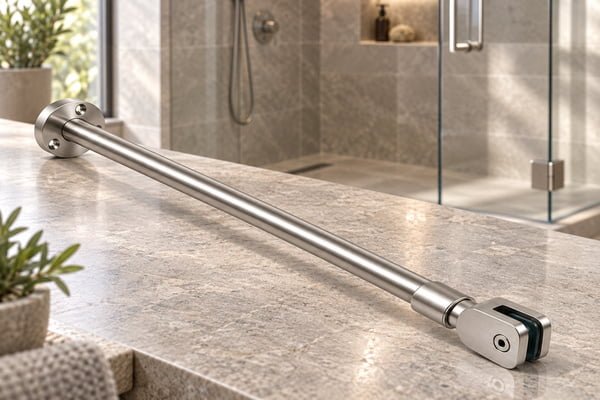
Short answer: Approve a shower-hardware mockup against a written checklist before releasing a bulk order. The mockup should connect the selected hardware, prepared glass, mounting interfaces and drawing revisions. An attractive sample display alone cannot verify fit.
A showroom sample and an approval mockup do different jobs
A showroom sample helps a buyer judge appearance. An approval mockup tests whether the proposed combination meets the agreed project checks. Keep those purposes separate so that a finish approval is not accidentally treated as approval of every dimension and interface.
Choose the relevant items from the shower systems range, then use the support-bar planning guide to identify the connections included in the mockup. Label the components with model and drawing references before assembly.
Prepare a one-page brief
The brief should identify the intended door or screen arrangement, components, prepared-glass references, mounting surfaces and checks to be performed. Define who may approve each item and what remains outside the mockup’s scope.
CRL’s shower-hardware catalogue illustrates the importance of model-specific selection. The glass-cutout control guide helps prevent an obsolete template from entering the sample build.
| Approval item | Review method | Record |
|---|---|---|
| Component identity | Compare labels and drawings | Model and revision |
| Prepared-glass interface | Compare approved template and assembly | Observation and deviation |
| Movement or access | Follow agreed safe procedure | Result and limitation |
| Visible finish | Compare approved reference | Sample identifier |
| Supplied parts | Check the assembly list | Missing or extra items |
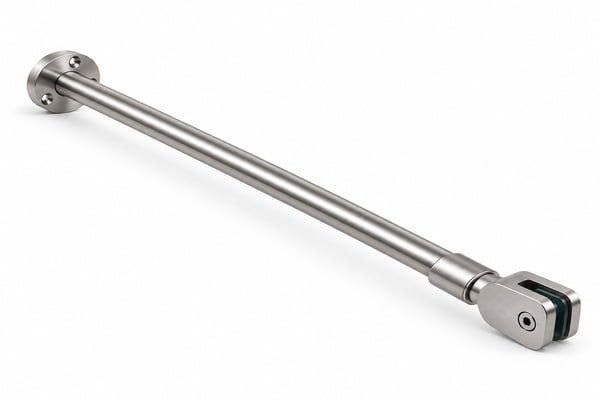
Catalogue illustration: Complete glass-to-wall shower support bar with both end fittings. Shown as a component reference, not an installation drawing or test result.
Hold a structured review, not a casual demonstration
Start with document identity, then review fit, appearance and supplied scope. Use the approved procedure for any movement checks. The hinge-selection guide is useful when the mockup includes a moving panel.
CPSC’s tempered-glass information provides safety background. Prepared glass must follow the approved fabrication route; a mockup problem is not permission for an improvised alteration of tempered panels.
An illustrative record might say: “Mockup M-01, drawing revision B: handle fixing interface accepted; wall condition outside scope.” This is an example of a precise approval statement, not a report of an actual Elim project.
Measure the interface that matters
Avoid filling the sheet with dimensions unrelated to the acceptance question. Record the measurements needed to demonstrate the agreed fit, along with the measuring method and suitable instrument identification. NIST’s traceability guidance helps frame the measurement record.
Where accessibility applies, the U.S. Access Board’s door guidance and bathing-room guidance provide jurisdiction-specific references. The project team must determine applicability; a catalogue mockup does not certify the completed room.
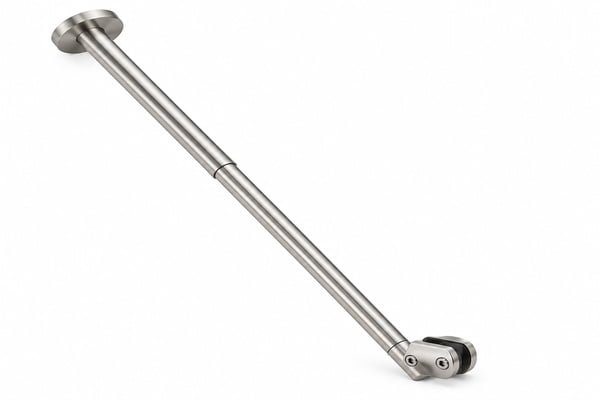
Catalogue illustration: Adjustable Glass-to-Ceiling Shower Support Bar. Shown as a component reference, not an installation drawing or test result.
Separate three approvals
Fit approval identifies the reviewed geometry and interfaces. Finish approval identifies the accepted appearance reference. Bulk-release approval confirms that outstanding issues, quantities and documents are resolved. These may occur on different dates and involve different people.
If a sample changes after review, record the change and repeat the affected checks. Keep the rejected or superseded revision identifiable so that it cannot be mistaken for the current reference.
Care instructions also belong in the review. ASSDA’s cleaning guidance can support discussion of stainless surfaces, while coating or other finish-specific instructions should come from the relevant supplier.
Translate the sample into a purchase order
List the approved component references, drawing revisions, finish reference, supplied accessories and packing requirements. State whether the reviewed sample is retained and how production substitutions will be handled. “Same as sample” is incomplete when several samples or revisions exist.
ISTA’s packaging-procedure overview helps structure a packaging discussion. Trade.gov’s export-document guidance can help align the commercial shipment records. Neither replaces the project’s product and approval schedule.
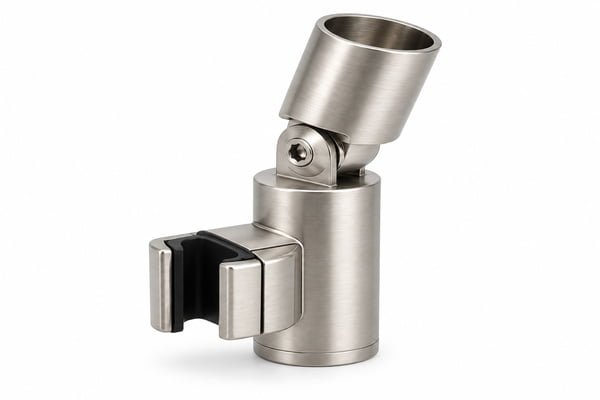
Catalogue illustration: Adjustable Shower Support Bar Bracket. Shown as a component reference, not an installation drawing or test result.
Before releasing the order
Confirm that every open item has an owner and a disposition. Check that the quantity schedule uses the same model references as the approved mockup. Ask the supplier to identify any quotation exception that affects the accepted configuration.
For custom interfaces, send the brief through OEM/ODM review. Compare the requested work and documents with the published capabilities. Then submit the approved schedule and unresolved questions through project enquiries.
The useful output is a traceable release package: what was reviewed, what was accepted, what was excluded and which exact configuration will be supplied. That reduces ambiguity without treating a sample assembly as a substitute for every required design or performance test.