
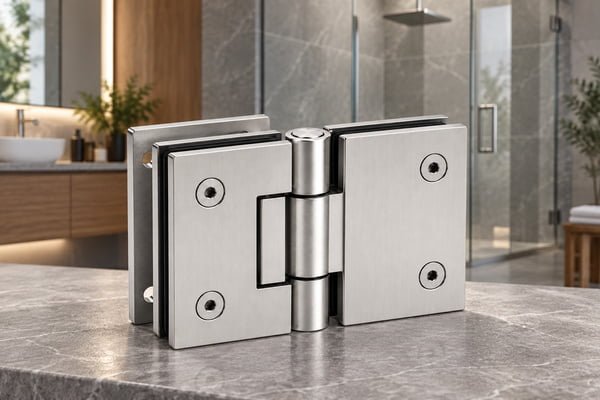
Quick answer — frameless shower hardware kits: Build frameless shower hardware kits around one enclosure drawing and its glass thickness. Match hinges, clamps, liners, handles and seal profiles; then state the count of each item per kit. A common finish name does not establish that components fit the same glass preparation or enclosure geometry.
This packing-bench walkthrough is for private-label brands buying frameless shower hardware. It follows a kit from product definition to dispatch and focuses on information that remains useful when the installer opens the package.
Bench station 1: identify the enclosure
Use the CRL shower-hardware catalogue as an example of the range of components involved. Its model data belong to CRL; a kit using another supplier’s components requires its own coordinated specification.
Elim catalogue comparison: Elim’s heavy-duty hinge and side seal strip represent load-support and gap-sealing functions. Their presence in the catalogue supports an itemized kit enquiry, not a claim that a seal profile is compatible with every hinge arrangement. Catalogue references: heavy-duty shower hinge.
Buying decision: Compare quotations per complete enclosure. Separate optional handles or seals from mandatory kit contents, then multiply each line by the enclosure count. This exposes a low kit price that excludes essential small parts before the buyer compares suppliers.
Bench station 2: verify the moving connection
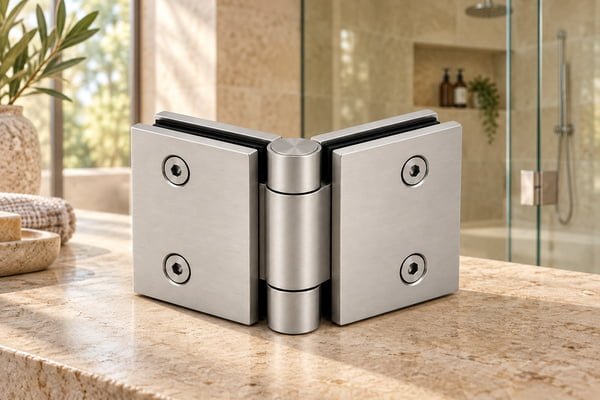
Check hinge identity, quantity and accessories against the approved arrangement. The CRL 90° model page and 135° model page demonstrate why separate geometry references matter. Do not copy their cut-outs or limits into an unrelated kit.
Record the agreed glass preparation and revision. The AGWA glass-standard notice and CPSC tempered-glass alert provide separate specification and safety context. They do not replace the kit’s technical approval.
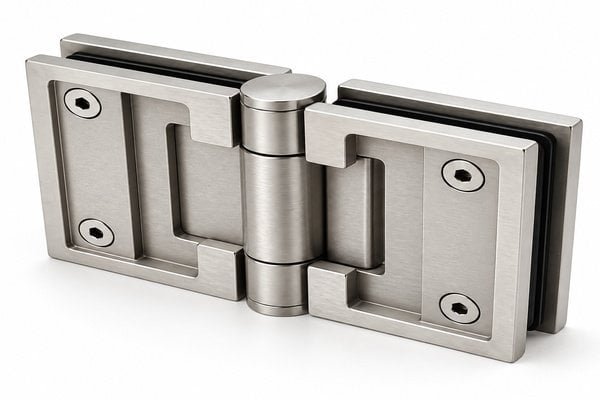
Catalogue reference: Heavy-Duty Shower Door Hinge. Appearance does not establish dimensions or performance.
How should a 10 mm shower kit be separated from a 12 mm kit?
A shared metallic finish does not make the kit interchangeable. CRL’s V1E092 drawing, for example, uses different gasket thicknesses for 10 mm and 12 mm glass. That reference illustrates model-specific matching rather than an Elim kit specification.
| Illustrative kit order | Quantity for 20 enclosures |
|---|---|
| Two hinges per approved enclosure design | 40 hinges |
| One handle per enclosure | 20 handles |
| Three clamps per approved design | 60 clamps |
These counts illustrate purchasing arithmetic, not a structural recommendation. Keep seals and liners against the exact glass thickness and profile. If only ten enclosures use 12 mm glass, split those ten kits into their own packing list instead of mixing all replacement gaskets in one carton.
Source: CRL Vienna gasket drawing. Reference checked 27 September 2026.
Request a matched quotation: Send the enclosure drawing and kit quantity for a component-by-component shower hardware quotation..
Bench station 3: match the seals and fixed-panel parts
Identify the exact seal profile, finished length and intended location. A shower-door side seal needs to match the approved glass interface and gap arrangement. It is not a universal replacement for every transparent strip in the catalogue.
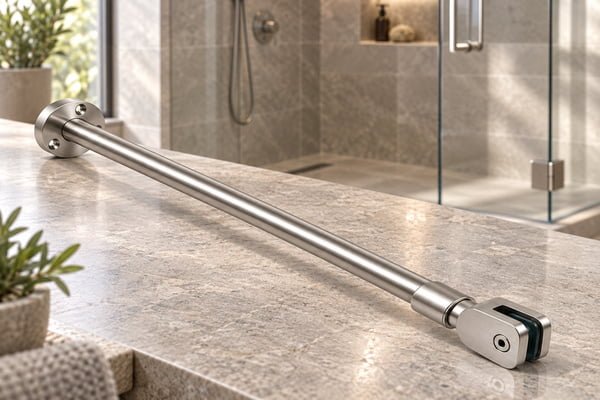
Check fixed-panel clamps, channels or support bars against the same enclosure drawing. State which fasteners, gaskets and protective parts accompany them. Do not let the packing team improvise when the list merely says “accessories included.”
| Kit record | Required identification |
|---|---|
| Hinges | Model, finish and approved quantity |
| Fixed-panel hardware | Location and assembly reference |
| Seals | Profile, length and position |
| Small parts | Named component and quantity |
| Instructions | Enclosure and revision covered |
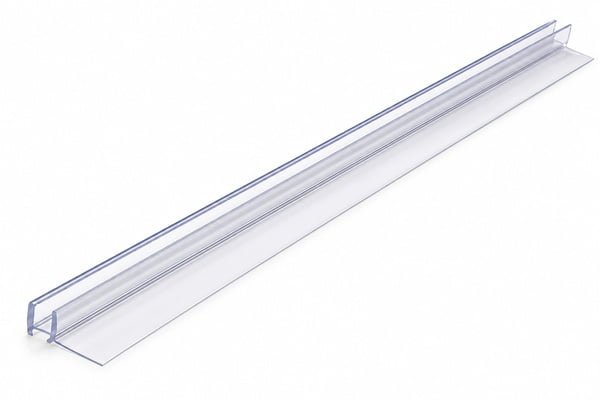
Catalogue reference: Shower Door Side Seal Strip. Appearance does not establish dimensions or performance.
Bench station 4: protect the approved appearance
For stainless surfaces, ASSDA’s cleaning guidance offers background; obtain care instructions specific to the actual coating or material. Include handling information that prevents inappropriate cleaning advice from being copied across different finishes.
Use the wholesale shower-range guide to coordinate the broader assortment. Submit branding, labels and packaging changes through Elim’s OEM review, keeping model identity visible even when private-label packaging replaces the supplier’s exterior label.
Bench station 5: make completeness observable
For a hypothetical 40-kit order containing two approved hinges per kit, the list must account for 80 hinges before separately specified spares. This is an example of quantity reconciliation, not a hinge-count recommendation for every door.
Continue the same project: 90° vs. 135° Glass-to-Glass Shower Hinges: A Distributor’s Selection Guide covers the next related purchasing decision in this system.
Bench station 6: validate shipment and handover
Use ISTA’s procedure overview when selecting package evaluation for the planned distribution route. Align carton descriptions and quantities with the export-document guidance. Keep different enclosure kits identifiable throughout transport and receiving.
Brand-manager FAQ
Can a kit be sold as universal? Only if a defined compatibility range is supported. Otherwise describe the particular enclosure configuration it covers.
Should every spare be hidden in the main quantity? No. Name and count spares separately so the installer can distinguish required components from extras.
Send the enclosure drawing, parts list, finish reference, branding requirements and quantity through the kit quotation form. Request a complete packed sample and a revision-controlled contents list before releasing the bulk order.
Comments (4)