Manage glass clamp gaskets by their specified material, supplier storage instructions and identifiable batch. Do not assign one universal shelf life to every black gasket. Shelf life before installation and service life inside a working clamp are different questions.
This warehouse-focused guide is for distributors stocking glass clamp systems. It explains how to keep replacement kits identifiable and avoid treating old stock as interchangeable simply because the parts still look flexible.
Start with the supplier’s storage basis
Request the compound identification, packaging requirements and any dated inspection or storage limits. Parker’s elastomer-storage guide provides a useful general reference, but its scope must be checked against the actual gasket compound and supplier instructions.
Our EPDM and silicone comparison discusses material selection. The compound, additives and part geometry can matter as well as the polymer family. A catalogue label such as rubber is insufficient for a controlled replacement-stock programme.
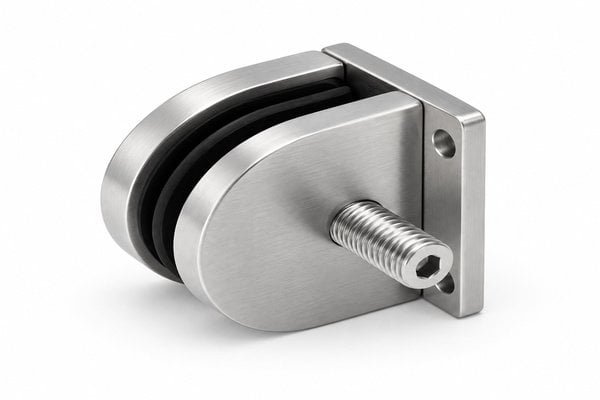
Catalogue illustration: Flanged D-shaped Glass Clamp. Shown as a component reference, not an installation drawing or test result.
Separate three records
| Record | Purpose |
|---|---|
| Manufacture or batch date | Identifies the source lot |
| Storage limit or review date | Follows the supplier’s applicable instructions |
| Installation date | Starts the installed-service record |
Keep original batch labels with repacked kits. If the warehouse divides a bulk bag into smaller quantities, preserve the original identity and the repacking date. A new bag should not silently reset the product’s age.
Use first-expiring-first-out where applicable limits differ. If no expiry is specified, ask for the supplier’s storage and review policy rather than inventing a date. First-in-first-out can help stock rotation, but it does not replace a suitability assessment.
Control storage conditions
Follow the applicable instructions for light, temperature, contamination and deformation. Avoid hanging or compressing parts in a way that changes their intended shape. Keep incompatible chemicals and uncontrolled cleaning products away from stored kits.
Parker’s material handbook is background for compatibility questions, not approval to wash or rejuvenate an unidentified gasket. A part that feels dry or distorted should enter a documented review, not receive an improvised treatment before shipment.
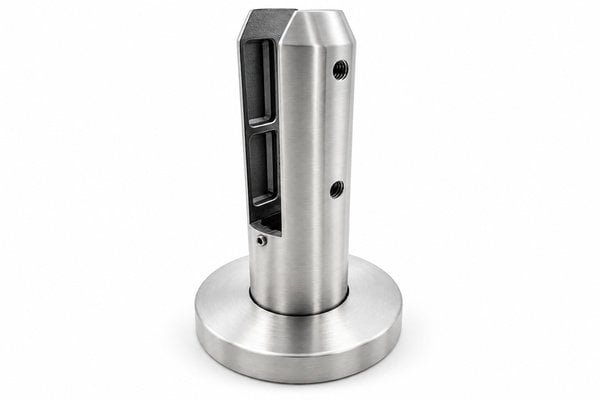
Catalogue illustration: Round-base Glass Spigot with Rectangular Pads. Shown as a component reference, not an installation drawing or test result.
Keep complete kits together
A CRL replacement protection kit illustrates how sleeves and face gaskets can be supplied for a named fitting series. That example belongs to its specified product family. It does not establish compatibility with another clamp.
Our bushing and protection-kit guide explains the importance of maintaining the assembly identity. Store different thickness variants and similar-looking inserts separately. Colour and approximate size should not be the only distinguishing features.
The CPSC glass alert provides safety context, but it does not supply gasket acceptance limits. The selected hardware manufacturer’s requirements determine which protection components belong in the assembly.
Receiving and stock review
Record the supplier, part code, compound reference, batch and quantity. Use traceability principles to keep that information connected to outgoing orders. Inspect packaging condition and any specified part characteristics before placing the stock into normal circulation.
Define an appropriate acceptance-sampling approach and documented sampling plan for relevant checks. A visual inspection can identify some damage or contamination; it cannot establish every material property or predict remaining service life.
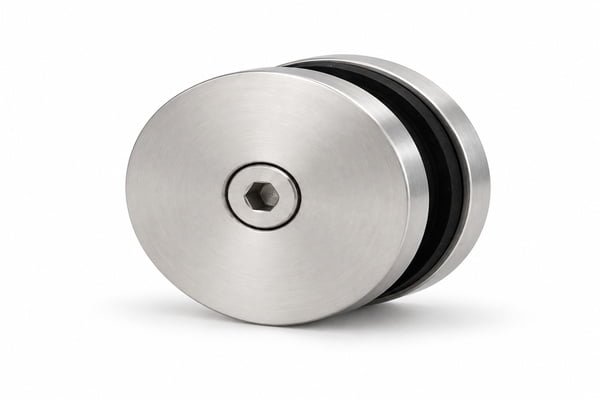
Catalogue illustration: Round Shower Glass Clamp. Shown as a component reference, not an installation drawing or test result.
Label the outgoing kit
Include the fitting code, gasket variant and originating batch on the smaller package. If the customer orders mixed thicknesses, separate them physically and on the packing list. Keep the supplier instructions accessible to the warehouse team so that repacking does not discard the information needed for later enquiries.
A practical stock decision
If a batch has lost its identity, quarantine it while the supplier reviews the available evidence. Do not mix it into a known batch. If an approved substitute is offered, update the kit record and state which fitting revisions it is compatible with.
The glass clamp SKU guide helps organize variants without creating an unmanageable stock list. Include a policy for obsolete parts so that a discontinued metal body does not leave apparently usable but unidentifiable gasket inventory.
Can unused gaskets be sold indefinitely? Not on the basis of appearance alone. Apply the supplier’s instructions and any required review.
Does good storage prove long service life? No. Installed exposure, assembly conditions and the specified material affect a separate question. Conformity-assessment guidance helps limit claims to what the evidence supports.
Discuss custom kits through OEM services, review manufacturing capabilities, and request supply details including batch labels and storage instructions. That creates a replacement programme that purchasing and warehouse teams can actually maintain.