
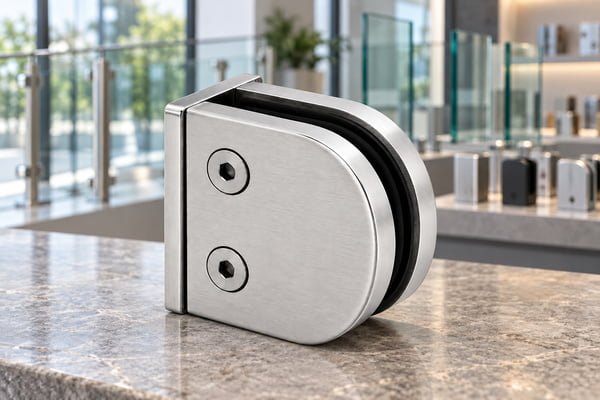
Selection summary: EPDM and silicone describe material families, not finished glass-clamp performance. Compare the actual compound, hardness, gasket thickness, contact shape and compatibility with the assembled clamp. A different rubber can change fit and grip even when its colour and nominal size look identical.
The comparison starts with the job
A gasket separates glass from metal and forms part of the clamp interface. Its job is therefore more specific than simply resisting weather. Buyers reviewing glass balustrade hardware should identify which gasket belongs to each clamp and glass configuration before considering material alternatives.
The Parker O-Ring Handbook provides background on elastomer families and compatibility. It is not a glass-clamp approval document. General material tables are useful for screening candidates, but their values cannot be transferred automatically to a different compound or to an assembled railing.
| Question | EPDM candidate | Silicone candidate |
|---|---|---|
| Exact identity | Request compound reference | Request compound reference |
| Hardness | Compare specified Shore scale and tolerance | Use the same comparison basis |
| Geometry | Check pad thickness and moulded profile | Check the same installed envelope |
| Exposure | Review cleaner and site compatibility | Review cleaner and site compatibility |
| Assembly evidence | Obtain evidence for the complete clamp | Obtain evidence for the complete clamp |
This table intentionally does not declare a universal winner. The better material is the one validated for the complete intended interface.
Parker’s compound tables distinguish EPDM from silicone formulations rather than treating all rubbers alike. They also show why the contacting medium matters: a temperature entry for air is not automatically a water or lubricant rating. Request the actual compound data sheet and compare the relevant medium, not its largest advertised temperature number.
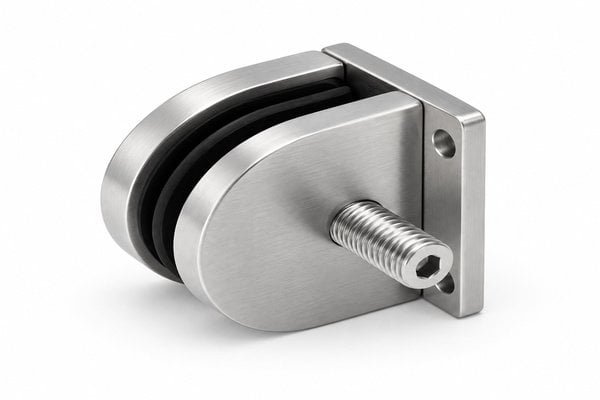
Catalogue illustration: Flanged D-shaped Glass Clamp. Shown as a component reference, not an installation drawing or test result.
Three questions for a sample review
1. Is the pad really the same part?
Compare the D-shaped glass clamp reference with the gasket supplied in the sample. Photograph both contact faces, measure thickness at agreed locations and record moulded lips or locating features. Do not identify a compound by colour alone.
An apparent thickness difference can originate from compression, measurement pressure or profile shape. Specify the method and keep the sample condition consistent. NIST’s measurement-traceability guidance supports documenting how a measurement result was obtained, rather than treating a number without context as proof.
2. Does it fit the specified glass?
Use the glass-clamp procurement checklist to record the glass build-up and pad combination. Ask whether a stated glass range requires different gasket sets. Two catalogue options may share a metal body while using different contact pads.
The CPSC glass safety alert offers relevant background on glass failure. It does not establish that an untested replacement gasket preserves the original assembly’s performance. Avoid approving a substitute solely because the clamp closes around the glass.
3. Will its environment change the comparison?
List the actual cleaner, exposure and maintenance process. ASSDA’s stainless cleaning guidance concerns the metal surface; gasket compatibility still needs separate review. IMOA’s coastal exposure information and ASSDA’s tea-staining guidance help describe the surrounding environment without claiming a rubber compound has been qualified for it.
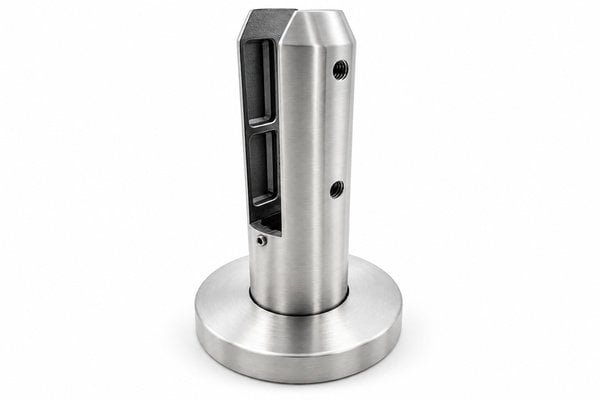
Catalogue illustration: Round-base Glass Spigot with Rectangular Pads. Shown as a component reference, not an installation drawing or test result.
A practical comparison worksheet
Give candidates A and B separate sample identifiers. Photograph them beside their matching clamp, record the declared material, and list the test or assembly evidence supplied. Add columns for thickness, hardness specification, glass configuration, finish contact and approval status.
Use actual measured results only. An empty evidence cell should remain an open action; filling it with a generic catalogue value makes the worksheet look complete while weakening the purchasing decision. The fit and tolerance article explains why the whole stack matters.
Ask for any proposed material change through OEM/ODM review, including the reason for substitution. Consider supply continuity, but do not let availability alone determine a component affecting glass retention. A second source needs its own documented acceptance rather than the original source’s approval label.
Keep the approved combination together
The receiving record should identify metal body, gasket reference and intended glass configuration as one set. Review manufacturing and inspection capabilities to establish which checks the supplier can document. Mark sample bags and production cartons so different pads cannot be mixed at a distributor’s warehouse.
Use ISTA’s procedures when selecting relevant packaging evaluation, and Trade.gov’s export-document guidance when aligning shipment records. These address logistics, not rubber qualification. Keep each type of evidence attached to the requirement it actually supports.

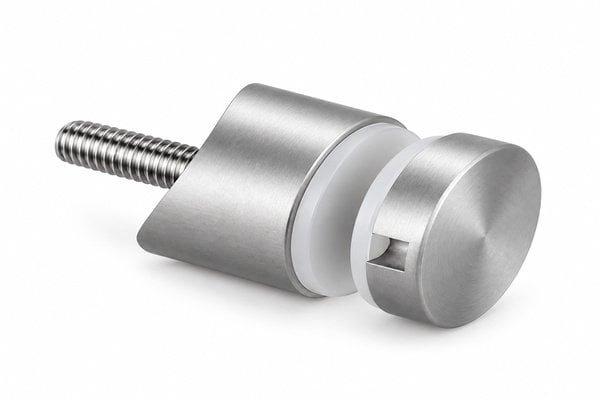
Catalogue illustration: Glass-to-glass connector clamp fixing detail. Shown as a component reference, not an installation drawing or test result.
Questions buyers often ask
Is silicone automatically the premium option? No. Price or a material-family name does not establish better performance in this clamp.
Can I change only the pad thickness? Treat that as an assembly change and obtain approval for the revised combination.
What should accompany an enquiry? Send the clamp reference, glass specification, existing pad dimensions and intended environment. Request a gasket and clamp review before committing a replacement to a bulk order.

Comments (2)