
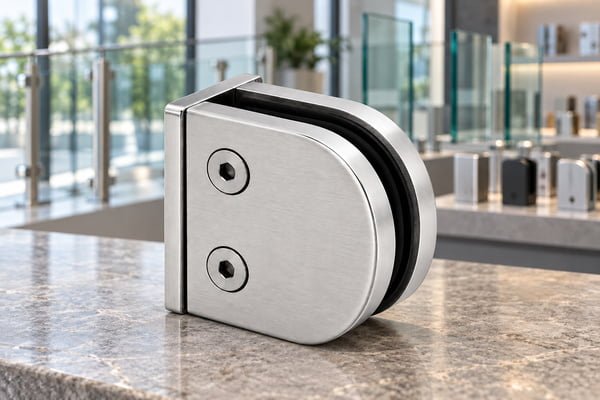
Quick answer — bulk glass clamps: Order bulk glass clamps as matched body-and-inlay combinations for a specified glass build-up and mounting surface. State glass thickness, laminated or monolithic construction, clamp model and complete gasket-set quantity. A body that looks correct can still require a different liner or mounting profile, so price the complete kit.
For B2B buyers comparing glass balustrade components, these checks turn the catalogue shortlist into a complete purchasing specification.
Checkpoint 1: freeze the approved combination
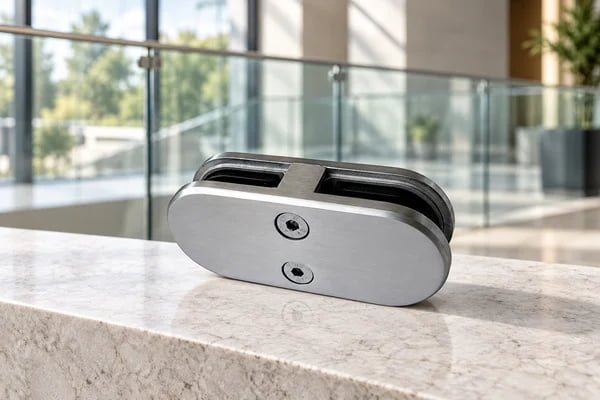
Elim catalogue comparison: Elim’s flanged D-shaped clamp and round-base spigot are separate catalogue forms. They help distinguish a localized clamp interface from a base-supported assembly; one should not replace the other merely because both grip glass. Catalogue references: flanged D-shaped glass clamp.
Buying decision: Split the quotation into body, complete liner set and fasteners. If two suppliers quote different set contents, compare the cost per complete mounting position rather than per metal body. Keep glass thickness in the order description, not only in a sales email.
Do not combine the words “fits glass” with several unverified thicknesses. The AGWA glass-standard notice is useful for understanding Australian specification context, while the CPSC tempered-glass alert explains a separate safety concern. Neither replaces the selected clamp manufacturer’s application evidence.
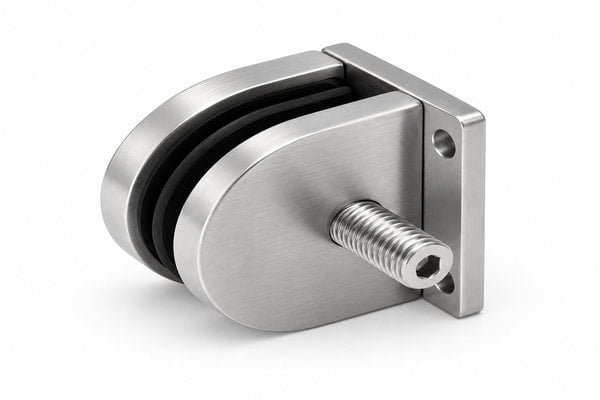
Catalogue reference: Flanged D-shaped Glass Clamp. Appearance does not establish dimensions or performance.
Checkpoint 2: identify every gasket
Do not use a thicker liner as an improvised remedy for the wrong clamp. Have the supplier document the correct combination and installation instructions. Keep spare liners identifiable so the installation crew does not mix similar-looking versions.
| Inspection record | What the team should retain |
|---|---|
| Assembly identity | Model and drawing revision |
| Glass interface | Approved glass description and preparation |
| Gasket identity | Part reference and approved variant |
| Fixing interface | Hole pattern, fastener and substrate reference |
| Acceptance decision | Inspector, date and disposition |
Which glass clamp size and gasket should a buyer order?
Q-railing’s MOD 2200 example lists 6–10 mm laminated or monolithic glass, a 316 stainless body and rubber inlays supplied separately. It shows why ordering a clamp body alone can leave the installation kit incomplete; these values do not specify the pictured Elim clamp.
| RFQ line | Useful entry |
|---|---|
| Glass | Exact thickness and monolithic or laminated construction |
| Body | Model plus flat or curved mounting interface |
| Inlay | Part number matched to that glass and body |
| Quantity example | 200 bodies plus 200 complete inlay sets |
The 200-set line is a purchasing example, not a rule for supports per panel. Ask for the pieces contained in one inlay set so that two pads are not confused with two complete sets.
Source: Q-railing MOD 2200 specification. Reference checked 27 September 2026.
Request a matched quotation: Send the glass build-up and mounting profile for a quotation separating clamp bodies, matching inlays and fasteners..
Checkpoint 3: separate glass fit from structural fixing
The glass may fit while the mounting arrangement remains unsuitable. Confirm the supporting member, hole pattern, fastener specification and access for installation. Hilti’s technical guides are an example of fastening information tied to a defined anchor system, not permission to choose an anchor from a catalogue photograph.
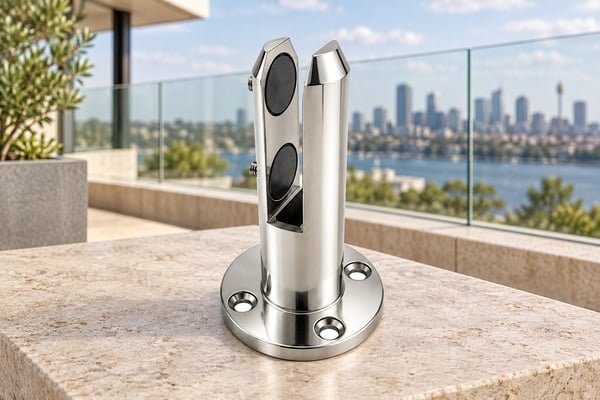
A spigot with rectangular pressure pads illustrates a different glass-contact arrangement within the same catalogue. Keep its pads and fixing information separate from the D-clamp record. Similar finish does not make components interchangeable.
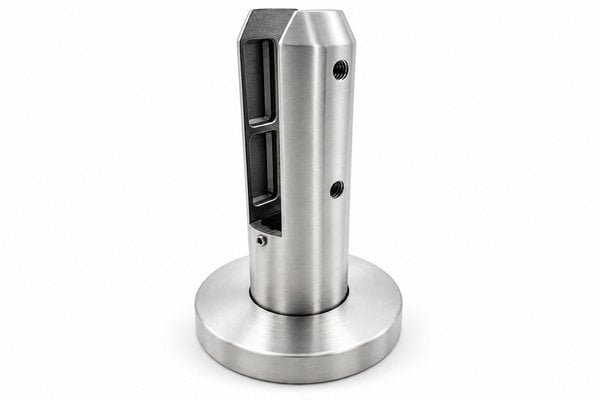
Catalogue reference: Round-base Glass Spigot with Rectangular Pads. Appearance does not establish dimensions or performance.
Checkpoint 4: inspect surfaces consistently
Use ASSDA’s tea-staining discussion and IMOA’s coastal guidance when reviewing environment and finish choices. Keep exposure assumptions in the order record. ASSDA’s cleaning guidance supports a separate maintenance discussion, especially where surfaces are sheltered from rain.
Review the hardware quality evaluation guide with the supplier. Resolve the inspection method before goods are ready to ship, including how disputed appearance or dimensional findings will be assessed.
Checkpoint 5: test identification at the packing bench
For an illustrative 200-set order, if each approved set contains two specified liners, the packing list should account for 400 liners. This is arithmetic for that hypothetical bill of materials, not a statement that every clamp uses two liners. List separately approved spares rather than hiding them inside a nominal set quantity.
Use the ISTA procedure overview for relevant package-testing options. Align carton identification with the commercial packing list using export-document guidance. Quantity and model descriptions should remain consistent across purchasing and shipping records.
Release, hold or revise?
Release the batch only against the agreed inspection criteria. Hold unidentified gaskets, mixed revisions or unexplained substitutions for investigation. A delivery deadline does not resolve an unknown interface.
Continue the same project: Glass Spigots vs. Standoffs: A Procurement Guide for Railing Projects covers the next related purchasing decision in this system. Related scope: Elim’s OEM review process.
Frequently asked questions
Can one gasket serve several glass thicknesses? Only where the identified assembly is specified and supported for that range. Do not infer it from flexibility alone.
Should the warehouse install every clamp? Agree a proportionate inspection and sampling plan with the responsible technical team; this article does not set a universal sample quantity.
Send the model list, assembly drawings and receiving requirements through the bulk-order enquiry form to build a traceable approval package.
Comments (4)