Quick answer — slotted glass handrails: Specify slotted glass handrails as connected runs with a defined tube section, wall thickness, glass liner, corner geometry and end detail. Distinguish tube cut length from assembled run length. Square and round profiles need their own matching connectors; a shared finish does not make them one compatible system.
For B2B buyers comparing glass balustrade hardware, these checks turn the catalogue shortlist into a complete purchasing specification.
Draw the route before choosing the profile
Mark each straight run, corner, termination and change in level. Give every run an identifier, such as R01 or R02, and dimension between stated reference points. Distinguish the finished overall length from the cut length of each supplied tube.
For projects with accessibility requirements, consult the US Access Board handrail guidance within its jurisdiction. Glass selection requires its own review: the AGWA notice on AS 1288 is Australian specification context, while the CPSC tempered-glass alert addresses a different safety issue. Neither document establishes an Elim assembly rating.
Detail one: the slot and glass interface
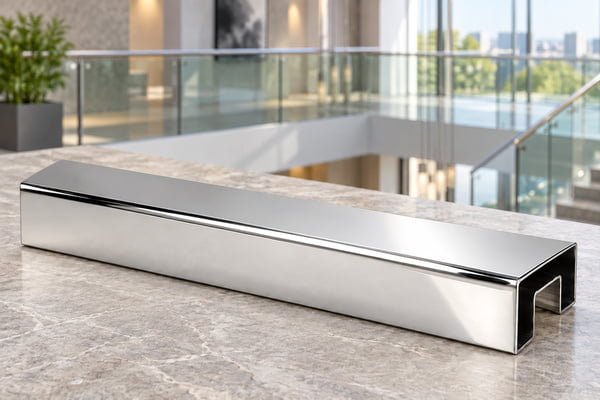
Elim catalogue comparison: The Elim examples deliberately include a square slotted tube, a round-profile corner and a glass-mounted bracket. This catalogue comparison exposes different interfaces; it does not present those three entries as a ready-to-install kit. Catalogue references: square slotted glass handrail tube.
Buying decision: Reject profile mismatches before optimizing stock lengths. Once the section is fixed, derive tube cuts from the assembled drawing and connector insertion details. Buying standard lengths first can create avoidable offcuts or force an unsuitable corner connection.
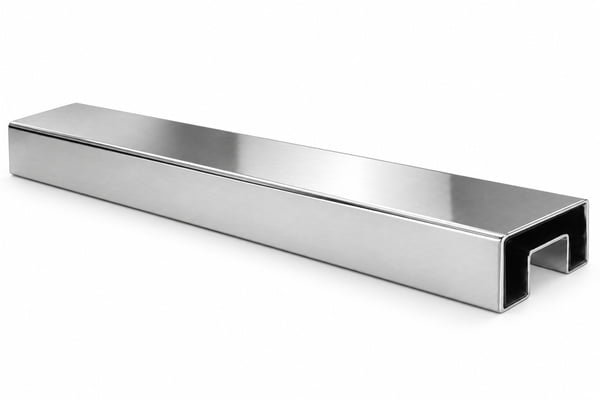
Catalogue reference: Reflective Silver Square Slotted Glass Handrail Tube.
Which dimensions should a slotted handrail enquiry contain?
Specify tube outside size, wall thickness and slot geometry. Highco’s SL100242 connector example identifies a 42.4 × 1.5 mm slotted tube. It is a useful published interface example, not proof that an Elim square tube fits that round connector.
| Parameter | Example of a precise request |
|---|---|
| Tube | Round, 42.4 mm OD × 1.5 mm wall |
| Run | 2400 mm finished length, stated as a project target |
| Corner | Required plan angle and matching section |
| Glass interface | Actual glass thickness plus compatible liner |
The illustrative tube has a nominal 39.4 mm internal diameter before tolerances and seam effects. Specify whether 2400 mm describes a cut tube or the assembled run: connector insertion and end details can make those different purchasing lengths.
Source: Highco slotted connector dimensions. Reference checked 27 September 2026.
Request a matched quotation: Send tube section, glass thickness and finished run dimensions for a matched tube, corner and end-detail schedule..
Detail two: the corner belongs to a profile family
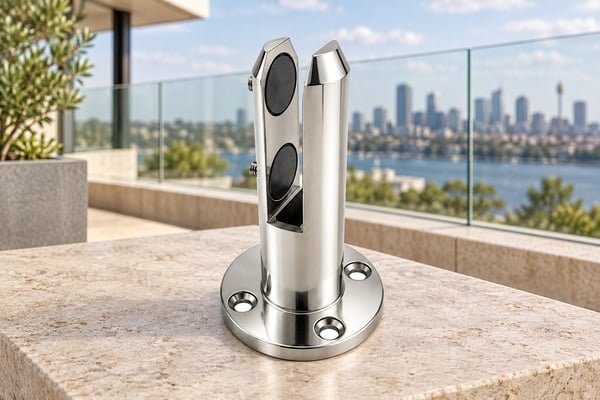
The round slotted handrail corner connector illustrates a different interface family. It is not presented as a matching connector for the square tube above. That distinction is exactly why procurement needs both the outside profile and the mating section.
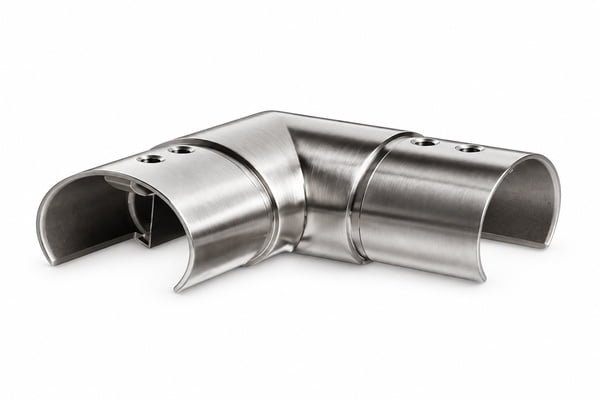
Catalogue reference: Horizontal Corner Connector for Round Slotted Handrail.
Detail three: supports and terminations
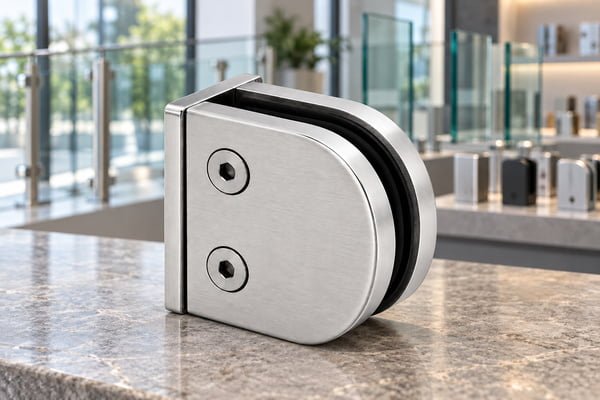
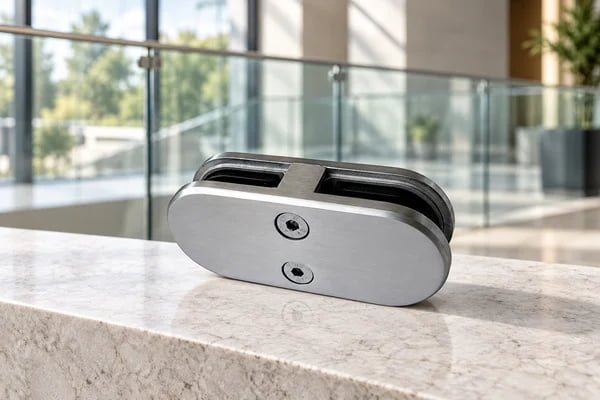
A glass-mounted handrail bracket adds another interface: the rail connection, arm geometry and glass fixing must all be identified. Verify whether its saddle or connector matches the selected rail rather than assuming that all handrail accessories share a common fit.
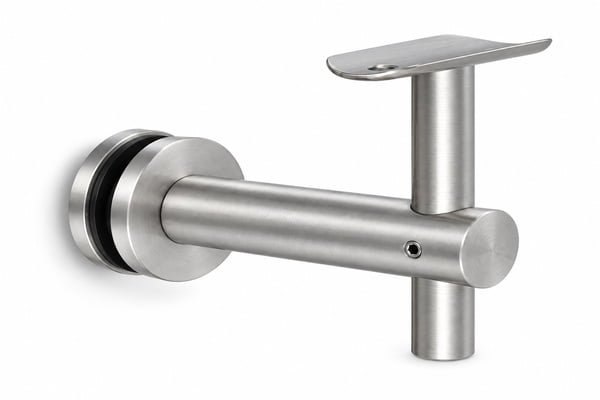
Catalogue reference: Matte Silver Straight-arm Glass-mounted Handrail Bracket.
Show end caps, wall returns and exposed ends on the run drawing. Where the assembly connects to a building substrate, use the selected fastening documentation; Hilti’s technical guides illustrate how that information is organized by system.
A worked purchasing record
The following fictional schedule demonstrates document control, not a recommended installation design. Dimensions and connector quantities must come from the approved project drawing.
| Run record | Example entry |
|---|---|
| Run identifier | R01, level corridor |
| Profile reference | Square slotted profile S, drawing revision B |
| Corner decision | Round connector excluded; square joint detail required |
| End treatment | Two ends individually marked on drawing |
| Approval hold | Cut lengths pending accepted corner detail |
Use the earlier railing connection comparison to coordinate the underlying glass-support decisions. It complements the run schedule rather than replacing it.
Approve finish and delivery together
Specify the visible surface, brushing direction where relevant, and sample reference. ASSDA’s tea-staining guidance and IMOA’s coastal discussion help frame exposure questions. Finish colour alone does not identify material grade or establish suitability for the site.
Agree care information using the actual supplied finish; ASSDA’s cleaning guidance is useful background for stainless surfaces. Long components also need protection at ends and corners. Select an appropriate shipment evaluation with reference to ISTA’s procedure overview.
Continue the same project: Ordering Glass Clamps in Bulk: Glass Thickness, Gaskets and Mounting Compatibility covers the next related purchasing decision in this system.
Fabricator questions
Can square tubes and round corner connectors be mixed? Only through a specifically designed transition; the catalogue examples are not an approved pair.
Which length should appear on the order? Identify both the finished run requirement and the approved component cut schedule.
Send the route drawing, sections, corner details, finish reference and quantities through the project enquiry form. Request a marked-up assembly schedule before releasing the order.