
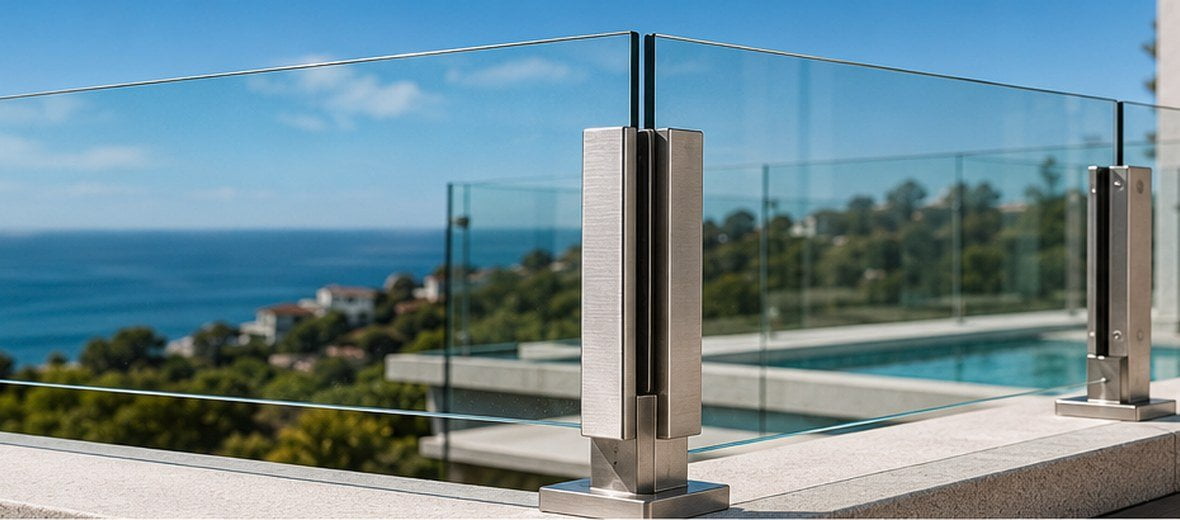
Glass balustrade hardware can look excellent in one sample, but bulk orders can still bring risk. A bright surface may hide unclear material, loose dimensions, missing screws, or weak packaging. I usually tell buyers to treat quality as a procurement risk check, not only a visual judgment.
To evaluate glass balustrade hardware before a bulk order, I check material proof, drawings, dimensions, surface finish, machining quality, accessory completeness, packaging, and sample-to-mass-production consistency. I also ask the supplier for environment suitability advice, pre-shipment QC records, and clear installation-related information before confirming production.
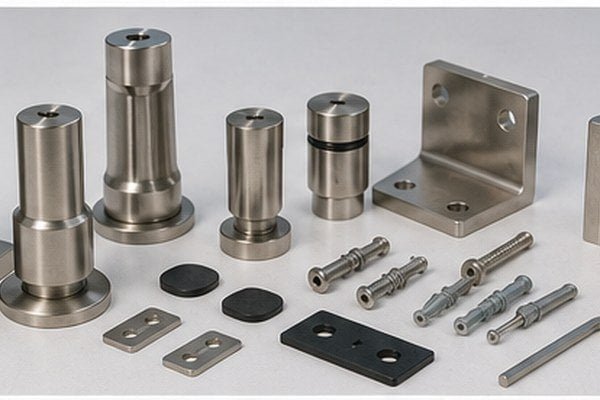
A good sample is only the starting point. Before I feel comfortable with a bulk order, I want to know whether the supplier can repeat that quality at scale and support the buyer when small installation problems appear.
What Does Glass Balustrade Hardware Quality Really Mean?
Quality problems often start when buyers focus only on surface brightness. I have seen inquiries where the buyer asked, “Is it 304 stainless steel and mirror polish?” That question matters, but it is not enough.
Glass balustrade hardware quality means the product is verifiable, consistent, installable, and serviceable. Buyers should check not only material grade, but also dimensions, finishing, machining, accessories, packaging, and supplier control before shipment.
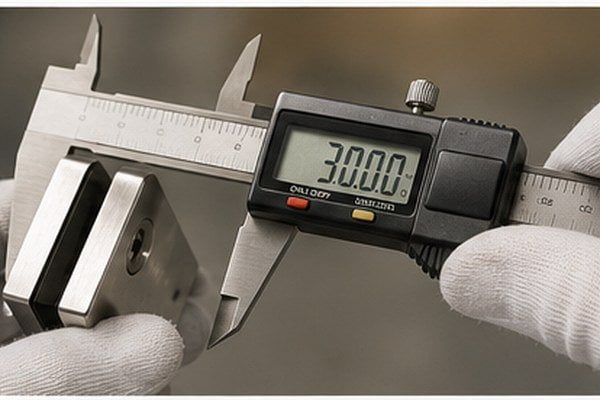
Key checks before approval
I suggest buyers review these points before placing a bulk order:
| Check item | Why it matters |
|---|---|
| Material statement | Helps confirm what the supplier claims |
| Drawing and dimensions | Reduces installation mismatch |
| Surface treatment | Affects appearance and corrosion complaints |
| Machining details | Impacts fit, edges, holes, and assembly |
| Accessories | Prevents missing screws, gaskets, or covers |
| Packaging method | Reduces scratches and transit damage |
| QC records | Shows whether inspection is controlled |
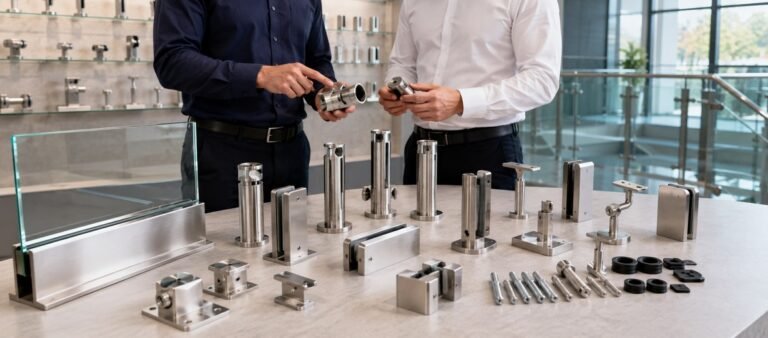
For glass clamps and fixing clips, I pay close attention to rubber pads, screw fit, edge smoothness, hole position, and clamping surface. For posts, bases, and brackets, I focus more on wall thickness, welding, base flatness, hole alignment, cover fit, and surface consistency.
I do not treat one stainless steel grade as a magic answer. For example, indoor, coastal, poolside, and high-humidity environments may need different material and finishing discussions. Buyers should ask the supplier for suitability advice, then verify critical decisions with a qualified professional when safety or local building rules are involved.
For complementary guidance, see Custom Glass Balustrade Hardware from Drawings: OEM Manufacturing Process Explained.
What Should Buyers Request Before Ordering Glass Balustrade Hardware?
Many problems happen because the buyer confirms price too early. I have learned that a clear pre-order document list saves time later, especially for importers and distributors selling to installers.
Before ordering glass balustrade hardware, buyers should request material information, product drawings, dimensions, surface finish details, accessory lists, packaging photos, sample confirmation records, and planned pre-shipment QC reports. If certificates are mentioned, buyers should ask for copies and verify them.

My practical request list
When I communicate with suppliers, I usually ask for:
Material statement
The supplier should state the stainless steel grade or other material clearly.Technical drawing or dimension sheet
I want hole size, glass thickness range, base dimensions, screw size, and installation-related measurements.Surface treatment details
Buyers should confirm satin, mirror, brushed, powder-coated, or other finishes.Accessory list
This should include screws, gaskets, rubber pads, covers, anchors, or tools if included.Packaging method
I prefer inner protection, separated parts, strong cartons, and clear carton marks.Sample-to-bulk confirmation
The supplier should confirm that mass production will follow the approved sample.Pre-shipment QC plan
Buyers can request photos or records showing quantity, appearance, dimensions, accessories, and packing checks.
This process does not replace engineering review. It simply helps buyers reduce common bulk-order risk before money, time, and reputation are exposed.
For complementary guidance, see 304 vs 316 Stainless Steel Glass Balustrade Hardware: What B2B Buyers Should Know.
How Can Buyers Compare Glass Balustrade Hardware Suppliers?
A cheap quotation can be tempting. However, I have seen buyers spend more time solving small after-sales issues than they saved in purchase cost. Supplier evaluation should include communication quality, not only unit price.
Buyers should compare glass balustrade hardware suppliers by checking quotation clarity, sample consistency, document support, customization ability, packaging control, QC communication, and after-sales response. A reliable supplier should answer practical questions before the order, not only after problems appear.

Supplier comparison table
| Supplier factor | What I look for |
|---|---|
| Quotation detail | Model, material, finish, accessories, MOQ, packing |
| Sample quality | Same as quoted specification |
| Communication | Clear answers, not vague promises |
| Production control | Ability to repeat approved sample |
| Export packing | Suitable for long-distance transport |
| QC support | Inspection photos or report before shipment |
| Service attitude | Fast response when questions appear |
For wholesalers and building-material distributors, consistency matters more than a beautiful single sample. If one carton has missing accessories, the installer may stop work. If surface color varies between batches, the distributor may receive complaints. If drawings are unclear, the buyer may order the wrong model.
So I recommend asking one simple question:
“Can this supplier help me avoid installation complaints after the goods arrive?”
If the answer is uncertain, I slow down and ask for more proof.
For complementary guidance, see How to Choose a Glass Balustrade Hardware Supplier for Wholesale Projects.
Frequently Asked Questions
Is 304 stainless steel enough for glass balustrade hardware?
Not always. 304 stainless steel may be suitable for many indoor or general environments, but buyers should consider humidity, coastal exposure, chemicals, and local requirements. Material choice should be confirmed with the supplier and reviewed by a qualified professional when needed.
Should I approve a bulk order based on one sample?
I would not rely only on one sample. A sample helps check appearance and basic fit, but buyers should also confirm drawings, materials, accessories, packaging, and mass-production consistency before ordering.
What is the biggest overlooked issue?
Accessory completeness is often overlooked. Missing screws, rubber pads, gaskets, or covers can create installation delays even when the main hardware looks good.
Do certificates prove product quality?
Certificates can be useful, but buyers should request copies and verify them. A certificate alone does not replace product inspection, correct dimensions, suitable material selection, or proper installation review.
Bulk quality comparison: a practical decision record
Use this proposed worksheet to record a purchasing decision. It is an editorial checklist, not a completed project inspection or test result.
| Review step | What to record |
|---|---|
| Define the requirement | Choose measurable drawing features and an agreed visual finish sample for the inspection record. |
| Resolve the interface | Record sampling scope, measurement results and disposition of deviations instead of accepting an unqualified quality statement. |
Worked example: Observed sample proportion
Illustrative assumptions only — not an actual order, measured result, price offer or engineering approval.
If 2 inspected pieces out of 50 show the defined defect, the observed sample proportion is 2/50 = 4%.
Decision: This does not prove the entire batch has a 4% defect rate or determine acceptance; use the agreed inspection plan.
Reference and applicability
worldstainless marine applications: Material-selection background; glass compatibility and structural capacity require separate verification. Project-specific technical or regulatory requirements should be checked by the responsible qualified professional.
Editorial update: 25 September 2026. This update checks article structure, topic scope and the references identified above. It does not claim independent engineering certification.
Related guides and product references
For the next stage of glass balustrade hardware selection, use these guides alongside the product catalogue. Catalogue references do not replace project-specific drawings or engineering approval.
- Glass Balustrade Hardware Buying Guide for Distributors and Importers
- The Complete Guide to Glass Balustrade Hardware for B2B Buyers
- Glass balustrade hardware product range
- Flanged D-shaped Glass Clamp — catalogue reference
Conclusion
Glass balustrade hardware quality is not just about a shiny sample. I evaluate it through material clarity, dimensions, finish, machining, accessories, packaging, QC records, and supplier consistency. Before placing a bulk order, buyers should request clear documents and verify application-specific requirements. If you are sourcing hardware in volume, I can help you build a practical pre-order checklist and compare supplier responses before production starts.


Comments (3)