

Quick answer
Build a glass-balustrade purchase specification around the intended system, glass interface, mounting arrangement, material, finish, accessory list and packing. Keep the catalogue selection, sample approval and project-specific technical approval as distinct records.
Begin a glass-balustrade enquiry with specification control: identify the fittings, supporting system, glass interface and finish before comparing offers. Photographs can assist identification but do not supply the complete specification.
For distributors and importers, glass balustrade hardware should be purchased as a complete system decision, not as isolated cheap parts. Buyers should confirm railing type, glass thickness, fixing method, material, finish, dimensions, packaging, and export delivery details before samples, quotations, or bulk orders.

The key is not to collect ten random prices. The key is to reduce risk before money is spent. When I handle export quotations, the best projects usually begin with clear drawings, photos, glass data, installation scenarios, and packaging expectations.
How Should Importers Define Glass Balustrade Hardware Before Quotation?
Many quotation problems begin with missing details. A buyer may send only one product photo and ask for “same item.” That sounds easy, but it often hides major differences in system design, fixing method, and accessories.
Importers should define glass balustrade hardware by system type, glass thickness, fixing method, installation location, material grade, surface finish, and matching accessories before requesting a quote. This reduces wrong samples, unclear pricing, and repeated revisions.
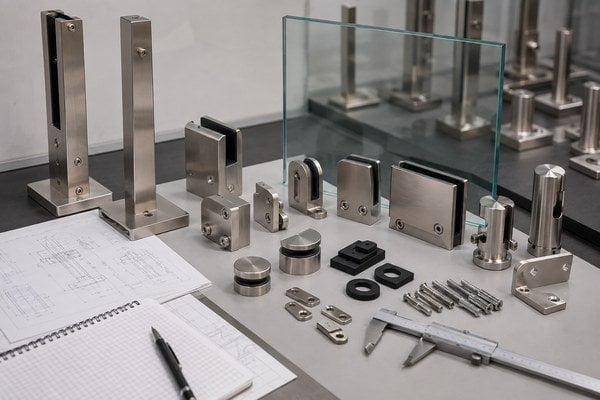
Start with the system, not the unit price
Before I quote, I usually ask buyers these questions:
- Is the railing frameless, semi-frameless, or post-supported?
- What is the glass thickness, such as 10 mm, 12 mm, or 15 mm?
- Is the hardware for indoor, balcony, stair, pool, or commercial use?
- Does the project need posts, clamps, brackets, handrail connectors, end caps, or base shoes?
- What surface is required: brushed, mirror polished, matte black, or custom finish?
- Are drawings, samples, or local installation requirements available?
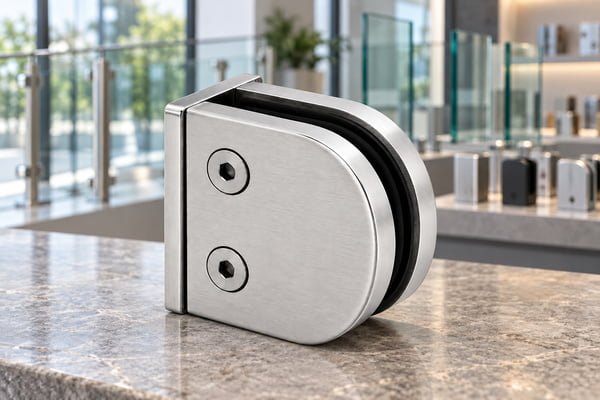
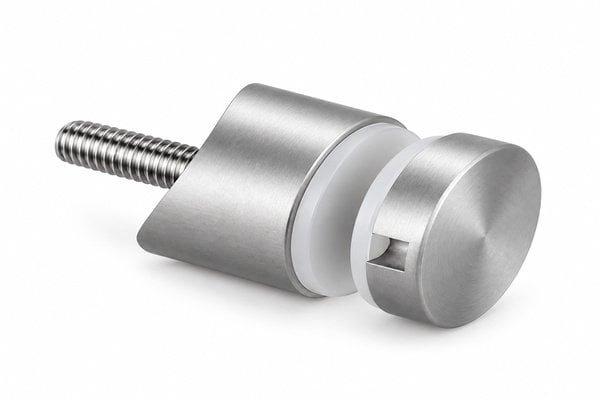
A product photo rarely answers all of this. Two clamps may look almost identical, but their groove width, screw position, rubber gasket, casting tolerance, and glass fit can be different.
| Check Point | Why It Matters |
|---|---|
| Glass thickness | Prevents poor fit or unsafe matching |
| Fixing method | Affects bracket, post, and screw selection |
| Material | Influences corrosion resistance and market positioning |
| Finish | Affects batch consistency and customer complaints |
| Accessories | Prevents incomplete system supply |
This article is not engineering or legal compliance advice. For load, structure, and local building-code questions, importers should confirm with qualified engineers, installers, or local authorities.
For complementary guidance, see How to Evaluate Glass Balustrade Hardware Quality Before Placing a Bulk Order.
Why Is Similar-Looking Glass Balustrade Hardware Not Always Interchangeable?
A common mistake is assuming that similar-looking products can replace each other. That may work for simple decorative items, but glass railing components need tighter checking.
Similar-looking glass balustrade hardware is not automatically interchangeable because material, size tolerance, finish, gasket design, screw type, and accessory compatibility can differ. Distributors should verify samples and technical details before bulk purchasing.
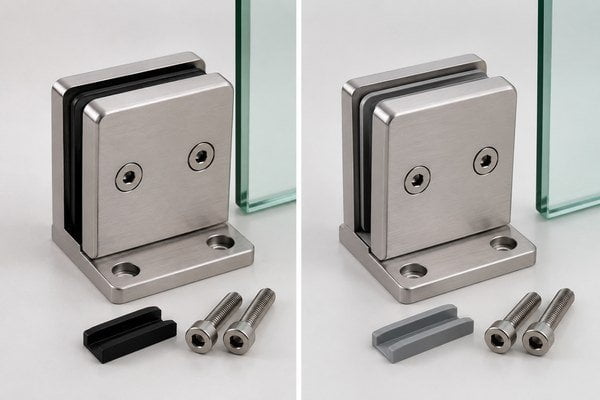
Small differences can create big resale issues
Illustrative enquiry scenario, not a recorded customer case: a clamp photograph and glass thickness omit the post geometry and gasket specification. Requesting those details may change the proposed configuration before a quotation can be treated as complete.
Distributors should check:
Material statement
Stainless steel grades, zinc alloy, aluminum, or other materials should be clearly confirmed. If certificates or test reports are mentioned, buyers should request documents and verify whether they apply to the actual product and batch.Dimensional tolerance
A few millimeters can affect installation. This is especially true for clamps, brackets, and handrail connectors.Surface finish consistency
Brushed and polished finishes must look consistent across cartons and batches. Mixed visual quality can cause retail or project complaints.Accessory matching
Screws, rubber pads, covers, end caps, and connectors should be checked together. A missing small part can delay resale or installation.
My practical rule is simple: if the product belongs to a system, quote and sample it as part of that system.
For complementary guidance, see Custom Glass Balustrade Hardware from Drawings: OEM Manufacturing Process Explained.
What Export Details Matter When Buying Glass Balustrade Hardware?
For importers, delivery details are part of product quality. Good hardware can still create problems if packaging, labeling, moisture protection, or carton strength is ignored.
When buying glass balustrade hardware, importers should confirm sample approval, packing method, anti-scratch protection, carton labels, moisture control, spare parts, and batch consistency before placing bulk orders. These details reduce damage, confusion, and after-sales disputes.
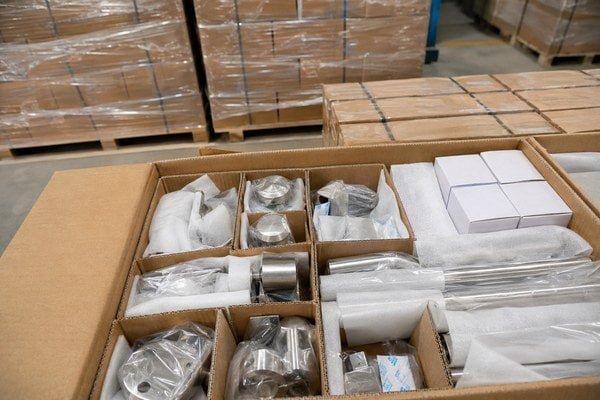
Packaging is not a small issue
Hardware is heavy, hard, and easy to scratch. Export cartons may pass through long transport, warehouse handling, and customs inspection. I prefer to confirm packaging before mass production, not after damage appears.
Important checks include:
- Individual bags or foam protection for polished surfaces
- Inner boxes for small fittings
- Strong outer cartons with clear weight limits
- Palletizing when needed
- Moisture protection for sea shipment
- Customer labels, SKU labels, or barcode labels
- Clear separation of left/right or model-specific parts
Sample approval should also include packaging when possible. A sample without export packing only proves the product shape. It does not prove that the order can arrive in sellable condition.
For distributors, batch consistency is also critical. If the first shipment sells well, the second shipment must match the same finish, size, packaging, and accessory list. That is why written specifications, confirmed samples, and pre-shipment inspection records are useful.
For complementary guidance, see 304 vs 316 Stainless Steel Glass Balustrade Hardware: What B2B Buyers Should Know.
Frequently Asked Questions
What is the first thing to confirm before buying glass balustrade hardware?
The first thing is the railing system type. Buyers should confirm whether the system is frameless, post-supported, or uses clamps, brackets, handrails, or base shoes. Price comparison should come after system confirmation.
Can I buy based only on a product photo?
A photo helps, but it is usually not enough. Buyers should also provide glass thickness, dimensions, material request, finish, fixing method, usage scenario, and accessory requirements. This avoids wrong quotes and samples.
Should importers ask for certificates?
Importers can ask for certificates, test reports, or material documents when relevant. However, they should verify whether those documents apply to the exact product, material, batch, and destination market requirements.
Why should packaging be confirmed before bulk orders?
Packaging affects arrival condition. Scratches, missing parts, weak cartons, and unclear labels can create after-sales problems. Importers should confirm protection, labels, carton strength, and moisture control before mass production.
Distributor buying record: a practical decision record
Use this proposed worksheet to record a purchasing decision. It is an editorial checklist, not a completed project inspection or test result.
| Review step | What to record |
|---|---|
| Define the requirement | Group the order by installation arrangement and the required glass interfaces. |
| Resolve the interface | Reconcile item codes, finish references, accessories and replacement identification before approving samples and the purchase order. |
Worked example: Order allocation
Illustrative assumptions only — not an actual order, measured result, price offer or engineering approval.
An order allocates 80 parts to model A, 70 to B and 50 to C: 200 parts total. A total of 200 in the packing list is insufficient unless the model-level quantities also match.
Decision: Keep finish and revision identifiers alongside the model counts.
Reference and applicability
worldstainless marine applications: Material-selection background; glass compatibility and structural capacity require separate verification. Project-specific technical or regulatory requirements should be checked by the responsible qualified professional.
Editorial update: 25 September 2026. This update checks article structure, topic scope and the references identified above. It does not claim independent engineering certification.
Related guides and product references
For the next stage of glass balustrade hardware selection, use these guides alongside the product catalogue. Catalogue references do not replace project-specific drawings or engineering approval.
- How to Choose a Glass Balustrade Hardware Supplier for Wholesale Projects
- The Complete Guide to Glass Balustrade Hardware for B2B Buyers
- Glass balustrade hardware product range
- Flanged D-shaped Glass Clamp — catalogue reference
Conclusion
Glass balustrade hardware buying is really a risk-control process. Distributors and importers should start with the system, confirm specifications clearly, check sample details, and treat packaging as part of product quality. If you are preparing a quotation or bulk order, send drawings, photos, glass data, and target packaging needs first. I can help review the details before sampling and pricing.
Comments (4)