
Quick answer
Compare 304 and 316 glass-balustrade hardware using the actual exposure, cleaning access, specified finish and project requirements. Grade selection is separate from structural and glass-interface approval. A general coastal preference cannot establish suitability for every component.
304 vs 316 stainless steel glass balustrade hardware is a common sourcing question, but the wrong answer can create price pressure, visible corrosion complaints, or unclear quotations. I usually tell buyers not to ask, “Which one is better?” first. A better question is, “Where will it be used, and what risk must we control?”
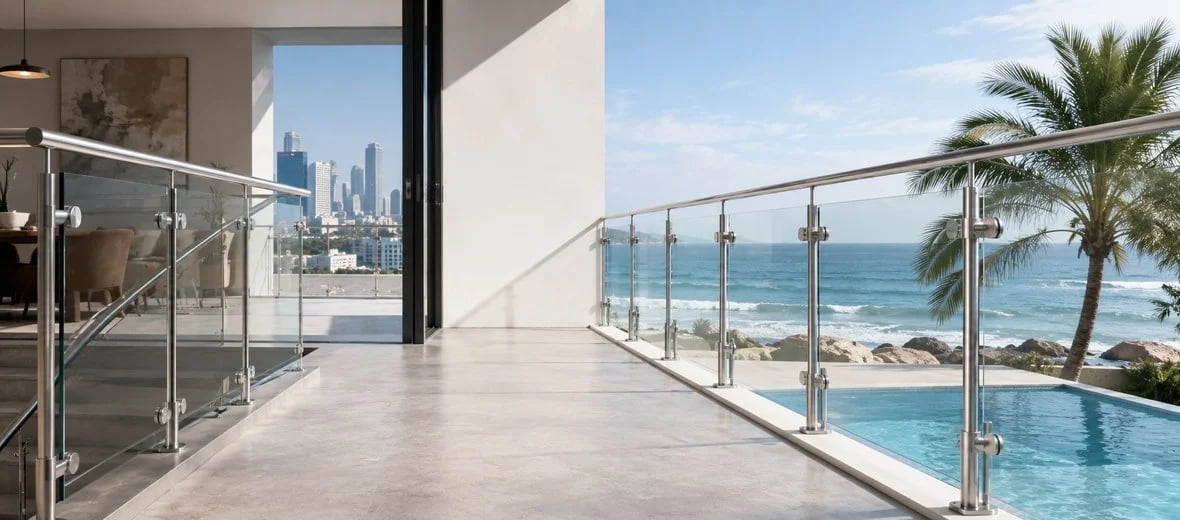
304 is often suitable for normal indoor or low-corrosion environments, while 316 is usually more suitable for coastal, seaside, island, poolside, or high-salt applications. B2B buyers should choose based on usage environment, budget, resale positioning, customer expectations, and after-sales risk—not only on unit price.
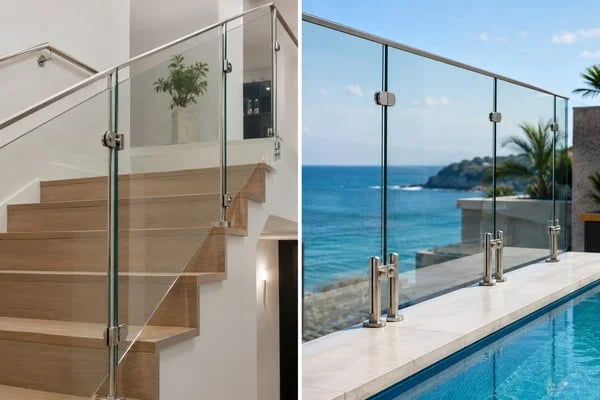
The decision is not only technical. It affects your quotation, product positioning, packaging claim, customer complaint risk, and supplier responsibility. Below is the practical way I discuss this with importers, wholesalers, contractors, and private-label buyers.
How Should Buyers Choose 304 vs 316 Stainless Steel Glass Balustrade Hardware?
Many buyers compare prices first. That is understandable, but it can be risky. If the hardware is used in the wrong environment, the cheaper option may create expensive complaints later.
In simple terms, 304 is a cost-effective choice for many ordinary indoor projects, while 316 deserves serious consideration for outdoor coastal or high-salt environments. Neither grade is automatically “good” or “bad.” The right choice depends on where the glass balustrade hardware will be installed.
Practical sourcing logic
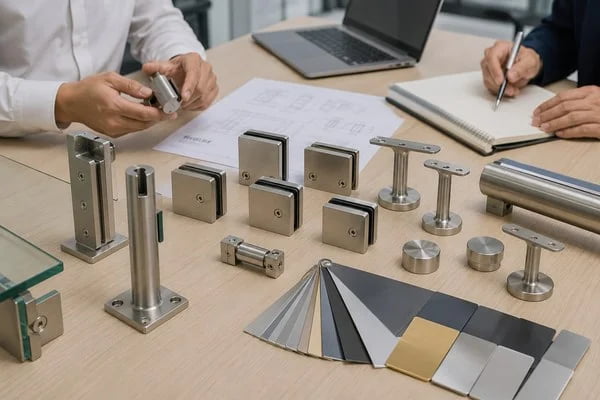
When I receive an inquiry for glass clamps, railing clamps, glass posts, handrail brackets, end caps, or connectors, I usually ask a few basic questions before recommending material:
- Will the hardware be used indoor or outdoor?
- Is the project near the sea, pool, chemical area, or high-humidity zone?
- Is the buyer selling to a budget market or premium market?
- Does the customer require 304 or 316 clearly stated on the quotation?
- Does the buyer need material labeling, test reports, or certificates for verification?
- What surface finish is required, such as brushed, polished, satin, or mirror?
| Application | Common Choice | Buyer Risk Focus |
|---|---|---|
| Indoor stairs or partitions | 304 | Price competitiveness |
| Normal outdoor city project | 304 or 316 | Finish and maintenance expectations |
| Coastal balcony or seaside hotel | 316 | Visible corrosion complaints |
| Premium private-label hardware | 316 often preferred | Brand positioning |
| Budget wholesale range | 304 often preferred | Resale price control |
I avoid saying “316 will not rust,” because that is not responsible. Stainless steel can still show staining under harsh conditions, poor maintenance, or contamination. Buyers should verify material documents and use qualified professionals for project-specific decisions.
For complementary guidance, see How to Evaluate Glass Balustrade Hardware Quality Before Placing a Bulk Order.
Why Is 316 Stainless Steel Glass Balustrade Hardware More Expensive?
Price differences can be frustrating. A buyer may see two similar-looking clamps and ask why one costs more. The issue is that the material grade changes cost, positioning, and risk.
316 stainless steel usually costs more because it contains added alloying elements that improve corrosion resistance in harsher environments. For B2B buyers, the higher price should be judged against possible complaint cost, replacement cost, and brand reputation.
Do not compare unit price only
Compare quoted purchase cost separately from estimated cleaning, replacement and service costs. Label forecasts as assumptions and use actual records when claiming a lifetime saving.
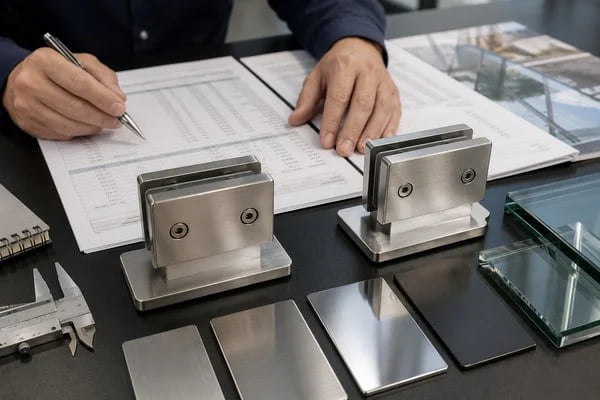
A better comparison includes:
- Material grade
- Surface finish
- Product thickness and size
- Packaging method
- Grade marking or label
- MOQ and lead time
- After-sales risk
- Target resale price
For example, if a distributor sells railing hardware to coastal contractors, 316 may support a stronger product story. If an e-commerce seller sells indoor decorative hardware, 304 may keep the listing more competitive.
The key point is balance. Over-specifying every order as 316 can make your quote too expensive. Under-specifying 304 for harsh environments can increase complaint risk. Good procurement is not about choosing the most expensive grade. It is about matching the grade to the real sales channel and usage environment.
For complementary guidance, see Custom Glass Balustrade Hardware from Drawings: OEM Manufacturing Process Explained.
What Should Be Confirmed Before Quoting 304 vs 316 Stainless Steel Glass Balustrade Hardware?
A vague inquiry creates a vague quotation. If the buyer only sends a photo and asks for the “best price,” the supplier may quote a standard option that does not match the final market.
Before quoting 304 vs 316 stainless steel glass balustrade hardware, buyers should confirm the product list, installation environment, target market, surface finish, packaging needs, grade statement, and any documents required for buyer verification.
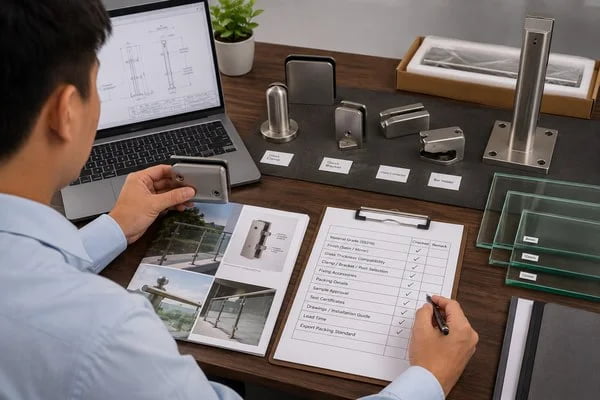
A simple quotation checklist
When I prepare or review this type of inquiry, I like to make the specification clear in writing:
- Product type: glass clamp, post, bracket, connector, end cap
- Stainless steel grade: 304 or 316
- Finish: brushed, polished, satin, mirror
- Glass thickness compatibility
- Quantity and packing method
- Logo, label, or private-label request
- Target country or region
- Indoor, outdoor, coastal, or poolside use
- Whether certificates or material reports need verification
This protects both sides. The buyer gets a clearer quote, and the supplier avoids misunderstanding.
A good stainless steel quotation should not only show price. It should show what the buyer is actually buying.
For importers and wholesalers, this is especially important. Their customers may compare products visually, but complaints often happen after installation. Clear grade communication helps the buyer manage expectations before resale.
For complementary guidance, see How to Choose a Glass Balustrade Hardware Supplier for Wholesale Projects.
Frequently Asked Questions
Is 316 always better than 304?
No. 316 usually has stronger corrosion resistance in harsher environments, but 304 can be a practical and cost-effective choice for many indoor or ordinary applications. The better choice depends on environment, budget, and customer expectations.
Can 304 stainless steel be used outdoors?
Yes, 304 can be used in many normal outdoor environments, but buyers should be cautious in coastal, high-salt, poolside, or industrial areas. In those cases, 316 is often worth considering.
Should the steel grade be shown on the quotation?
Yes. For B2B orders, the quotation should clearly state 304 or 316, especially for resale, project supply, and private-label orders. Buyers should also verify any certificates or material documents provided.
What hardware items are most affected by grade choice?
Visible parts such as glass clamps, railing clamps, posts, handrail brackets, connectors, and end caps are important because corrosion marks are easy for customers to notice.
304 versus 316 decision: a practical decision record
Use this proposed worksheet to record a purchasing decision. It is an editorial checklist, not a completed project inspection or test result.
| Review step | What to record |
|---|---|
| Define the requirement | Record the exposure and cleaning conditions before comparing the two material proposals. |
| Resolve the interface | Keep material choice separate from load capacity and glass compatibility; the grade name does not establish either. |
Worked example: Material quote comparison
Illustrative assumptions only — not an actual order, measured result, price offer or engineering approval.
For 150 parts, a hypothetical grade premium of USD 1.50 each totals USD 225.
Decision: The premium is a purchasing input, not evidence of suitability; compare the actual service environment and maintenance needs.
Reference and applicability
worldstainless marine applications: Material-selection background; glass compatibility and structural capacity require separate verification. Project-specific technical or regulatory requirements should be checked by the responsible qualified professional.
Editorial update: 25 September 2026. This update checks article structure, topic scope and the references identified above. It does not claim independent engineering certification.
Related guides and product references
For the next stage of glass balustrade hardware selection, use these guides alongside the product catalogue. Catalogue references do not replace project-specific drawings or engineering approval.
- Glass Balustrade Hardware Buying Guide for Distributors and Importers
- The Complete Guide to Glass Balustrade Hardware for B2B Buyers
- Glass balustrade hardware product range
- Flanged D-shaped Glass Clamp — catalogue reference
Conclusion
304 vs 316 stainless steel glass balustrade hardware should be selected by environment, budget, product positioning, and after-sales risk. 304 is not poor quality, and 316 is not automatically necessary for every order. If you are sourcing glass balustrade hardware, share your usage environment, target market, product list, finish, packaging needs, and budget range. I can help you prepare a clearer, more responsible specification for quotation.


Comments (3)