Choose anodizing or powder coating for an aluminium glass railing base shoe by comparing exposure, appearance, process specification and maintenance—not colour alone. The finish decision does not replace approval of the base shoe, anchors and glass assembly. This guide helps distributors compare two quotations on the same basis.
What are you actually buying?
Anodizing creates an oxide finish on aluminium; powder coating adds an organic coating system. A silver photograph cannot establish which process was used. Start with the exact profile from the glass balustrade hardware range, its alloy and its exposed surfaces. The Aluminum Anodizers Council specification guide explains anodized-finish terminology, while QUALICOAT specifications address architectural coating processes and quality requirements.
Those references describe their respective systems. They do not establish that an Elim component carries a particular certification. Ask for the finish specification and supporting records for the offered order.
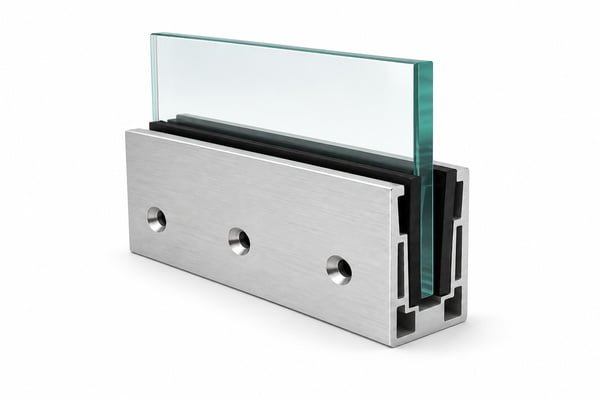
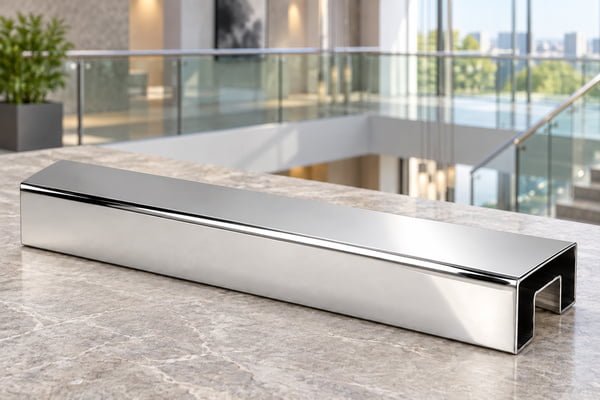
Catalogue illustration: Side-fixing Glass Railing Base Shoe. Shown as a component reference, not an installation drawing or test result.
Compare the quotation line by line
| Purchase question | Anodized option | Powder-coated option |
|---|---|---|
| Appearance | Agree colour and visible-metal sample | Agree colour, gloss and texture sample |
| Process | Identify treatment and specified finish class | Identify pretreatment and coating system |
| Fabrication | Resolve cut ends and machined areas | Resolve masking and coating after fabrication |
| Acceptance | Use an approved physical reference | Use an approved physical reference |
| Maintenance | Obtain compatible cleaning instructions | Obtain compatible cleaning instructions |
Sherwin-Williams architectural powder information illustrates why the coating technology matters as well as the colour name. Avoid requesting “black powder coat” without defining the intended environment and appearance. Conversely, an anodized finish should not be ordered solely by a photograph taken under showroom lighting.
Do not lose the installation detail
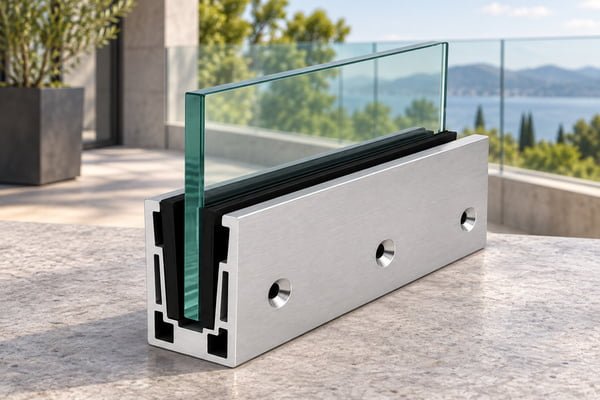
The wedge-versus-grout base shoe comparison concerns the retention arrangement, not merely the outer finish. Keep those choices separate in the schedule. The CRL base shoe catalogue is an external example of system-specific components; parts from different systems should not be treated as interchangeable.
Check whether coatings affect accessory seating, concealed joints or areas that require masking. Follow the selected manufacturer’s details. Keep base shoe drainage visible in the drawing review so a decorative cover or seal does not accidentally obstruct an intended water path.
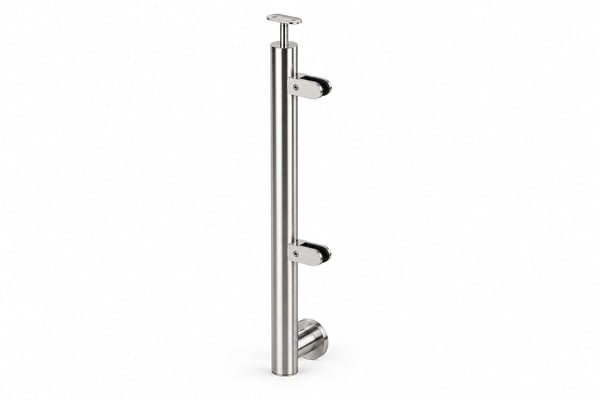
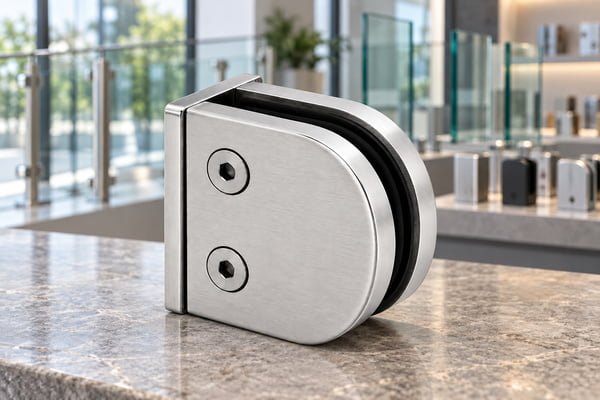
Catalogue illustration: Reflective Silver Side-mounted Glass Railing End Post. Shown as a component reference, not an installation drawing or test result.
Use a sample approval that survives repeat orders
Request a labelled production-representative sample with its profile, finish code, date and supplier reference. Record the accepted viewing conditions and any permitted variation between extrusions and accessories. Keep a reference sample with purchasing and another with the receiving team.
For example, a quotation for 40 lengths can contain three different finish batches. That is a hypothetical purchasing situation, not an Elim production claim. Asking for batch identification and a joint appearance review before dispatch is more useful than discovering a mismatch after installation.
Consult the finish-matching checklist when coordinating adjacent stainless components. Matching visual tone does not mean using the same treatment on different metals. The Aluminum Association standards resource helps distinguish material identification from the decorative finish designation.
Include packing and maintenance in the comparison
A good finish can be damaged by poor separation, abrasive debris or unsuitable protection. Specify how visible faces, ends and accessories will be protected, and when any protective film should be removed. ISTA test procedures provide distribution-testing context; they are not proof that a particular package has passed a test.
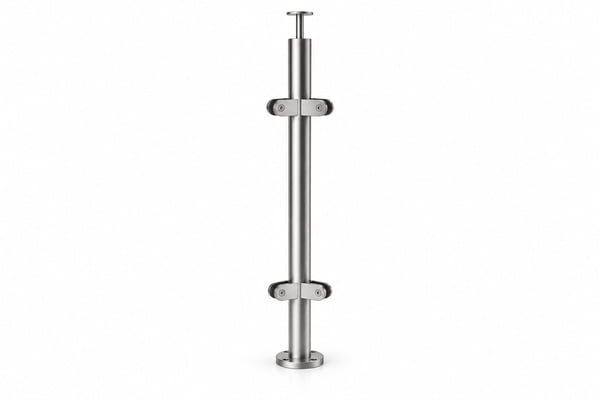
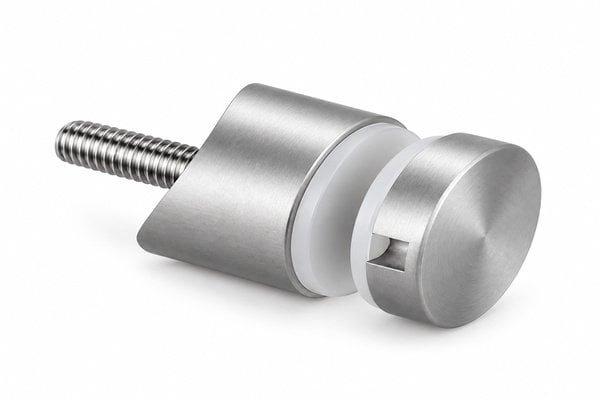
Catalogue illustration: Round Corner Glass Railing Post. Shown as a component reference, not an installation drawing or test result.
A finish schedule that purchasing can use
Give each finish option its own quotation line and sample identifier. State which faces remain visible after installation, whether accessories are included in the same approval, and how cut ends will be handled. Record who accepts appearance and who reviews technical performance. If a supplier proposes a different process after the sample is accepted, request a documented change review before production. This keeps an attractive sample from becoming an ambiguous specification for the full shipment.
Use NIST traceability guidance when discussing measurement records and conformity assessment guidance when deciding what supporting evidence to request. A sample approval, inspection record and certification have different purposes. Do not substitute one for another.
Questions buyers ask
Is one finish always better outdoors? No universal choice follows from the finish name. Compare the specified system, exposure and maintenance provisions.
Can replacement covers match years later? An exact visual match should not be assumed. Retain finish references and identify replacement requirements when ordering.
Should the finish change the structural approval? Refer changes affecting fit or performance to the responsible designer and system supplier.
For an OEM finish review, send the profile drawing and sample requirement. Review the relevant manufacturing capabilities, then request a quotation showing finish specification, accessories, packing and delivery scope as separate items.