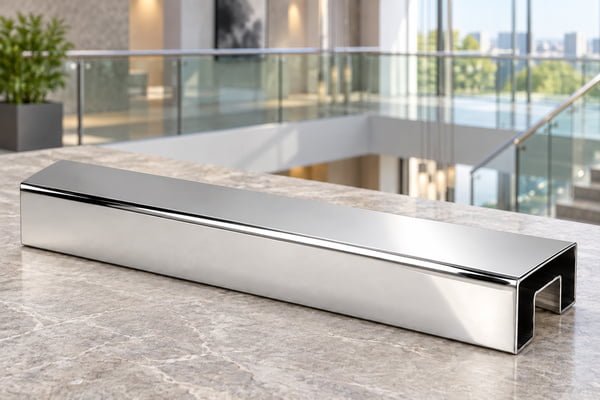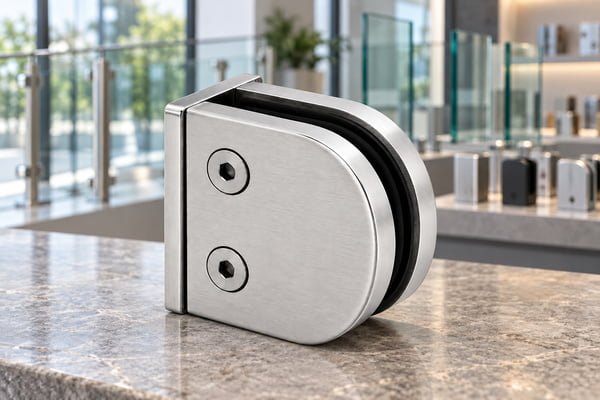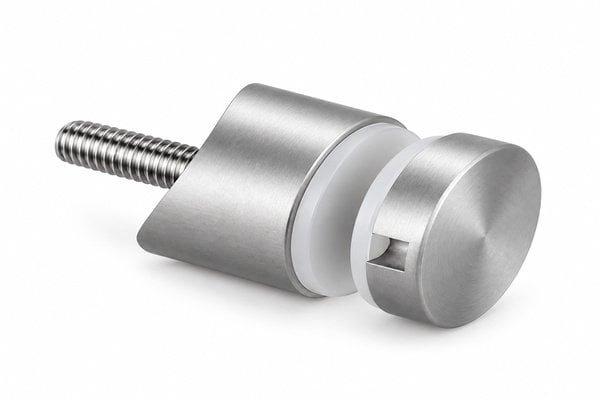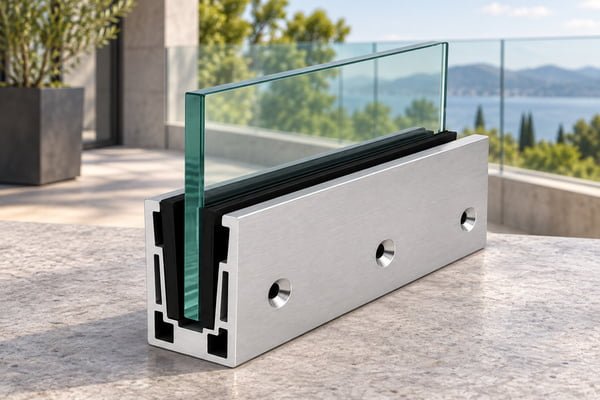
Choose wedge or grout fixing as part of an approved base-shoe system, not as an interchangeable installation preference. Compare the complete glass-support arrangement, site operations and replacement procedure before comparing channel prices. This buying guide is for contractors and importers coordinating glass, hardware and installation.
What is being compared?
A dry-glazed wedge system uses its specified mechanical setting and retention components. A wet-glazed arrangement relies on the identified bedding or grouting materials and procedure. Neither description defines every product sold under that label. The CRL base-shoe range and wet-glaze installation drawing illustrate distinct manufacturer-specific arrangements.
Select candidate components from our glass balustrade hardware range, then request the exact assembly drawing. Do not assume a channel designed for one method can be converted to the other by changing the material packed around the glass.
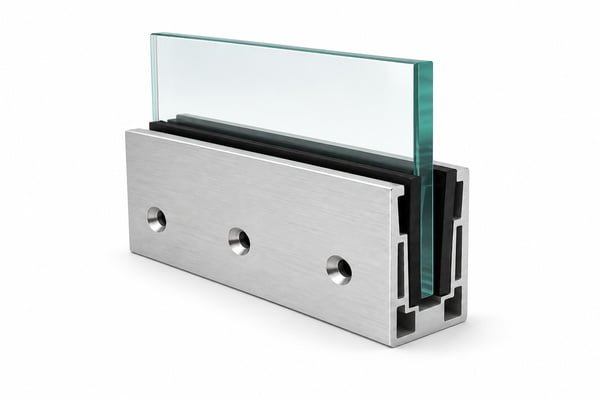
Catalogue illustration: Side-fixing Glass Railing Base Shoe. Shown as a component reference, not an installation drawing or test result.
Compare five purchasing decisions
| Decision | Wedge-system question | Grout-system question |
|---|---|---|
| Glass support | Which wedges, blocks and liners are specified? | Which bedding material and placement detail are specified? |
| Site work | What tools and access are required? | What preparation and curing conditions apply? |
| Adjustment | What adjustment is permitted and when? | At what stage can alignment be corrected? |
| Replacement | How is the retention system released? | How is glass removed without damaging the shoe? |
| Documentation | Which tested assembly is being supplied? | Which tested assembly and material system are being supplied? |
Both quotations should include small parts, end treatments and installation instructions. A cheaper bare channel is not equivalent to a complete kit. List exclusions explicitly, including sealants, setting blocks, cladding and anchor supply.
Coordinate the glass build-up
Record glass plies, treatment, interlayer and nominal total thickness. Our laminated-glass clamp guide explains the general importance of identifying the build-up, even though a base shoe uses a different support arrangement. The Kuraray interlayer overview provides external material context rather than approval of a railing assembly.
Do not select a wedge by visual fit alone or alter a specified grout to suit site availability. Changing either can change the support conditions on which the assembly documentation relies. Obtain the system supplier’s written response to a proposed substitution before procurement releases it.
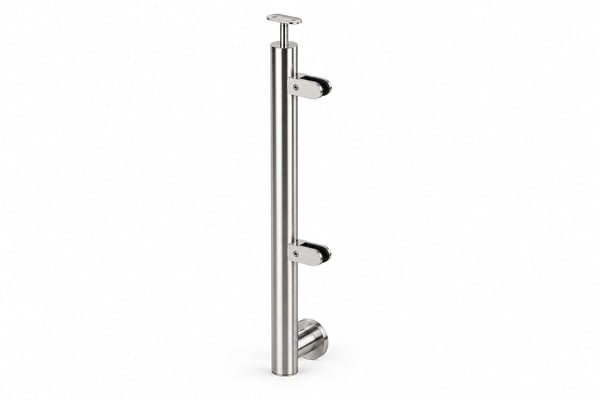
Catalogue illustration: Reflective Silver Side-mounted Glass Railing End Post. Shown as a component reference, not an installation drawing or test result.
Price the site sequence
Ask the installer to list the operations included: setting out, substrate preparation, channel installation, glass positioning, retention, finishing and cleanup. Where curing is required, include the permitted environmental conditions and the hold period stated by the material and system suppliers.
For illustration, a procurement comparison might separate 40 metres of straight channel, eight end pieces and four corner details. This is a bill-of-materials example, not a design recommendation. Comparing only the price of 40 metres leaves the project interfaces and labour assumptions unresolved.
Keep the anchorage review separate
The glass-retention method does not establish the capacity of the channel-to-building connection. Identify substrate, anchor arrangement, edge geometry and access. Hilti’s technical resources demonstrate the need for anchor-specific information. Our side-mounted hardware checklist is useful where the fixing location complicates access or waterproofing.
Review the complete assembly evidence with the railing test-report checklist. ASTM E2353 provides a relevant test-method reference, but citing its name does not prove that the selected assembly has passed a required evaluation. Match the configuration and project requirements.
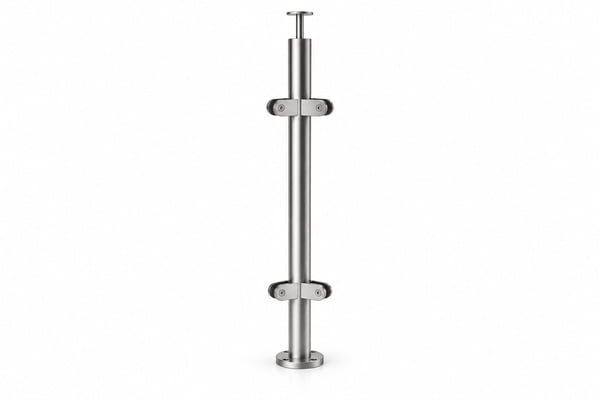
Catalogue illustration: Round Corner Glass Railing Post. Shown as a component reference, not an installation drawing or test result.
Samples, packing and release
Approve a labelled sample of the supplied channel and retention components. Identify every liner, wedge or material product code. The CPSC tempered-glass alert is relevant if late hardware changes would require alterations to finished tempered glass; coordinate fabrication before that stage.
For special lengths or connection details, discuss OEM development with the project drawing. Review the manufacturing scope and packaging requirements together. ISTA procedures can inform transport evaluation for long channels and separately packed small parts.
Is one method always faster? No universal saving follows from the label. Access, crew familiarity, geometry and the specified process determine the actual programme.
Does a catalogue listing establish compliance? No. NIST’s conformity-assessment overview helps distinguish product information, inspection, testing and certification.
To request a comparable base-shoe quotation, provide the approved glass schedule, mounting detail, lengths, corners, intended fixing method and delivery scope. Ask for a complete component schedule and installation-document reference with the price.