Choose a glass clamp by its post-contact geometry and fastening detail, not simply by the shape of its front cover. A flat-back clamp and a curved-back clamp can look alike from the outside while requiring different posts. This comparison helps distributors prevent mixed kits and contractors order the correct mounting interfaces.
Round and square posts: what changes?
| Interface | Round post | Square or rectangular post |
|---|---|---|
| Contact face | Curvature matched to the specified outside diameter | Flat contact area with adequate usable width |
| Orientation | Angular position around the tube must be controlled | Position referenced to the selected face |
| Fastening | Hole location and internal access coordinated with tube geometry | Hole location and access coordinated with corner radii and wall thickness |
| Identification | Post diameter and clamp back code | Face width and clamp back code |
Browse glass balustrade components by application, then request a drawing of the back face. The CRL fittings catalogue demonstrates why interface details belong in a catalogue review; another manufacturer’s dimensions are not specifications for Elim products.
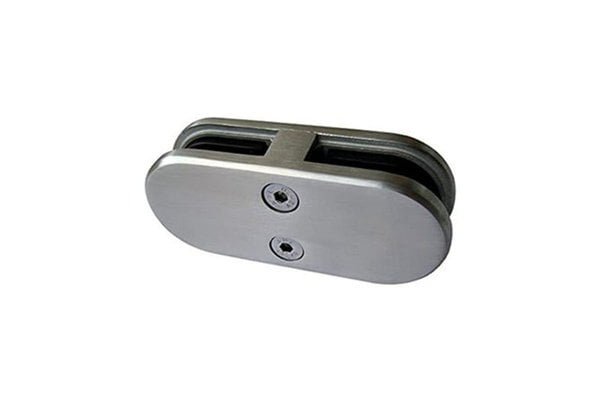
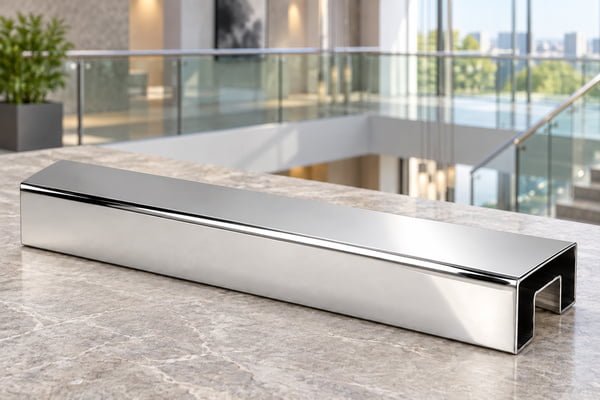
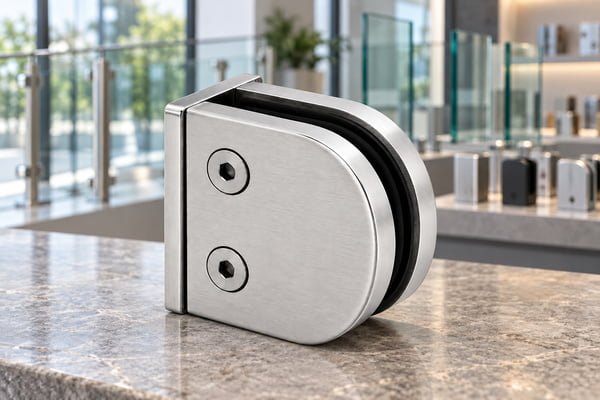
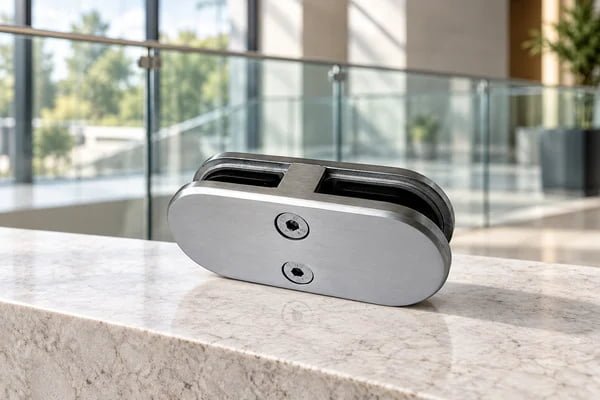
Catalogue illustration: Complete inline glass-to-glass connector clamp. Shown as a component reference, not an installation drawing or test result.
The dimension buyers often leave out
For round tubing, state outside diameter rather than a nominal pipe label. For square tubing, state the outside width, wall thickness and relevant corner radius. A flat face must provide the intended contact area; a broad clamp should not unintentionally bridge onto a rounded corner.
For illustration, a curved back identified for 42.4 mm tube must not be assumed suitable for 48.3 mm tube. Those numbers illustrate two distinct geometries, not the available sizes or approval of any catalogue model. The drawing and the supplier’s supported combination must resolve the selection.
Our tube-wall specification guide explains why outside size alone cannot describe the fastening substrate. If a threaded insert, backing component or internal nut is required, include it in the kit rather than leaving its purchase to the installer.
Match the complete fastening arrangement
Specify screw identity, thread engagement, access and the manufacturer’s installation procedure. Do not substitute a larger screw to compensate for an incompatible clamp back. The ASSDA galling guide is useful when discussing stainless threaded connections; it does not supply a universal tightening torque.
If the post arrangement transfers loads to anchors, review the base separately. Hilti technical guides illustrate the need for substrate-specific anchor information. They cannot establish the capacity of an unspecified clamp or post assembly. The bulk glass clamp checklist keeps these separate purchasing interfaces visible.
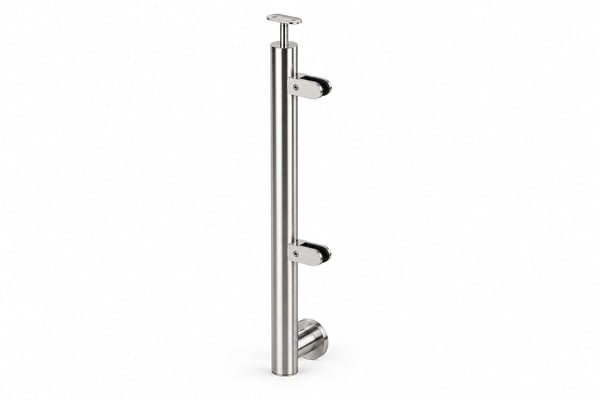
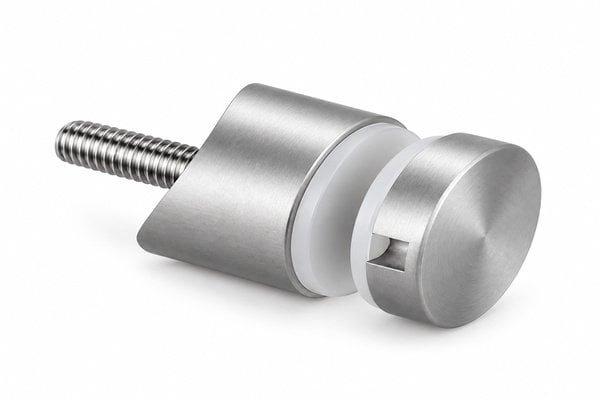
Catalogue illustration: Reflective Silver Side-mounted Glass Railing End Post. Shown as a component reference, not an installation drawing or test result.
A practical sample inspection
Inspect the clamp against a representative section of the specified post. Check that the intended mating faces seat correctly before tightening. Record the clamp code, post size, fixing kit and drawing revision beside photographs. Measuring results should identify the equipment used; NIST’s traceability guidance explains why a number without its measurement context is weak evidence.
Review the glass side independently. The correct post fit does not prove that the gasket matches the glass. The CPSC glass safety alert is relevant when fabrication changes involve tempered glass. Use our hardware tolerance checklist to organise the sample record and avoid passing an unchecked interface into production.
How should mixed orders be packed?
Give flat and curved backs different kit codes. Use a visible post-size description on each carton, alongside the internal SKU. An installer should not need to recognise a small curvature difference at the bottom of a box.
For custom kit identification, discuss OEM packaging and component development. Our capabilities overview provides manufacturing context. Ask for the exact marking and packing arrangement in the quotation, including whether spare gaskets and fixings are separately bagged. ISTA’s packaging resources can support the transport specification.
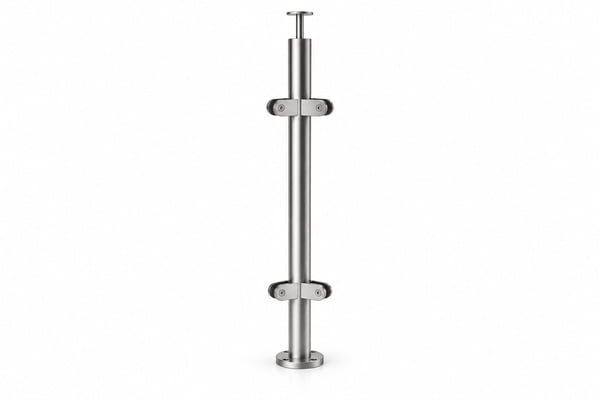
Catalogue illustration: Round Corner Glass Railing Post. Shown as a component reference, not an installation drawing or test result.
Three questions before ordering
Can an adapter make either clamp universal? Only if that adapter is part of the documented assembly. Improvised packing changes load transfer and fastening geometry.
Does stainless grade solve interface problems? No. IMOA’s coastal guidance addresses environmental material selection; it does not make a mismatched curved back fit a tube.
Is an inspection report a system certificate? No. NIST’s conformity-assessment overview distinguishes different forms of evidence. Request the evidence needed for the project rather than a document with an impressive heading.
To request a matched clamp quotation, send the post cross-section, glass build-up, mounting position, fixing access, finish and quantities. Separate round-post and square-post items into their own schedule rows, even when their outward appearance is identical.