Specification answer: State railing tube wall thickness separately from outside size, material, finish and dimensional tolerance. Outside diameter alone does not define the tube or its compatibility with inserts and connectors. Structural adequacy must be checked for the complete railing arrangement.
The quotation line that causes confusion
“Stainless tube, polished” leaves too many purchasing decisions open. Even a line that includes outside diameter can omit the wall thickness on which connector fit, fabrication and inspection depend.
Start with the stainless steel railing system range, then define a tube schedule instead of relying on a product photograph. The tube and flange matching guide explains why the receiving component matters as much as the visible tube surface.
For background on stainless material families, use Outokumpu’s product information. A producer’s general information is not a certificate for the specific tube material supplied by another company.
Outside size and inside space are different
For a simple circular section, nominal inside diameter is outside diameter minus twice the wall thickness. As an arithmetic illustration, a 42.4 mm outside diameter with a 2.0 mm wall gives a nominal inside diameter of 38.4 mm. With a 2.6 mm wall, it becomes 37.2 mm.
These are illustrative dimensions, not a recommendation or an Elim stock specification. Actual acceptance must account for the applicable dimensional requirements and the connector’s geometry. The example shows why two tubes with the same outside size can receive different inserts.
NIST’s measurement guidance supports clear dimensional records. State where and how measurements will be taken, including whether coatings, burrs or local deformation affect the reading.
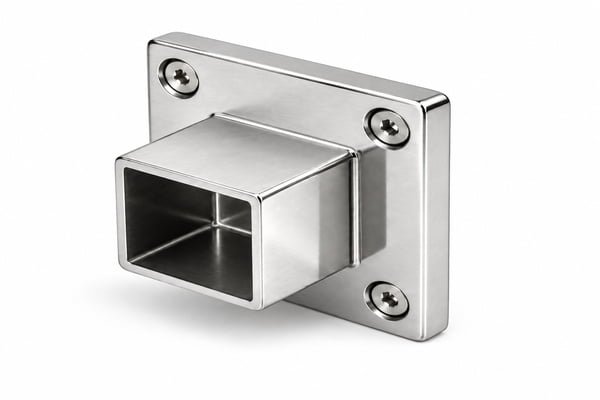
Catalogue illustration: Square Tube Wall Flange Connector — Reflective silver appearance concept. Shown as a component reference, not an installation drawing or test result.
Write a quotable tube schedule
| Field | What the purchasing line should identify |
|---|---|
| Section | Round, square or another defined profile |
| Outside size | Dimensions and units |
| Wall | Nominal thickness and acceptance requirements |
| Material | Specified designation and requested evidence |
| Finish | Approved appearance and treatment scope |
| Ends | Cut, deburred, machined or prepared as drawn |
Use the railing BOM guide to connect this line to the assembly. A tube schedule should tell the supplier which parts mate with each end and which surfaces remain visible after installation.
Ask QA to inspect the interface
A useful receiving check distinguishes material identity, dimensions, surface condition and assembly fit. Request a representative sample with its corresponding insert, cap or connector where practical. Record both part references rather than approving an unlabelled sample.
The handrail end-cap guide discusses another reason to preserve inside and outside dimensions. An externally locating cap and an internally locating insert do not depend on identical features.
ASSDA’s material-identification reference supports the grade discussion. Worldstainless’s properties overview is background information, not a replacement for the specified material documentation.
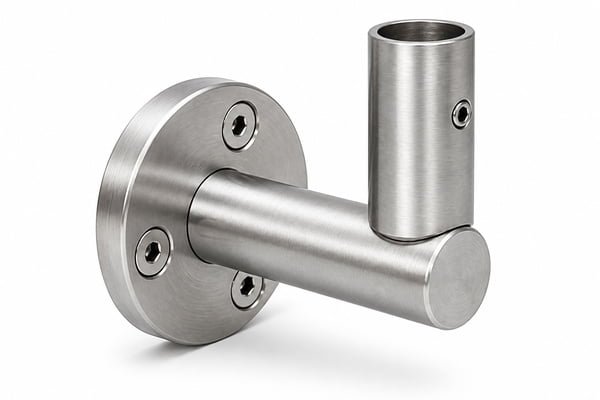
Catalogue illustration: Upright Socket Wall Handrail Bracket — Reference silver appearance. Shown as a component reference, not an installation drawing or test result.
Keep thickness separate from performance approval
Increasing wall thickness changes the section, but it does not by itself approve post spacing, anchorage, welds or the full railing. Likewise, a lighter section is not automatically unacceptable simply because it differs from a familiar order.
Ask the responsible designer to define the accepted configuration. Consult the relevant anchor technical guide where the railing connects to the building. Use Access Board stairway guidance only within its applicable accessibility context, not as a universal structural design rule.
Compare the delivered part, not the metal price
Quotations should make cutting, end preparation, protective film, packing and inspection visible. A lower tube price can lose its advantage if the receiving workshop must correct avoidable finish damage or unclear identification.
ISTA’s procedures provide transport-evaluation context. Trade.gov’s export-document guidance helps align shipment records with the parts schedule. Neither determines the required wall thickness.
Control repeat orders by revision
Keep a retained schedule showing the accepted section, end preparation and mating components. On a repeat order, compare the new supplier drawing with that schedule before approving a substitution. A change in inside clearance may be significant even when the outside appearance is unchanged. For receiving teams, identify which dimensions are measured on every agreed inspection sample and which fit checks require the matching component. Record deviations against the specific order line so that conforming and unresolved stock can be separated without guesswork.
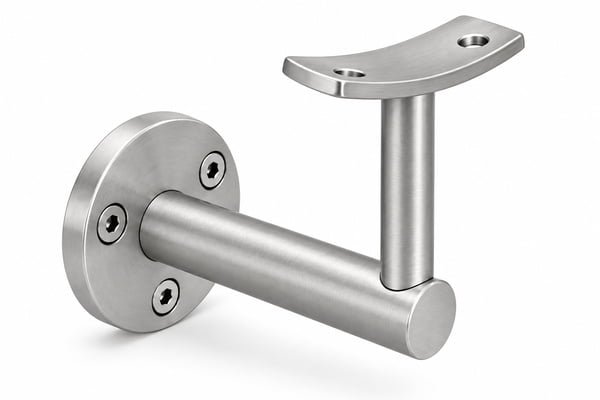
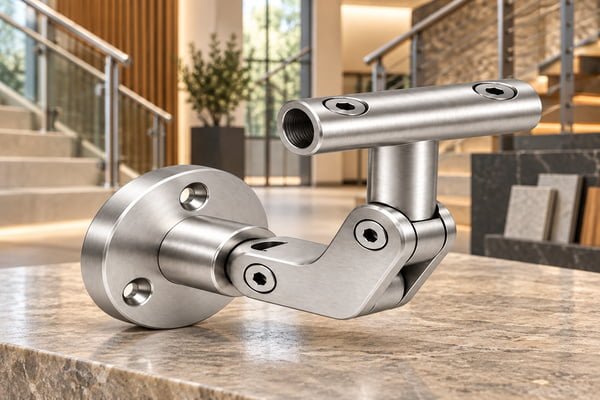
Catalogue illustration: Curved Saddle Wall Handrail Bracket — Matte silver appearance concept. Shown as a component reference, not an installation drawing or test result.
Final buyer check
Can wall thickness be inferred from outside diameter? No; specify both.
Should every location use the same section? Only where the approved design and mating interfaces permit it.
What sample should be requested? An identified tube section with the relevant mating components and agreed checks.
For machined ends or unusual sections, arrange an OEM feasibility review, discuss manufacturing and dimensional inspection, and send the tube schedule for quotation. Keep any illustrative dimensions in this article separate from the final approved purchase specification.