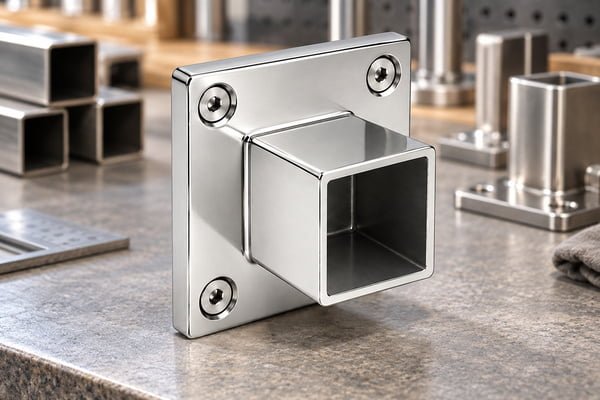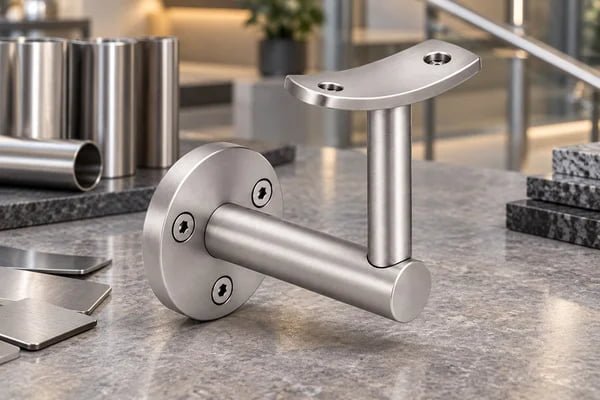
Buy the interface, not just the diameter: A handrail end cap must match the tube profile, relevant inside or outside dimensions, retention method and finished appearance. Two tubes with the same nominal outside diameter can require different insert caps when wall thickness or internal geometry differs.
For distributors expanding a stainless steel railing range, end caps are small parts with a disproportionate effect on completeness. A missing or loose cap can delay acceptance of an otherwise finished installation. This guide turns a catalogue description into an orderable component record.
First question: where does the cap locate?
An insert cap locates within an opening; an over-cap fits around an outside surface; a welded closure follows a different fabrication route. Specify the actual arrangement rather than treating these as interchangeable decorative options. Record whether the receiving tube is round, square, rectangular or otherwise shaped.
The tube and flange compatibility guide explains why mating dimensions matter throughout a railing. Look at the same principle in a tube flange connector: the visible outside size does not describe every locating surface. A closure needs its own drawing and application review.
Second question: which dimensions decide fit?
| Field | What purchasing should request |
|---|---|
| Receiving profile | Shape and drawing reference |
| Locating dimension | Actual mating size with agreed limits |
| Tube condition | Wall thickness and relevant internal features |
| Insertion or overlap | Defined engagement length |
| Visible face | Profile, edge treatment and finish reference |
| Retention | Approved fixing or assembly method |
For a simplified round tube, outside diameter minus twice the wall thickness gives a nominal internal diameter. A 42 mm tube with a 2 mm wall gives 38 mm nominally. This illustration ignores tolerances and internal features and is not a fit specification. Measure and approve the actual receiving component before ordering an insert.
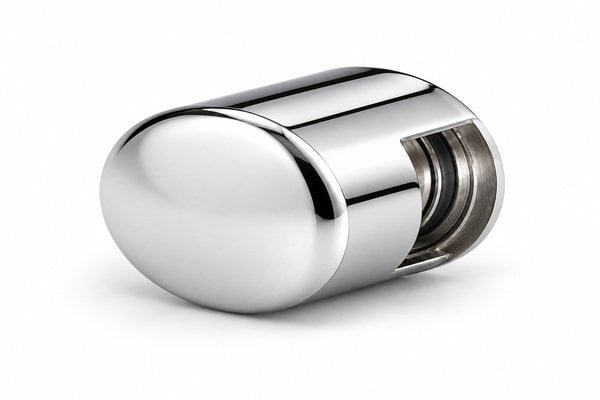
Product reference: Cable Railing End Cap — WR064. Match the supplied configuration to the approved drawing.
Third question: how is it retained?
Ask the supplier to describe retention and removal. Do not infer a secure fit from a photograph or assume adhesive is suitable because it worked on another product. Where an adhesive is proposed, follow the identified adhesive manufacturer’s instructions for substrates, preparation and service conditions.
For a welded closure, define fabrication and finish restoration. ASSDA’s pickling and passivation guidance explains surface treatment after stainless fabrication. For threaded retention, the risks outlined in galling guidance need consideration. Each arrangement requires its own approved assembly instructions.
Fourth question: can the finish be repeated?
Compare a cap beside the rail under agreed lighting. Specify polishing direction where visible, an approved colour reference where coated, and acceptable edges. The bulk-finish matching guide is useful because small polished faces can look different beside a long tube even when both are described as “silver.”
Use grade-confirmation guidance for material identity and coastal-exposure guidance when assessing environment. Neither a bright appearance nor an end cap’s low weight proves the intended material. Confirm whether the cap, retention component and rail have separate material specifications.
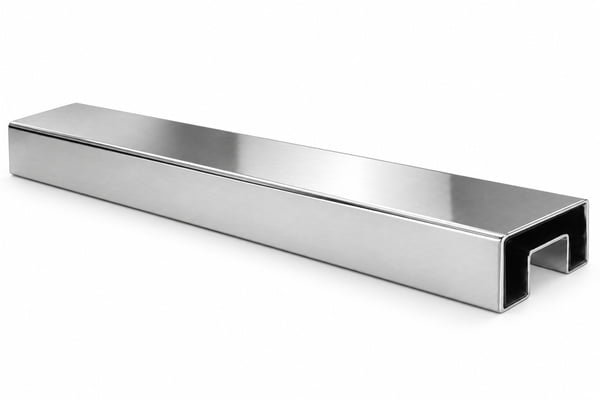
Product reference: Reflective Silver Square Slotted Glass Handrail Tube. Match the supplied configuration to the approved drawing.
Fifth question: how will the warehouse distinguish variants?
Create one record for each approved fit and finish combination. Include a photograph of the receiving profile, the cap orientation and the part label. Similar-looking caps should not share an unlabeled bin. Apply GS1 product-identification principles when managing trade-item changes in your distribution system.
Consider a simple purchasing example: a job with 60 independent rails, each requiring two closures, needs 120 installed caps. If the buyer chooses six additional service pieces, the order becomes 126. That arithmetic assumes both rail ends need the same cap; connected or returned ends may change the count. Derive quantities from the actual rail schedule.
Use the floor-by-floor kit planning guide to place caps in the correct installation packs. Small closure parts are easily overlooked when long rails and brackets dominate the delivery list.
Sixth question: what happens after delivery?
Protect visible faces from rubbing during transport and use ISTA’s procedure overview to discuss packaging verification. Supply care information consistent with stainless cleaning guidance. For stair projects, review the applicable design requirements; US Access Board stairway guidance addresses rail context but does not approve an individual cap.
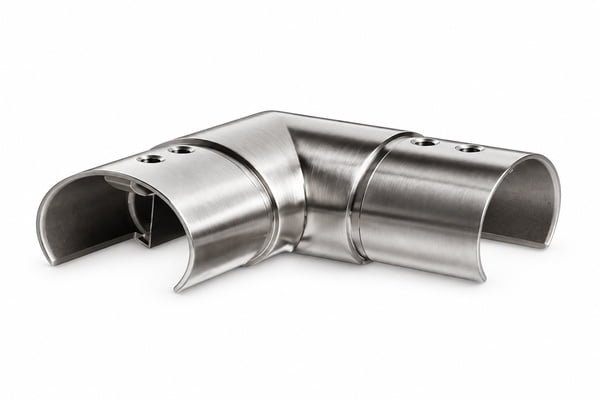
Product reference: Horizontal Corner Connector for Round Slotted Handrail. Match the supplied configuration to the approved drawing.
Can one cap serve several tube sizes? Only if the supplier has defined and approved that fit range.
Should spare caps match the original batch? Preserve the finish reference and fit specification so later replacements can be reviewed accurately.
Discuss custom closures through Elim’s manufacturing capabilities. Send a tube section drawing and quantity schedule, including the retention method, finish and intended application, before requesting a bulk quotation.