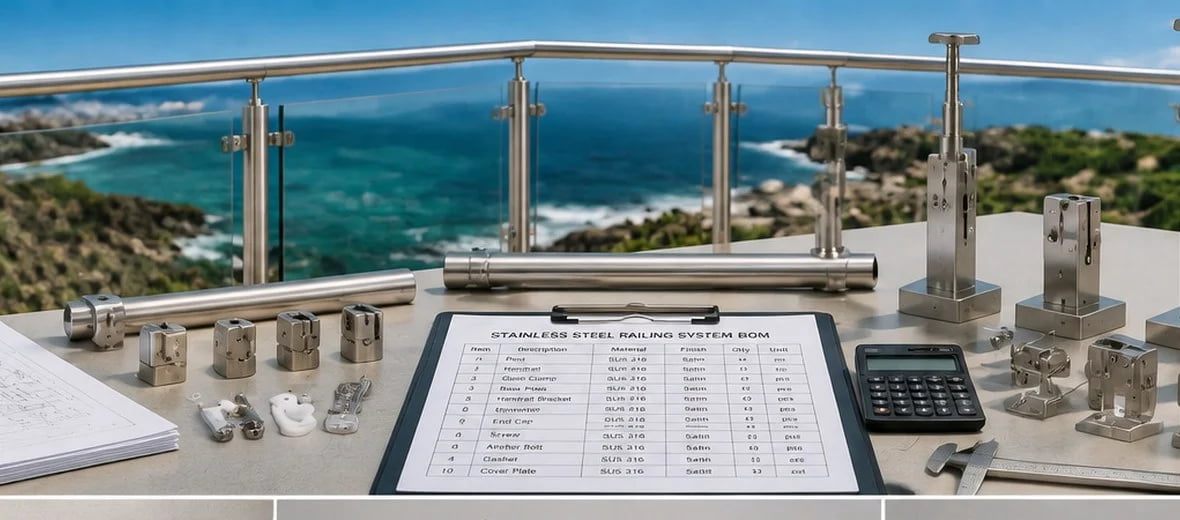
A stainless steel railing system BOM can look simple at first, but missing items can quickly turn a cheap quotation into an expensive project problem. I have seen buyers compare prices without realizing each supplier quoted a different scope. A clear BOM solves this by confirming what is included before production starts.
A stainless steel railing system BOM should include main railing components, matching accessories, fasteners, specifications, quantities, packaging details, spare parts if needed, and delivery documents such as drawings or installation instructions. More importantly, it should show whether every supplier is quoting the same system scope, not just a random list of parts.
The real question is not only “what parts are used?” The better question is: Can I verify that the delivered railing system will match the drawing, installation method, and quotation? That is where a good BOM becomes useful.
Why Is a Stainless Steel Railing System BOM More Than a Parts List?
A stainless steel railing system BOM is not just a warehouse checklist. It is a purchasing confirmation document. If it is too vague, suppliers may quote different scopes, and the buyer may discover missing parts only after the goods arrive.
A useful BOM helps buyers compare quotations fairly, confirm delivery responsibility, and reduce installation delay caused by absent connectors, screws, anchors, covers, or gaskets.
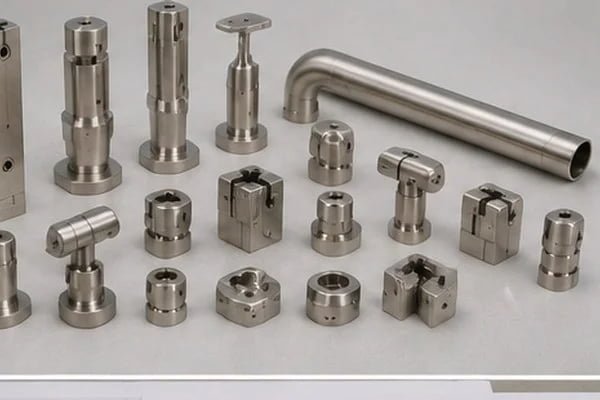
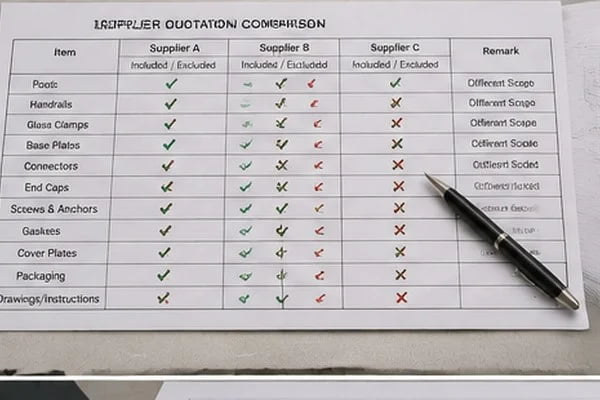
In quotation work, I often see one common problem: Supplier A gives a lower price, but their offer excludes anchors, glass, cover plates, or installation screws. Supplier B includes them, so their price looks higher. Without a BOM, the buyer may choose the wrong offer.
A good BOM should answer these questions:
- What is included in the supplier’s price?
- What is excluded and supplied by the buyer or contractor?
- Are all accessories compatible with the railing type?
- Are quantities calculated from drawings or estimated?
- Are packaging, labels, and documents included?
Here is a simple way to think about it:
| BOM Item | Why It Matters |
|---|---|
| Main components | Confirms the visible railing structure |
| Accessories | Prevents missing installation parts |
| Fasteners | Affects site installation readiness |
| Specifications | Controls material, finish, and matching |
| Packaging | Reduces export damage risk |
| Documents | Helps buyer check and install correctly |
The BOM does not replace engineering review. For load requirements, local codes, grade selection, or final safety approval, buyers should verify details with a qualified engineer or local authority.
What Main Components Should a Stainless Steel Railing System BOM Include?
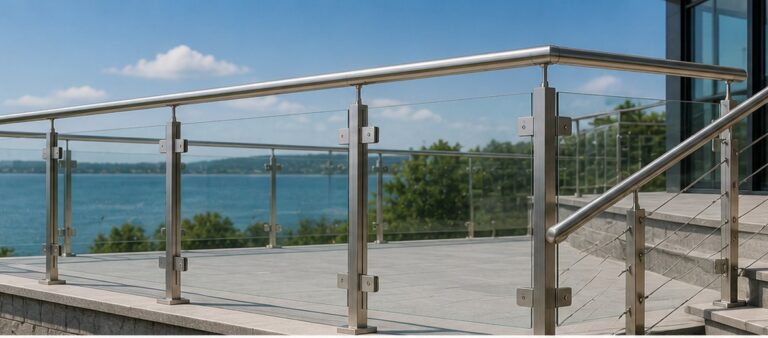
A stainless steel railing system BOM should start with the main visible parts: posts, handrails, glass panels if included, clamps, base plates, brackets, and connectors. These parts define the railing type and overall supply scope.
The BOM should list each main component with material grade, finish, size, quantity, and location if possible. This helps avoid confusion between balcony railings, stair railings, pool fencing, frameless glass systems, and post-mounted systems.
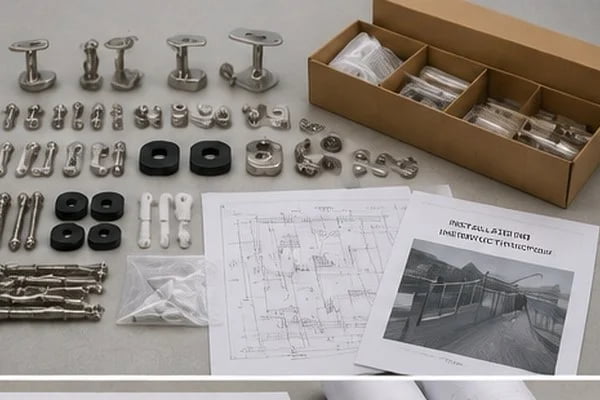
The exact components depend on the project. A glass railing with posts needs different parts from a wall-mounted handrail. A stair railing needs angled connectors. A balcony railing may need end caps, corner fittings, or floor-mounted base plates.
Common main items include:
Posts
These may be round, square, side-mounted, or floor-mounted. The BOM should show height, tube size, wall thickness, finish, and base type.Handrails
These can be round tube, square tube, slotted tube, or custom profile. The BOM should confirm length, joint method, end caps, and wall brackets if used.Glass clamps or spigots
These must match glass thickness and installation style. Gaskets should also be listed, because missing rubber pads can stop installation.Base plates and covers
Base plates carry installation importance, while decorative covers affect finished appearance.Connectors and elbows
These are small parts, but they often cause delays when missed. Stair angles and corners need special checking.
A simple BOM line should not only say “post.” It should say something closer to:
Stainless steel square post, 40 x 40 mm, satin finish, floor-mounted, with base plate and cover, quantity 50 pcs.
That level of detail makes supplier comparison much easier.
Which Accessories, Fasteners, and Documents Should Be Checked?
Accessories and fasteners are where many low quotations hide missing scope. A complete BOM should confirm anchors, screws, bolts, washers, gaskets, end caps, cover plates, labels, spare parts, and installation-related documents.
Buyers should ask whether these items are included, optional, or excluded. This is especially important for export orders, because replacing small missing parts later can take weeks.
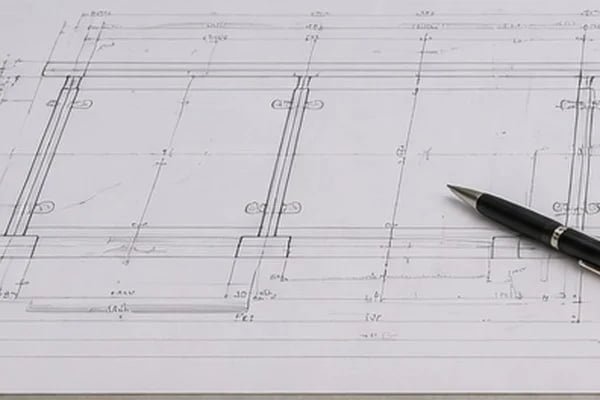
From my purchasing communication experience, missing accessories create the most annoying problems. The goods arrive, the main parts look fine, but the installer cannot proceed because one connector type or screw pack is absent.
Useful BOM accessory fields include:
- Item name
- Specification
- Material grade
- Finish
- Quantity
- Use position
- Included or excluded
- Packed together or separately
Fasteners need careful checking. Anchors for concrete, wood, or steel structures are not always the same. Some suppliers include standard screws only. Some exclude site anchors because the contractor must choose them based on the building condition.
Documents also matter. For many B2B orders, I would suggest requesting:
- Shop drawings or product drawings
- Packing list
- Installation instruction
- Material declaration if required
- Test reports or certificates if claimed
- Photos before shipment
Any standards, stainless steel grade requirements, or compliance claims should be verified against project requirements. I can help organize documents for purchasing review, but final engineering or code approval should come from qualified professionals.
How Do Project Inputs Change the BOM Scope?
A railing BOM changes according to railing type, drawings, dimensions, quantity, installation position, and supplier responsibility. There is no single universal BOM that fits every project.
Before asking for a quotation, buyers should provide drawings, railing length, height, installation method, finish, glass scope, packaging needs, and target market requirements.
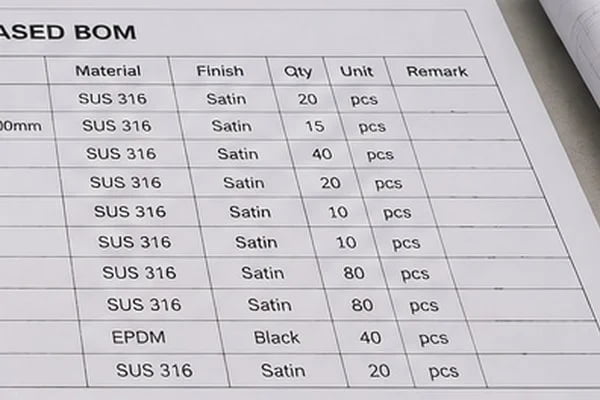
The same railing photo can lead to different BOMs. One supplier may quote only stainless steel hardware. Another may include glass. Another may include anchors, labels, cartons, and installation guides. That is why project input is so important.
Before confirming an order, I suggest buyers clarify:
| Project Input | What It Changes |
|---|---|
| Railing type | Posts, clamps, spigots, handrail style |
| Installation surface | Anchor type and base plate design |
| Drawing dimensions | Quantity and cutting length |
| Indoor/outdoor use | Finish and material grade to verify |
| Glass included or not | Packing, cost, responsibility |
| Private label need | Logo, carton, manual, barcode |
| Spare parts request | Extra screws, gaskets, caps |
For importers and distributors, packaging should also be part of the BOM discussion. Export packaging may need stronger cartons, palletizing, item labels, or separated accessory bags. These details affect both cost and after-sales service.
Frequently Asked Questions
Should glass be included in a stainless steel railing system BOM?
Yes, if the supplier is responsible for glass supply. The BOM should list glass thickness, size, quantity, edge treatment, and packing method. If glass is excluded, the BOM should clearly state that the buyer or local contractor will supply it.
Should anchors and screws always be included?
Not always. Anchors depend on the installation surface and local site condition. Some suppliers include standard fasteners, while some exclude them. Buyers should confirm this clearly and ask a project engineer to verify suitability.
Can I use one BOM template for every railing project?
No. A template helps, but the final BOM must match the actual railing type, drawings, installation method, and agreed supplier scope. Stair railings, balcony railings, and frameless glass systems all need different parts.
What is the biggest BOM mistake buyers make?
The biggest mistake is comparing total prices without checking included scope. A lower price may exclude connectors, covers, gaskets, anchors, glass, packaging, or documents. A clear BOM makes quotations comparable.
<!-- elim-blog-links-20260925 -->
Related guides and product references
For the next stage of stainless steel railing systems selection, use these guides alongside the product catalogue. Catalogue references do not replace project-specific drawings or engineering approval.
- Before You Place a Railing Hardware Order: 10 Supplier Details Worth Verifying
- From Drawing Approval to Mass Production: Inside an OEM Railing Components Order
- One Supplier or Multiple Suppliers? Sourcing a Complete Stainless Steel Railing System
- Buying Stainless Steel Railing Systems for Commercial Projects: Where Should You Start?
- Stainless Steel Railing System Components: The Complete Buyer's Guide
- Stainless steel railing systems product range
- Pivoting Glass Handrail Bracket — Reference silver appearance — SSR-001 — catalogue reference
<!-- /elim-blog-links-20260925 -->
Conclusion
A stainless steel railing system BOM should confirm more than part names. It should define components, accessories, fasteners, specifications, quantities, packaging, spare parts, and documents, so buyers know exactly what will be delivered. In my experience, the best BOM reduces quotation confusion and installation risk. If you need help preparing a clear supplier quotation request or checking railing hardware supply scope, you can contact our team for practical sourcing support.