

Quick answer
Choose one or several railing suppliers according to interface-control capacity and total supply scope. Split sourcing requires coordinated drawings, finish samples, accessory responsibilities and assembled-fit review. Compare the combined cost and coordination work, not isolated component discounts.
A stainless steel railing system can look simple on a quotation sheet, but it can become messy when posts, handrails, clamps, connectors, and fittings come from different places. If one part does not match another, the buyer pays through delays and rework. I usually look at the sourcing model first, not only the unit price.
For most cross-border buyers, sourcing a complete stainless steel railing system through one capable main supplier is usually safer and easier to control. Multiple suppliers can work, but only when the buyer has strong drawings, QC standards, tolerance control, and clear responsibility boundaries. The best choice depends on system compatibility, not just price.
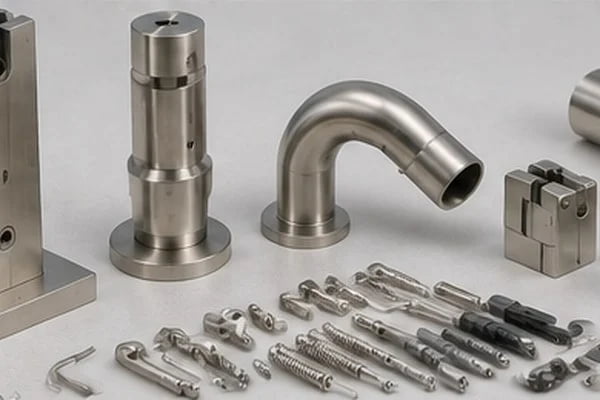
The real question is not “Which supplier is cheaper?” The better question is: Who can make the whole railing system fit, finish, pack, ship, and pass inspection as one coordinated set?
Should I Source a Stainless Steel Railing System From One Supplier?
Sourcing a stainless steel railing system from one supplier sounds convenient, but convenience is not the only point. The bigger value is coordination. If the buyer does not have a strong technical team, one main supplier can reduce many hidden risks.
A single capable supplier can coordinate posts, handrails, glass clamps, elbows, base plates, fasteners, surface finish, packaging, and shipment together. This makes compatibility easier to check and gives the buyer a clearer contact point when problems appear.
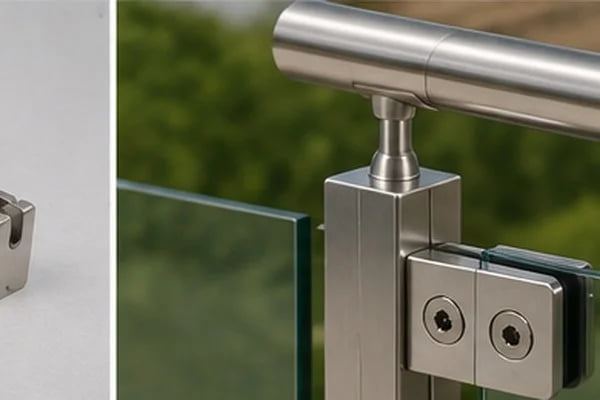
Why one main supplier often works better
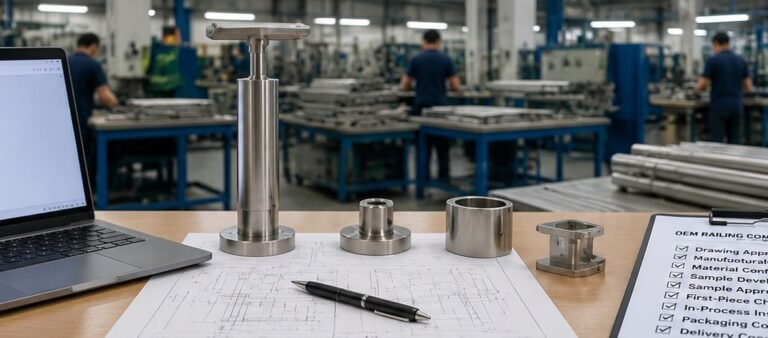
Check railing components as an assembly as well as individually. Compare post and handrail dimensions, connector angles, hole positions and clamp interfaces against the coordinated drawings.
Buyers should check:
- Material grade: such as 304 or 316 stainless steel, depending on use and corrosion risk
- Surface finish: mirror polish, satin, brushed, or custom finish
- Dimensions: tube diameter, wall thickness, post height, base plate size
- Tolerance: especially for holes, brackets, connectors, and glass clamps
- Batch consistency: color tone, polishing direction, and visible finish
- Certificates: material certificates or test documents, which buyers should verify
- Packing method: protection against scratches during export transport
A main supplier does not automatically mean perfect quality. I still ask for drawings, samples, inspection photos, packing details, and batch checks. However, one main supplier usually makes the responsibility line clearer.
| Item | One Main Supplier | Multiple Suppliers |
|---|---|---|
| Compatibility | Easier to coordinate | Buyer must control |
| Communication | One main contact | More follow-up needed |
| Claims | Clearer responsibility | Responsibility may split |
| Unit price | May be higher | May be lower |
| Total cost | Often more stable | Hidden costs may rise |
So, I would not say “one supplier is always best.” I would say: one capable main supplier is often the practical choice for overseas buyers who need lower coordination risk.
For complementary guidance, see Before You Place a Railing Hardware Order: 10 Supplier Details Worth Verifying.
When Do Multiple Suppliers Make Sense for a Stainless Steel Railing System?
Multiple suppliers can be a smart strategy, but only when the buyer controls the technical details. If the buyer only compares the price of posts, clamps, handrails, and fittings separately, the “saving” can disappear fast.
Multiple suppliers make sense when the buyer has complete drawings, confirmed specifications, inspection standards, and enough experience to manage system matching. This model works better for mature importers, contractors, or railing brands with strong QC and engineering support.
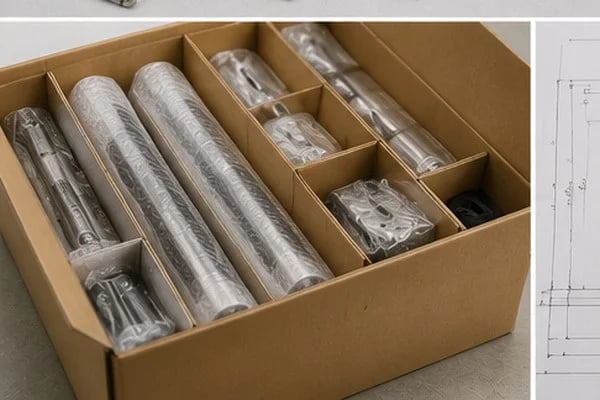
When splitting suppliers can work
A buyer may use one supplier for stainless steel posts, another for glass clamps, and another for special handrail connectors. This can be reasonable when one factory has a special advantage. For example, one supplier may do better polishing, while another may have more accurate CNC machining.
But the buyer must control the whole system.
Before splitting suppliers, I would confirm:
One master drawing set
Every supplier should follow the same dimensions, not their own “standard.”Clear tolerance rules
A 1–2 mm difference may look small, but it can affect assembly.Sample assembly test
Samples should be checked together, not separately.Surface finish standard
“Brushed finish” can look different from factory to factory.Responsibility boundary
If a connector does not fit the post, who pays for rework?Packaging and labeling
Mixed components must be easy to identify on site.
Multiple suppliers are not a shortcut. They are a management model. The buyer needs time, technical judgment, and inspection ability.
My simple rule: if I cannot clearly explain how every part connects, I should not split the supply chain too early.
For local building codes, load requirements, installation design, and structural safety, buyers should always consult qualified engineers, code professionals, or project specialists. A sourcing person can help compare suppliers and documents, but should not replace technical approval.
For complementary guidance, see What Should Be Included in a Stainless Steel Railing System BOM?.
How Should Buyers Compare Stainless Steel Railing System Quotes?
A stainless steel railing system quote should not be compared only by unit price. A cheap clamp or post can become expensive if it causes mismatch, extra samples, rework, repacking, or shipment delays.
Buyers should compare quotes by total landed procurement cost, including component compatibility, sample confirmation, inspection work, packaging, logistics, communication time, and after-sales responsibility. The best quote is the one that reduces total risk, not only the one with the lowest item price.
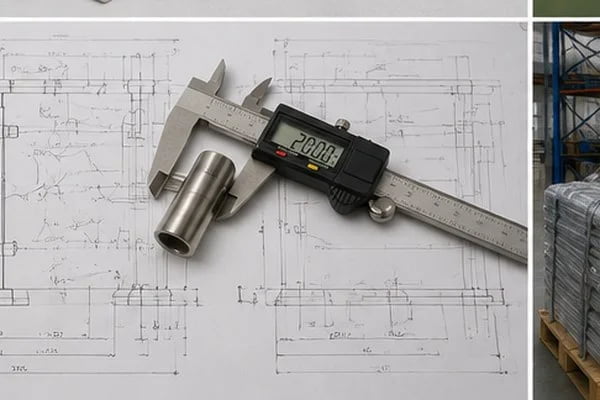
A practical quote checklist
When I review a railing system quotation, I prefer to build an accessory list first. This avoids missing small but important parts.
A useful list may include:
- Posts
- Handrails
- Wall brackets
- Glass clamps
- Base plates
- End caps
- Elbows and connectors
- Screws, bolts, and anchors
- Rubber pads or gaskets
- Installation accessories
- Packaging method
- Spare parts percentage
Then I ask suppliers to confirm the same points:
| Quote Point | What I Check |
|---|---|
| Material | 304, 316, or other grade with documents |
| Finish | Satin, mirror, brushed, or project standard |
| Dimensions | Tube size, wall thickness, height, hole position |
| Tolerance | Written acceptable range |
| Samples | Whether parts are assembled together |
| Inspection | Photos, measurements, batch checks |
| Packing | Scratch protection and carton/pallet plan |
| Documents | Certificates buyers must verify |
This approach makes quotes more comparable. It also helps buyers avoid a common mistake: accepting a low price without checking whether all parts belong to the same system.
For complementary guidance, see From Drawing Approval to Mass Production: Inside an OEM Railing Components Order.
Frequently Asked Questions
Is one supplier always better for a stainless steel railing system?
No. One supplier is not always better. It is usually better for buyers who need easier coordination and clearer responsibility. Multiple suppliers can work well when the buyer has strong drawings, QC control, and technical experience.
Can I save money by buying railing parts from different suppliers?
You may reduce some unit prices, but total cost can increase. Extra samples, inspection, communication, packaging, shipping coordination, and rework can remove the savings. Buyers should compare total landed cost.
What documents should I ask for?
You can ask for material certificates, drawings, finish details, inspection photos, packing lists, and test documents if required. Buyers should verify important certificates and project requirements with qualified professionals or third parties.
Should samples be checked separately or together?
Samples should be checked together whenever possible. A railing system works as an assembled system, so posts, handrails, clamps, connectors, and fittings should be tested for fit, finish, and consistency.
Single versus multiple suppliers: a practical decision record
Use this proposed worksheet to record a purchasing decision. It is an editorial checklist, not a completed project inspection or test result.
| Review step | What to record |
|---|---|
| Define the requirement | List every interface between separately supplied railing components. |
| Resolve the interface | Assign one owner to drawing revisions, tolerance coordination and nonconformity resolution before comparing sourcing models. |
Worked example: Split-order freight
Illustrative assumptions only — not an actual order, measured result, price offer or engineering approval.
One illustrative offer is USD 1,000 plus USD 100 freight: USD 1,100. Two split offers total USD 950 plus USD 80 and USD 90 freight: USD 1,120.
Decision: The split offer is USD 20 higher before coordination costs; use actual quotes rather than these assumed prices.
Reference and applicability
worldstainless marine applications: Material-selection background for marine exposure, not a railing-system test report. Project-specific technical or regulatory requirements should be checked by the responsible qualified professional.
Editorial update: 25 September 2026. This update checks article structure, topic scope and the references identified above. It does not claim independent engineering certification.
Related guides and product references
For the next stage of stainless steel railing systems selection, use these guides alongside the product catalogue. Catalogue references do not replace project-specific drawings or engineering approval.
- Buying Stainless Steel Railing Systems for Commercial Projects: Where Should You Start?
- Stainless Steel Railing System Components: The Complete Buyer's Guide
- Stainless steel railing systems product range
- Pivoting Glass Handrail Bracket — Reference silver appearance — SSR-001 — catalogue reference
Conclusion
A stainless steel railing system should be sourced as a coordinated system, not just as separate cheap parts. One capable main supplier often gives overseas buyers better control over compatibility, communication, inspection, and responsibility. Multiple suppliers can still make sense, but only with strong technical control. If you are comparing suppliers now, start with drawings, an accessory list, and clear specifications before you chase the lowest price.



Comments (3)