
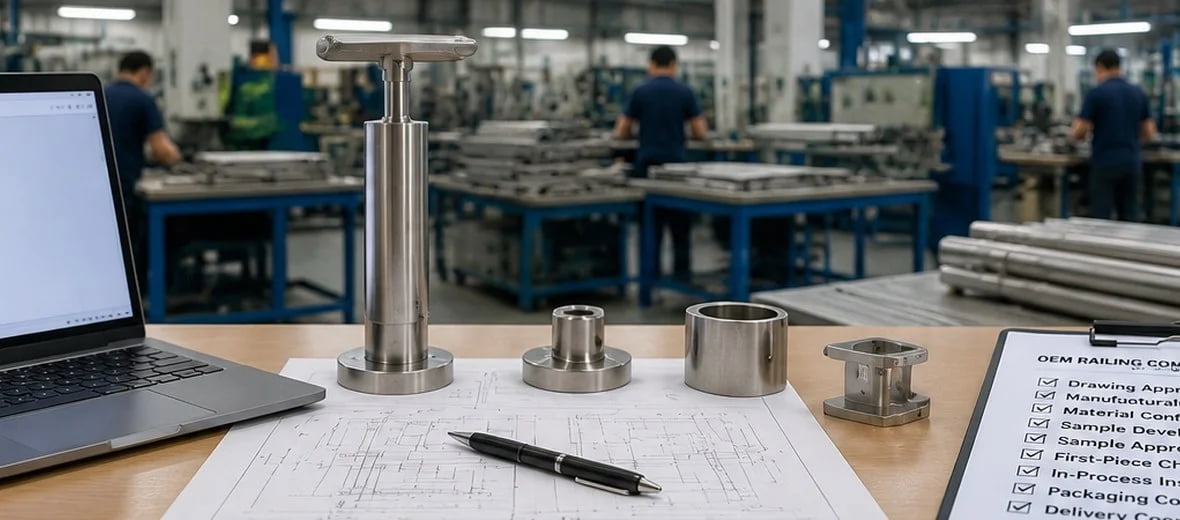
An OEM railing components order can look simple after the buyer approves the drawing. The risk is that everyone relaxes too early. A signed drawing does not automatically control materials, finish, fit, packaging, or inspection standards. In my order follow-up experience, drawing approval is only the first checkpoint before real production control starts.
An OEM railing components order moves from drawing approval to mass production through manufacturability review, material confirmation, sample development, sample approval, first-piece checking, in-process inspection, packaging confirmation, and delivery coordination. The main goal is not only to make parts, but to make repeatable parts that match agreed standards.
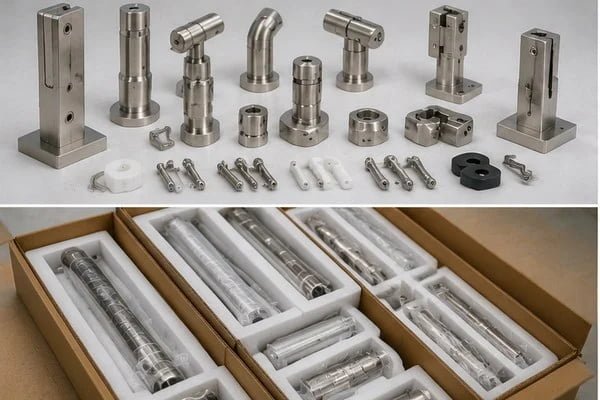
Many sourcing problems do not come from one big mistake. They come from small unclear details. A radius, coating color, hole position, carton method, or tolerance note can create rework later. That is why I treat each step as a risk-control point, not as paperwork.
Why Is Drawing Approval Only the First Checkpoint in an OEM Railing Components Order?
Drawing approval feels final, but it can still leave hidden gaps. Buyers may think the supplier is ready to produce. The supplier may still need to confirm whether the design is practical, stable, and suitable for the expected railing system use.
A drawing-approved OEM railing components order still needs review of material grade, tolerances, surface treatment, corrosion expectations, matching parts, installation position, and inspection criteria. Drawing approval confirms the design direction, but it does not replace manufacturability review or production standard confirmation.
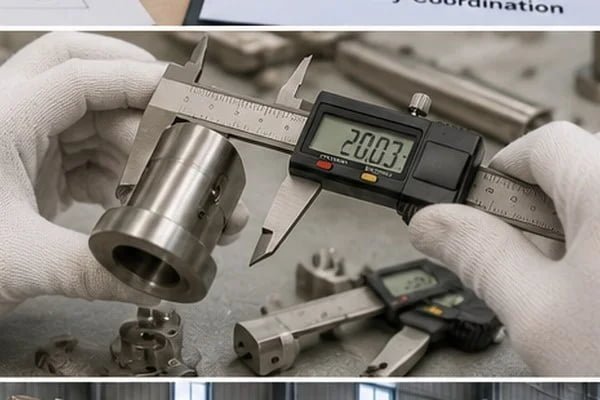
In many OEM railing component projects, I first check whether the drawing tells the whole story. A drawing may show dimensions clearly, but it may not explain how the part will be used outdoors, which visible surfaces matter most, or how tightly it must fit with other accessories.
Details I usually confirm before sampling
- Material requirement: stainless steel, aluminum, zinc alloy, or another specified material
- Tolerance level: normal commercial tolerance or tighter control
- Surface finish: polishing, brushing, powder coating, anodizing, plating, or painting
- Color standard: sample color, RAL number, or buyer reference
- Assembly relationship: matching tube, glass, screws, base plates, or brackets
- Use environment: indoor, outdoor, coastal, humid, or high-touch area
- Inspection focus: dimensions, appearance, coating, fit, packaging, or labeling
These details affect price and lead time. For example, a tighter tolerance may require more careful tooling, slower processing, or higher inspection effort. A higher surface finish standard may increase polishing time and rejection risk. Outdoor-use requirements may need more attention to corrosion resistance and coating durability.
| Variable | Risk if unclear | What I ask buyers to confirm |
|---|---|---|
| Material | Wrong strength, look, or corrosion behavior | Grade, certificate request, intended use |
| Tolerance | Poor fit during installation | Critical dimensions and acceptable deviation |
| Surface finish | Color or texture dispute | Finish sample, photo, or color code |
| Packaging | Scratches during transport | Inner protection, carton strength, labeling |
| Inspection | Different quality expectations | AQL level or key inspection points |
I do not present myself as a structural engineer or lab authority. For load-bearing or project-specific safety decisions, buyers should involve qualified engineers and verify required standards. My role is practical: I help turn buyer drawings into clear supplier instructions before production risk grows.
For complementary guidance, see Before You Place a Railing Hardware Order: 10 Supplier Details Worth Verifying.
How Does Sample Approval Protect an OEM Railing Components Order Before Mass Production?
A sample is where the drawing becomes physical. The problem is that buyers sometimes approve a sample too casually. If the sample approval is vague, the bulk order may still face disputes about appearance, dimensions, surface treatment, fit, or packaging.
Sample approval protects an OEM railing components order by creating a shared production reference. The approved sample should define visible quality, key dimensions, finish standard, assembly fit, packaging method, and acceptable deviation before mass production starts. It reduces misunderstanding, but it does not guarantee perfection without process control.
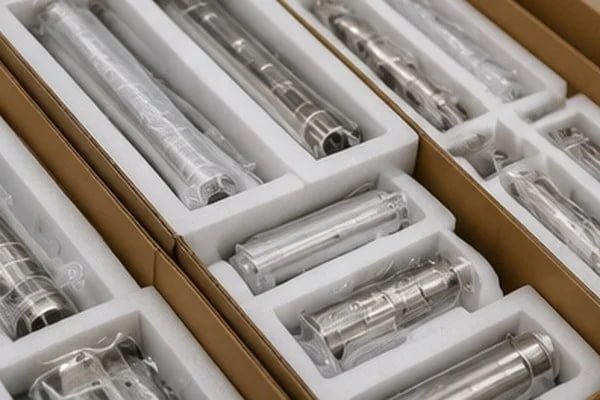
Before arranging samples, I usually ask buyers to confirm what they will judge. Some buyers care most about installation fit. Some care about surface appearance because the component is visible in retail packaging or project photos. Some care about packing because polished parts scratch easily during shipment.
What a useful sample approval should include
Dimension check
I compare the sample with the approved drawing, especially holes, slots, angles, and matching positions.Appearance review
The buyer and supplier should agree on acceptable scratches, polishing marks, color differences, and visible defects.Fit confirmation
If the part connects with railing tubes, glass clamps, screws, or brackets, the matching relationship must be tested.Surface treatment confirmation
A finish can look acceptable in photos but different under natural light. A physical reference is safer.Packaging test
Packaging should protect the finish during handling, export cartons, and long-distance transport.
The biggest sourcing risk is not always the lowest price. It is the gap between the approved sample and the bulk shipment. That is why I pay attention to first-piece confirmation. When mass production begins, the first finished pieces should be checked against the approved sample and drawing before the factory continues at full speed.
A practical control plan may include:
- First-piece dimension and appearance check
- In-process inspection at key production stages
- Surface treatment confirmation before full batch packing
- Final random inspection before shipment
- Photo or video records for buyer review when appropriate
A supplier should not only say, “Mass production will match the sample.” The better question is: Which standards, tools, and inspection points will help keep the bulk order close to the approved sample?
For complementary guidance, see What Should Be Included in a Stainless Steel Railing System BOM?.
Frequently Asked Questions
Is drawing approval enough to start mass production?
No. Drawing approval is important, but it is not enough by itself. Buyers should also confirm material, tolerance, surface finish, assembly fit, packaging, inspection points, and sample standards before mass production.
Why can two quotations for railing components be very different?
Cost can change because of material grade, tolerance strictness, surface treatment, outdoor-use requirements, packaging method, inspection expectations, and order quantity. A lower price may hide unclear standards or higher quality risk.
Does Does sample approval guarantee the bulk order will be perfect?
No. Sample approval creates a reference, but bulk consistency still depends on first-piece checking, process control, in-process inspection, final inspection, and clear acceptance standards.
What should I send before asking for a quotation?
You should send drawings, material requirements, surface finish needs, intended use, expected quantity, packaging requirements, and key inspection concerns. Photos or reference samples also help the supplier evaluate feasibility.
OEM revision control: a practical decision record
Use this proposed worksheet to record a purchasing decision. It is an editorial checklist, not a completed project inspection or test result.
| Review step | What to record |
|---|---|
| Define the requirement | Link the drawing revision to the sample identifier and written approval date. |
| Resolve the interface | Record deviations and corrective actions at first-piece, production and packing stages; do not mix superseded drawings into the release pack. |
Worked example: Revision segregation
Illustrative assumptions only — not an actual order, measured result, price offer or engineering approval.
In a hypothetical 200-piece order, 40 pieces were produced to revision A before revision B was approved. Separate those 40 from the remaining 160 pending disposition.
Decision: Approval of revision B does not retrospectively approve the revision-A parts.
Reference and applicability
worldstainless marine applications: Material-selection background for marine exposure, not a railing-system test report. Project-specific technical or regulatory requirements should be checked by the responsible qualified professional.
Editorial update: 25 September 2026. This update checks article structure, topic scope and the references identified above. It does not claim independent engineering certification.
Related guides and product references
For the next stage of stainless steel railing systems selection, use these guides alongside the product catalogue. Catalogue references do not replace project-specific drawings or engineering approval.
- One Supplier or Multiple Suppliers? Sourcing a Complete Stainless Steel Railing System
- Buying Stainless Steel Railing Systems for Commercial Projects: Where Should You Start?
- Stainless Steel Railing System Components: The Complete Buyer's Guide
- Stainless steel railing systems product range
- Pivoting Glass Handrail Bracket — Reference silver appearance — SSR-001 — catalogue reference
Conclusion
An OEM railing components order does not become safe just because the drawing is approved. The real work starts when the buyer and supplier turn that drawing into manufacturable parts, approved samples, inspection standards, and protected packaging. If you are preparing a custom railing component project, send your drawings, intended use, material needs, surface treatment requirements, and key inspection expectations first. I can help review feasibility and quotation details from an OEM order-follow-up perspective.



Comments (1)