
Quick answer
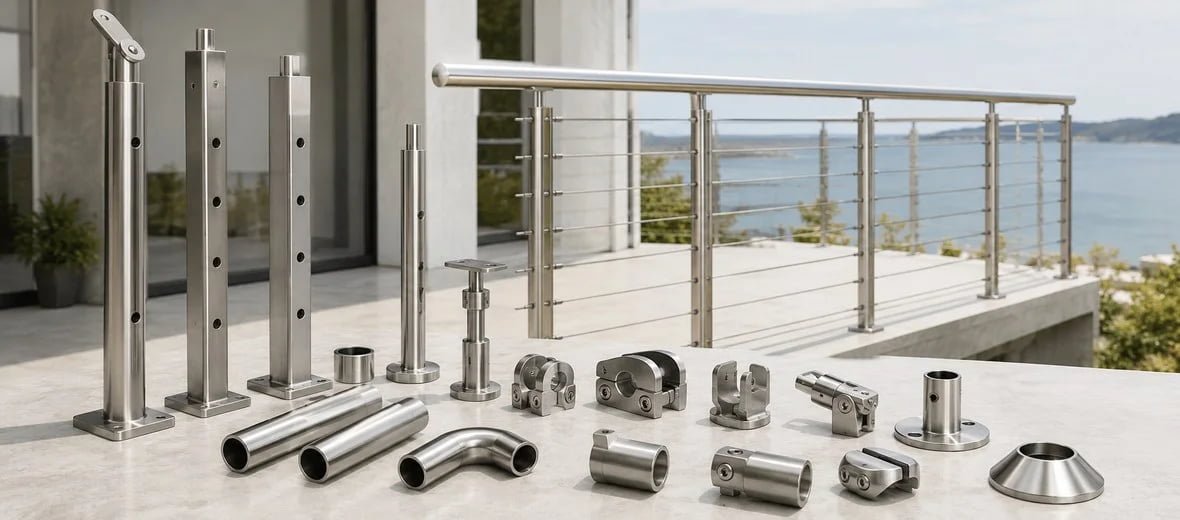
A stainless railing system needs coordinated posts, rails, connectors, infill fittings, covers and fixings. Identify the railing type and site interfaces first, then prepare a drawing-linked parts list so the quoted package and installation responsibilities are explicit.
Stainless steel railing system components can look simple at first, but missing one small part can slow down a whole project. I often see buyers ask for posts and handrails, then later realize they also need clamps, anchors, caps, elbows, or tensioners. A better solution is to build the list by system type and site condition.
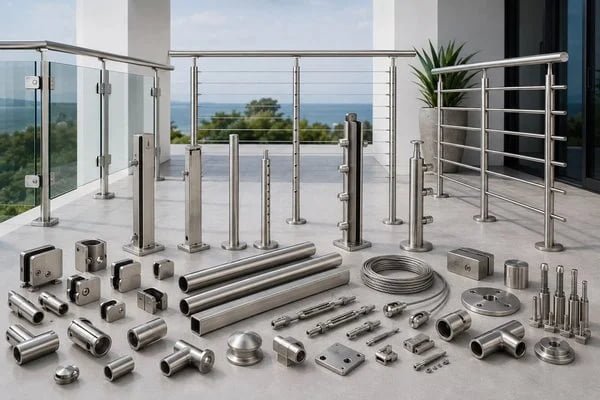
A complete stainless steel railing system component list should include structural parts, connection parts, fixing hardware, finishing accessories, adjustment parts, and spare or replacement items. The exact list depends on whether the project uses glass railing, cable railing, or tube railing, plus the installation surface and environment.
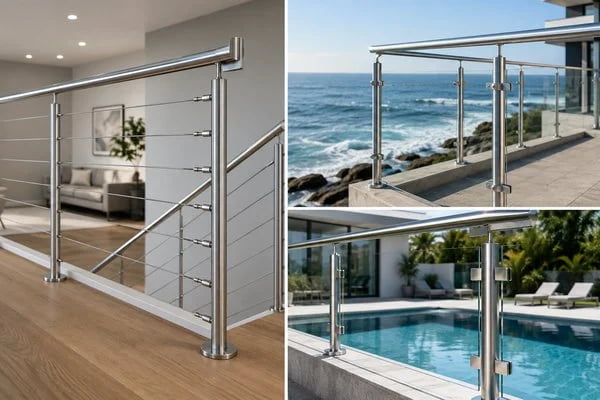
I do not treat railing parts as a loose shopping list. In real quotation work, the safer way is to ask, “How will this system be installed, adjusted, finished, and maintained?” That question prevents many quotation mistakes.
A railing order can fail because of small missing items, not only big parts. Buyers usually remember posts, tubes, or handrails. However, they may forget base plates, screws, wall flanges, cover plates, end caps, or glass rubbers. That creates reorders, delays, and extra freight costs.
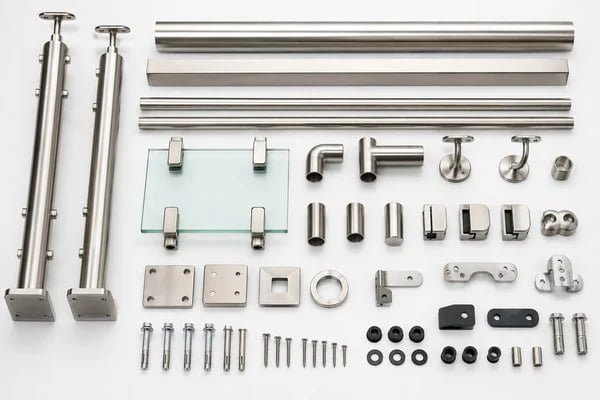
A complete stainless steel railing system components list should cover six roles: main structure, connection, fixing, finishing, adjustment, and backup parts. Each role matters because the railing must not only stand in place, but also connect cleanly, fit the site, look finished, and allow future replacement.
Main structure parts
These are the visible load-bearing or support parts. I usually discuss them first because they define the basic system.
Common examples include:
- Posts or balusters
- Handrails
- Top rails
- Bottom rails
- Glass panels
- Stainless tubes
- Cable wires
- Horizontal bars
For procurement, I do not recommend quoting only “post + handrail.” That is too vague. A buyer should confirm post height, tube size, wall thickness, surface finish, installation method, and whether the handrail is round, square, slotted, or custom.
Connection parts
Connection parts make separate components work as one system. These are easy to miss because they are smaller, but they affect both appearance and assembly.
Typical connection parts include:
- Glass clamps
- Tube connectors
- Handrail brackets
- Elbows
- Corner connectors
- Tee connectors
- Wall connectors
- Cable terminals
In my quotation discussions, connectors often create the most back-and-forth. For example, a 90-degree corner may need an elbow, an adjustable connector, or a welded solution depending on the design. If the buyer only says “corner needed,” the supplier may quote the wrong item.
Fixing parts
Fixing parts attach the railing to concrete, wood, steel, or other surfaces. This area needs special care because I am a supplier, not a structural engineer. I can help match common hardware, but project-specific fixing decisions should be checked by qualified professionals.
Fixing items may include:
| Role | Common Parts | Buyer Should Confirm |
|---|---|---|
| Floor mounting | Base plates, anchor bolts, cover plates | Concrete, tile, steel, wood |
| Side mounting | Side brackets, bolts, spacers | Slab thickness and edge distance |
| Wall fixing | Wall flanges, screws, wall brackets | Wall material and handrail height |
| Glass fixing | Spigots, standoffs, clamps | Glass thickness and panel size |
Finishing and backup parts
Finishing parts make the railing look complete. Backup parts reduce after-sales problems.
Important small parts include:
- End caps
- Cover rings
- Decorative covers
- Rubber gaskets
- Plastic inserts
- Spare screws
- Extra clamps
- Replacement caps
I always suggest buyers treat these as procurement-risk items, not minor add-ons. A missing end cap may look small on paper, but on site it can make the whole railing look unfinished.
Why Do Stainless Steel Railing System Components Change by Railing Type?
A generic component list is risky because glass railing, cable railing, and tube railing do not use the same logic. Each system has different connection points, adjustment needs, and finishing accessories. If a buyer mixes the lists, the quotation may look complete but still be wrong.
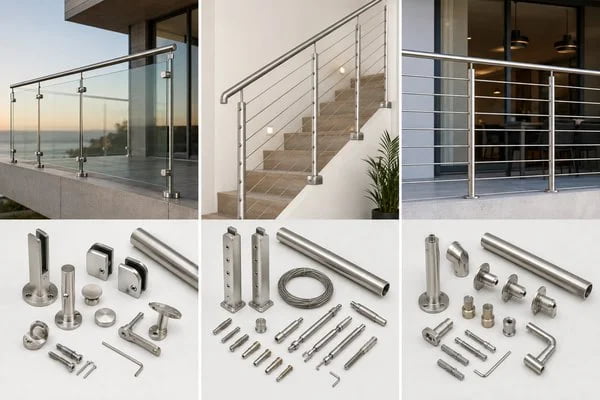
Stainless steel railing system components must be selected according to the railing type. Glass railing needs glass clamps, spigots, rubbers, or standoffs. Cable railing needs wires, tensioners, and terminals. Tube railing needs elbows, flanges, connectors, and end caps. One universal checklist is not enough.
Glass railing components
Glass railing usually focuses on holding glass safely and cleanly. The main procurement questions are glass thickness, fixing method, and whether the handrail is required.
Common glass railing parts include:
- Posts with glass clamps
- Frameless glass spigots
- Glass standoffs
- Slotted handrails
- Rubber gaskets
- End caps
- Base plates and anchors
A buyer should not only ask for “glass railing hardware.” The supplier needs to know if it is post-mounted, spigot-mounted, standoff-mounted, or channel-mounted. Each option uses different accessories.
Cable railing components
Cable railing looks simple, but it has more adjustment parts than many buyers expect. The system needs tension, alignment, and clean termination.
Key parts include:
- Stainless steel posts
- Wire rope
- Cable tensioners
- Swage terminals
- Turnbuckles
- End fittings
- Intermediate pass-through fittings
- Protective sleeves
The most common risk is undercounting tensioners and terminals. Each cable run has ends, corners, and sometimes intermediate posts. If the layout is not clear, the quantity can be wrong.
Tube or horizontal bar railing components
Tube railing often uses round or square tubes with welded or mechanical connectors. It is common for stairs, balconies, terraces, and commercial spaces.
Main parts include:
- Posts
- Handrails
- Horizontal bars
- Elbows
- Tee connectors
- Wall flanges
- Base plates
- End caps
- Decorative covers
Tube railing buyers should confirm whether the system is for straight runs, stairs, corners, or mixed sections. Stair angles often need adjustable connectors instead of fixed elbows.
Quick comparison
| Railing Type | Main Risk | Parts Buyers Often Miss |
|---|---|---|
| Glass railing | Wrong glass fixing method | Gaskets, clamps, spigots, caps |
| Cable railing | Wrong tensioning layout | Tensioners, terminals, sleeves |
| Tube railing | Wrong corner or stair fitting | Elbows, flanges, covers, end caps |
For complementary guidance, see Before You Place a Railing Hardware Order: 10 Supplier Details Worth Verifying.
How Should Buyers Choose 304 or 316 Stainless Steel Railing Components?
Stainless steel grade selection should start with the environment, not only price. I often see buyers ask, “Is 304 enough?” The better question is, “Where will the railing be installed, and what exposure will it face?” Indoor, outdoor, coastal, pool, and high-traffic areas are different.
For stainless steel railing components, 304 is commonly used for many indoor and general environments, while 316 is often preferred for harsher outdoor, coastal, poolside, or high-humidity conditions. Buyers should verify material documents and get professional advice for application-specific requirements.
I avoid making absolute promises about corrosion life because real performance depends on environment, cleaning, surface finish, chemicals, salt exposure, and maintenance. Even stainless steel needs care.
Practical grade questions
Before requesting a quote, buyers can answer:
- Is the railing indoor or outdoor?
- Is the site near the sea?
- Is it near a swimming pool or chemical area?
- Is the area humid or rainy?
- Will many people touch the railing daily?
- Is mirror polish, satin finish, or brushed finish required?
A simple office interior and a seaside balcony should not be treated the same.
Surface finish also matters
Material grade is only one part of selection. Finish affects appearance and maintenance.
| Finish | Common Use | Buyer Note |
|---|---|---|
| Brushed / satin | Modern indoor and outdoor projects | Popular and practical |
| Mirror polish | Decorative spaces | Shows fingerprints more easily |
| Matte finish | Minimalist design | Needs clear sample approval |
| Powder-coated stainless | Custom color projects | Coating quality should be checked |
For B2B orders, I suggest buyers request material grade, finish standard, drawings, and sample photos before mass production. If certifications or test reports are mentioned, buyers should verify the documents and confirm they apply to the ordered product.
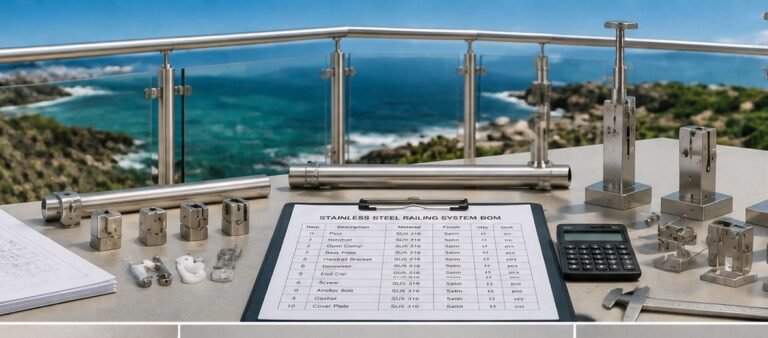
For complementary guidance, see What Should Be Included in a Stainless Steel Railing System BOM?.
What Information Should Buyers Prepare Before Requesting a Quote?
Use the initial photograph to identify the enquiry, then obtain dimensions, layout, quantities and accessory requirements. Label any quotation based on incomplete information as preliminary.
To quote stainless steel railing system components accurately, buyers should prepare drawings, dimensions, total railing length, quantity, installation position, mounting surface, environment, target railing type, finish, grade preference, and packaging needs. This helps suppliers match the correct parts and reduce quotation errors.
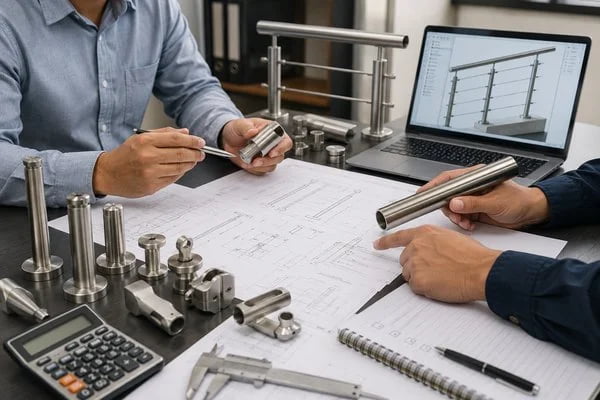
Here is the checklist I recommend:
- Project drawing or simple sketch
- Total railing length
- Section lengths
- Stair or balcony layout
- Post quantity if already known
- Glass size and thickness if glass railing
- Cable rows and spacing if cable railing
- Tube size if tube railing
- Floor-mounted or side-mounted installation
- Mounting surface: concrete, steel, wood, tile, or other
- Indoor, outdoor, coastal, poolside, or humid environment
- Stainless steel grade preference: 304 or 316
- Surface finish requirement
- Packaging and labeling needs
- Spare parts requirement
- Target market and any documents to verify
This list does not replace engineering review or local code checking. However, it gives the supplier enough information to make a cleaner quotation and a more complete component proposal.
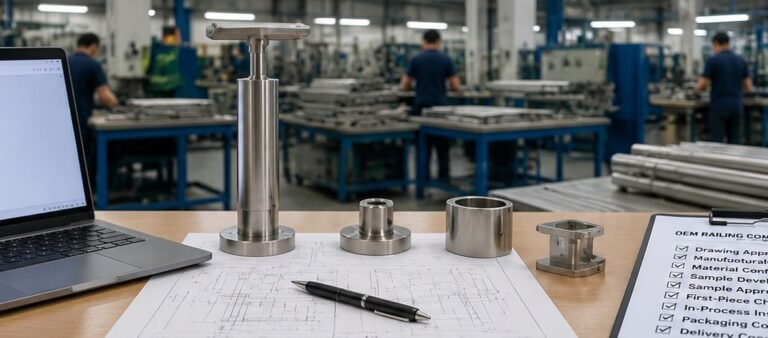
For complementary guidance, see From Drawing Approval to Mass Production: Inside an OEM Railing Components Order.
Frequently Asked Questions
Are stainless steel railing system components universal?
No. I do not recommend using one universal parts list. Glass railing, cable railing, and tube railing need different clamps, connectors, tensioners, caps, and fixing parts. The correct list depends on the system type and installation condition.
What small railing parts are most often forgotten?
Buyers often forget end caps, cover plates, rubber gaskets, wall flanges, anchor bolts, elbows, cable tensioners, and spare screws. These small accessories can delay installation if they are missing from the order.
Is 316 stainless steel always better than 304?
316 is often preferred for harsher environments like coastal, poolside, or high-humidity areas, but “better” depends on the project. Buyers should consider exposure, budget, finish, cleaning, and professional advice before confirming the grade.
Can I request a quote with only photos?
Photos help, but they are not enough for an accurate quote. I suggest sending dimensions, railing type, installation surface, environment, quantity, finish, and any drawings. This reduces missing parts and wrong configurations.
Railing component completeness: a practical decision record
Use this proposed worksheet to record a purchasing decision. It is an editorial checklist, not a completed project inspection or test result.
| Review step | What to record |
|---|---|
| Define the requirement | Separate structural supports, infill attachments, rail connections and finishing parts. |
| Resolve the interface | Check corners, ends, stairs and transitions individually; these locations can require different components from a straight run. |
Worked example: Connection schedule
Illustrative assumptions only — not an actual order, measured result, price offer or engineering approval.
A hypothetical approved layout has 10 straight joints and 4 corner joints. List 14 joints in total but retain the two joint types as separate BOM lines.
Decision: Equal quantities do not make different joint geometries interchangeable.
Reference and applicability
worldstainless marine applications: Material-selection background for marine exposure, not a railing-system test report. Project-specific technical or regulatory requirements should be checked by the responsible qualified professional.
Editorial update: 25 September 2026. This update checks article structure, topic scope and the references identified above. It does not claim independent engineering certification.
Related guides and product references
For the next stage of stainless steel railing systems selection, use these guides alongside the product catalogue. Catalogue references do not replace project-specific drawings or engineering approval.
- One Supplier or Multiple Suppliers? Sourcing a Complete Stainless Steel Railing System
- Buying Stainless Steel Railing Systems for Commercial Projects: Where Should You Start?
- Stainless steel railing systems product range
- Pivoting Glass Handrail Bracket — Reference silver appearance — SSR-001 — catalogue reference
Conclusion
A complete stainless steel railing system components list is not a fixed checklist. It should be built around the railing type, site condition, fixing method, environment, and finishing needs. In my quotation work, the biggest problems usually come from missed accessories and unclear layouts. If you prepare drawings, dimensions, installation details, and appearance requirements, your supplier can match the parts more accurately. Send a clear inquiry checklist before ordering, and you will avoid many costly surprises.


Comments (3)