Short answer: Pickling and passivation are related surface-treatment operations, not interchangeable purchase descriptions. Define the condition to be corrected, the required appearance and the acceptance evidence. Ask a competent finishing provider to select and control the process; this article is not a chemical-treatment procedure.
Procurement memo: replace one vague line
The line “weld cleaned and passivated” can conceal different expectations between purchaser, fabricator and finisher. One party may expect heat tint removal, another an iron-contamination check, and another a uniform visible finish.
Start with the actual components in the stainless railing range. Mark visible weld areas and surfaces hidden after installation. The welded versus mechanical connection guide helps establish which fabrication operations belong in the supply scope.
ASSDA’s pickling and passivation explanation distinguishes removal of heat-related scale and affected surface material from treatments addressing contamination and passive-film formation. Specify the required outcome rather than assuming one process name answers every surface question.
Separate function, appearance and evidence
| Purchasing concern | Information to request |
|---|---|
| Weld condition | Which areas need post-fabrication treatment? |
| Appearance | What sample or finish reference applies? |
| Cleanliness | What contamination checks are agreed? |
| Process record | Which part batch and operations are identified? |
| Release | Who accepts the result before packing? |
The worldstainless treatment guide provides further background. It does not establish that a particular delivered railing received the stated treatment. That connection requires supplier records linked to the order.
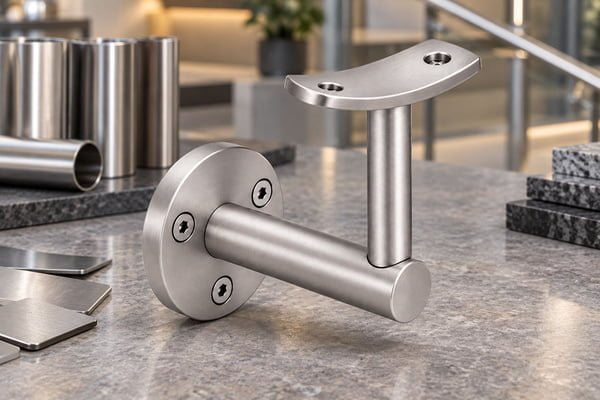
Catalogue illustration: Curved Saddle Wall Handrail Bracket — Matte silver appearance concept. Shown as a component reference, not an installation drawing or test result.
Approve a representative finish sample
A small unwelded coupon cannot show every feature of a welded corner. Where appearance matters, request a sample with comparable geometry and finishing access. Include both the treated area and adjacent visible surfaces in the review.
Use the finish-matching guide to record viewing conditions and the accepted sample identity. A photograph can support the record, but lighting changes the way stainless steel appears. Define the practical comparison method before production.
The material-certificate checklist addresses a separate question: the identity of the steel. A material certificate and a surface-treatment record should not be presented as if they were the same document.
Do not buy an unexplained “corrosion-proof” claim
The intended environment, surface condition, cleaning access and maintenance plan all belong in the discussion. IMOA’s coastal exposure guidance and ASSDA’s tea-staining information provide relevant background. No finishing label should be used to promise unlimited performance in every exposure.
For example, two visually similar brackets may differ in weld accessibility or the surfaces on which deposits collect. The procurement response is to define the actual configuration and care requirements, not to approve both through a single photograph.
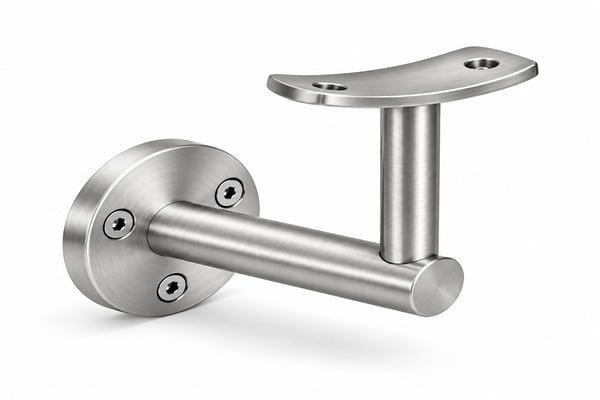
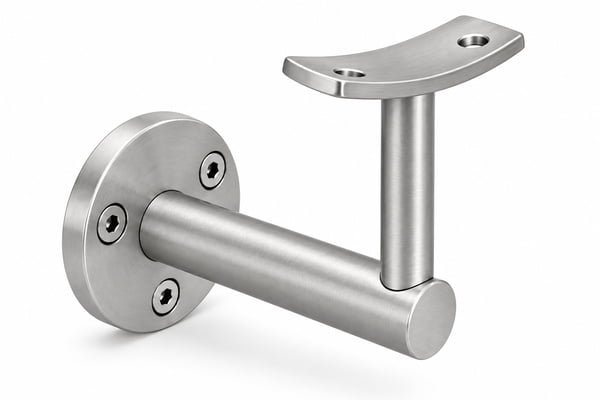
Catalogue illustration: Curved Saddle Wall Handrail Bracket — Fine-brushed silver appearance concept. Shown as a component reference, not an installation drawing or test result.
Give the finisher a controlled work package
Supply the drawing revision, material designation, finish reference, quantities and any protected surfaces or assembled components. Ask which parts must be treated before assembly and how identification is preserved through subcontracted operations.
Avoid specifying chemical concentrations or exposure times copied from a general article. Process selection, safety and disposal require the competent provider’s procedures. The buyer’s role is to define the deliverable and the evidence needed to accept it.
Use NIST’s traceability reference when agreeing meaningful measurement records. ASSDA’s grade-confirmation discussion helps keep material verification distinct from visual finish inspection.
Protect the accepted result
After finishing, packing and handling should prevent avoidable contamination, abrasion and part mixing. An accepted sample is of limited value if the supplied batch arrives without a clear identity or with damaged contact surfaces.
The ISTA procedure overview supports the packaging discussion, and ASSDA’s exterior-cleaning guide offers maintenance context. Specify which care instructions accompany the finished components rather than adding a generic cleaning leaflet at shipment.
Make quotation exceptions easy to compare
Ask each bidder to mark excluded operations and documents beside the corresponding requirement. One quotation may cover mechanical finishing only, while another includes a defined post-fabrication treatment and an inspection record. Comparing only the final amount hides that difference. Record which sample establishes appearance, which document records treatment scope and who approves an exception. When work passes through a subcontract finisher, require the order and batch references to remain connected through delivery. This provides a clearer basis for resolving a discrepancy than a generic finish description.
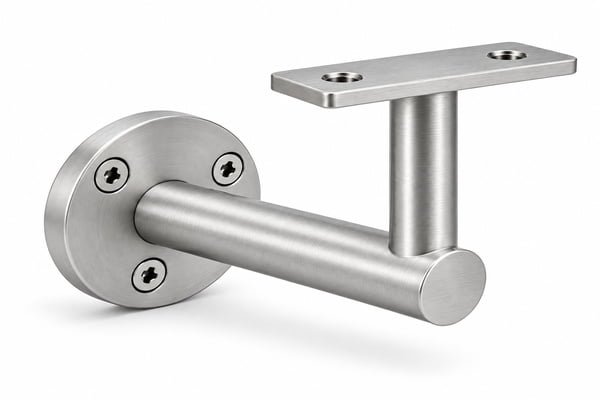
Catalogue illustration: Rectangular Flat Saddle Handrail Bracket — Matte silver appearance concept. Shown as a component reference, not an installation drawing or test result.
Three questions for the quotation review
Does passivation automatically remove all weld heat tint? Do not assume it; ask the finishing provider to define the required preparation and result.
Does a bright surface prove the treatment? No. Appearance and documented process scope are different checks.
What should the order retain? The approved sample, drawing, treatment scope, acceptance record and batch identity.
Discuss the configuration through OEM review, identify relevant finishing and inspection capabilities, and send a marked drawing with your enquiry. This memo describes purchasing controls, not a claim of an Elim-certified treatment result.