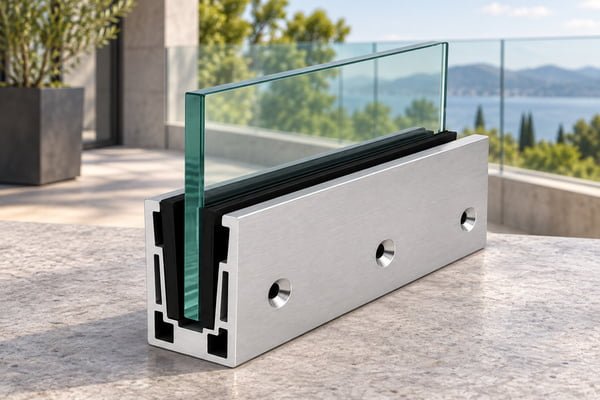
Quick answer: A glass-railing load test report is useful only when the tested assembly, procedure and acceptance criteria can be connected to the system being purchased. Check the complete specimen and report scope before accepting a headline load figure. A component photograph is not evidence of assembly performance.
Read the report as a chain of identity
Imagine receiving a quotation with a report attached but no clear relationship between the report’s specimen code and the quoted model. The first task is not to interpret the graph. It is to establish whether the evidence belongs to this order.
Start with the selected glass balustrade product family. Cross-reference the quoted components, glass specification, support arrangement and drawing revision. The quality review guide provides a broader pre-order framework, but the report review needs its own recorded outcome.
ASTM E2353 describes tests addressing glazing performance in permanent railing systems, including static, impact and post-breakage characteristics. Its scope illustrates why “load tested” is an incomplete description. Confirm the standard edition and requirements relevant to the actual project.
Use a six-part review sheet
| Report field | Buyer’s review question |
|---|---|
| Identity | Which model and drawing revision were tested? |
| Specimen | What glass, fittings and supports were assembled? |
| Method | Which procedure and edition were used? |
| Results | What was measured and how was acceptance decided? |
| Issuer | Who performed and authorised the work? |
| Applicability | Which differences require further review? |
This sheet records questions; it does not turn a purchaser into the approving engineer. Where interpretation requires engineering judgement, send the identified differences to the responsible professional.
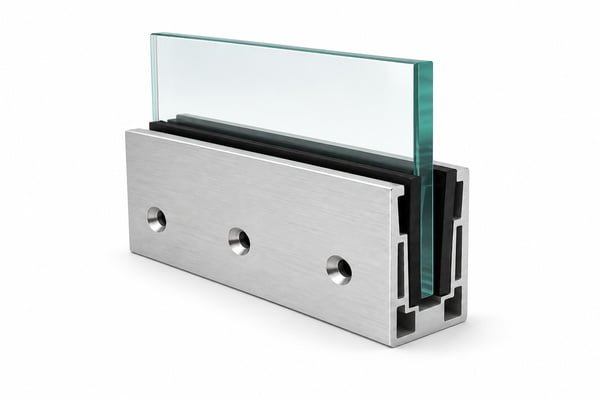
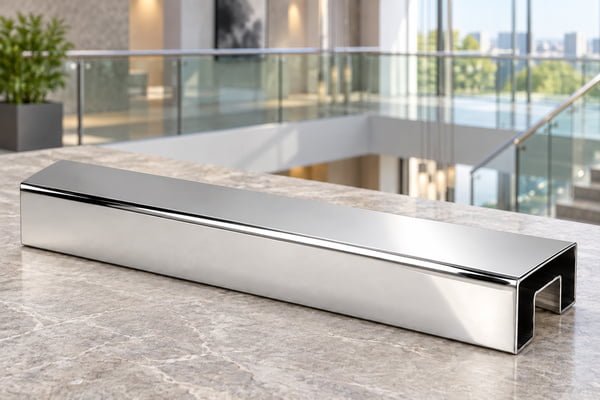
Catalogue illustration: Side-fixing Glass Railing Base Shoe. Shown as a component reference, not an installation drawing or test result.
Separate three different claims
“The metal is the specified grade,” “the fixing resisted a test load,” and “the complete railing meets the project requirement” are different statements. Evidence supporting one does not automatically support the others.
ASSDA’s grade-confirmation guidance is relevant to material identification. NIST’s traceability information concerns measurement traceability. Neither source makes a particular railing compliant. Keep each document attached to the claim it actually supports.
The standoff RFQ guide helps describe glass geometry and fixing coordinates. For side-mounted arrangements, include the supporting edge and fixing detail rather than submitting only the visible fitting.
Make a difference register
Compare the proposed order with the tested specimen. Record changes in panel dimensions, glass build-up, support spacing, anchors, substrate, gaskets or fasteners. “Looks similar” is not a documented equivalence assessment.
An illustrative register might contain six comparison fields with four matching and two unresolved. The result is not “67% compliant.” The two unresolved fields remain review items because their significance is not determined by simple counting.
Consult the relevant anchor manufacturer documentation for anchorage scope and the CPSC glass safety reference for glass-related background. Project-specific requirements may involve evidence beyond a single report.
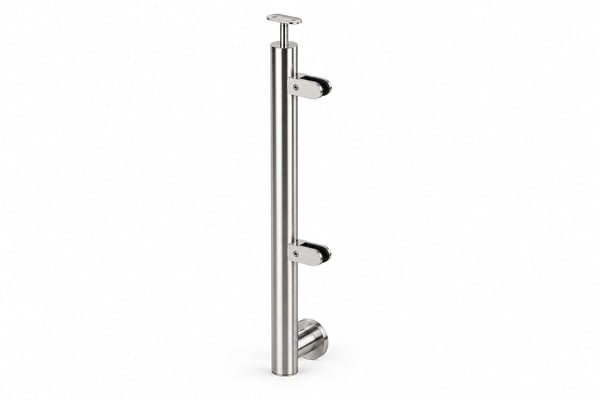
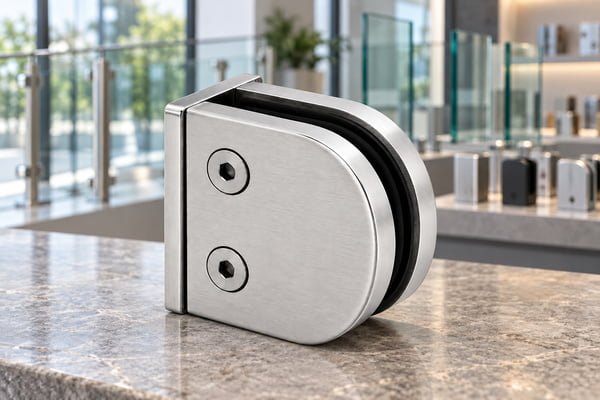
Catalogue illustration: Reflective Silver Side-mounted Glass Railing End Post. Shown as a component reference, not an installation drawing or test result.
Check limits as carefully as results
Read exclusions, conditioning, specimen quantity and observations. Ask whether the document addresses the exposure and performance questions being asked. A short-term mechanical result should not be presented as proof of unlimited service life.
For environmental context, IMOA’s coastal discussion is useful. For handling and delivery risks, ISTA’s transport procedures address a different stage of the supply chain. Keep those distinctions clear in the purchasing file.
Give the review a commercial outcome
Record one of three outcomes: accepted for the defined scope, further information required, or not applicable to the proposed assembly. Identify who made the decision and what condition must be satisfied before release. Avoid vague approval emails that omit the model or revision.
Use Trade.gov’s document overview when organising shipment paperwork, but retain the technical evidence separately from the packing list and invoice. Link both through the order and part identities.
Preserve the review trail
Keep the supplier’s original report, the proposed assembly drawing and the difference register together. If a later quotation changes an anchor or panel dimension, reopen the relevant review item instead of relying on an earlier approval email. Record the decision date, scope and responsible reviewer. This document control is particularly useful for repeat orders, where an unchanged commercial product name may conceal a revised component or installation arrangement. A clear record also helps replacement-part teams understand which configuration was originally accepted.
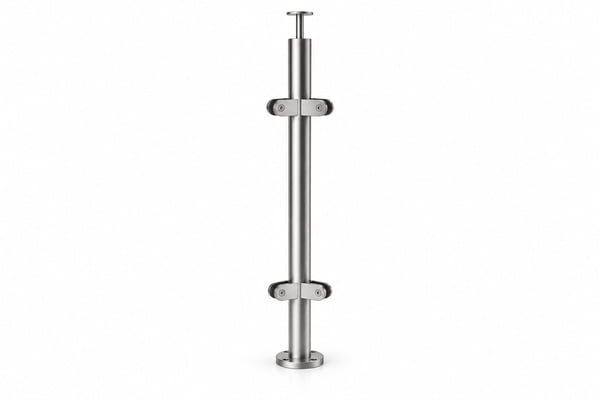
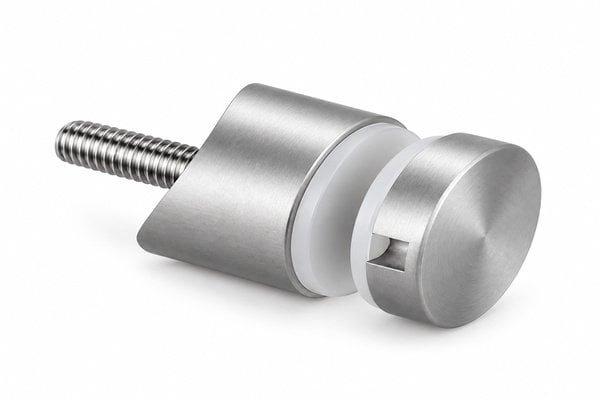
Catalogue illustration: Round Corner Glass Railing Post. Shown as a component reference, not an installation drawing or test result.
Buyer questions
Is a report number enough? No. Request the report and verify its relationship to the supplied assembly.
Can another manufacturer’s public report approve an Elim product? No. It can illustrate documentation practice, not establish equivalence.
What should be requested before production? The required evidence scope, specimen identity and a process for reviewing changes.
Discuss proposed configurations through OEM review, identify relevant inspection capabilities, and submit the evidence requirements with your enquiry. This article supplies a review method; it does not claim that Elim has completed a particular test.