Buy stock-length glass railing base shoes when site flexibility and usable offcuts justify the extra cutting work. Buy cut-to-size lengths when the approved layout is stable and factory preparation reduces handling, waste and installation time. Compare the delivered job cost, not simply the price per metre.
Put both quotations on one cutting schedule
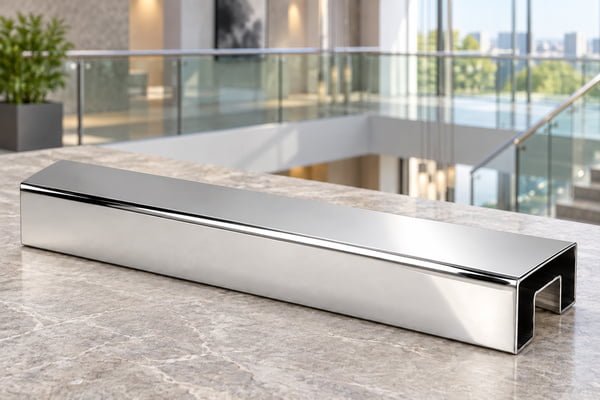
Select the profile from the glass balustrade hardware range, then list every required piece by finished length and location. Include corners, end conditions and any factory preparation. The CRL base shoe range provides examples of system-specific profiles; similar external dimensions do not establish interchangeability.
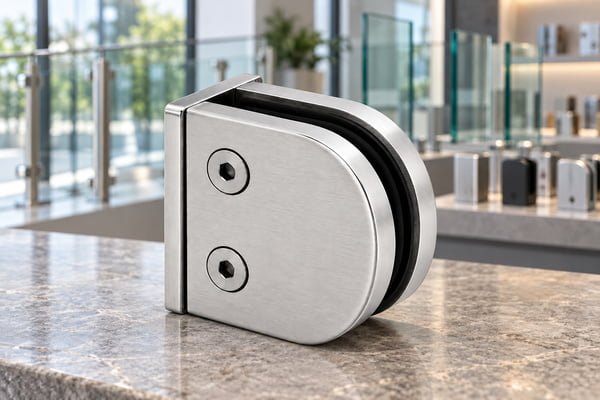
Our base shoe fixing comparison helps keep the retention system fixed while comparing supply formats. Changing profile or fixing method halfway through a price comparison makes the figures unreliable.
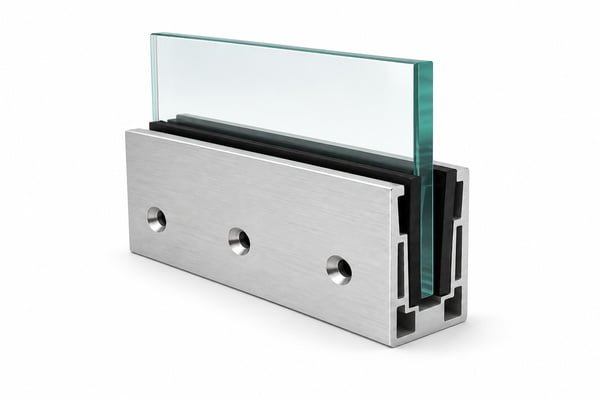
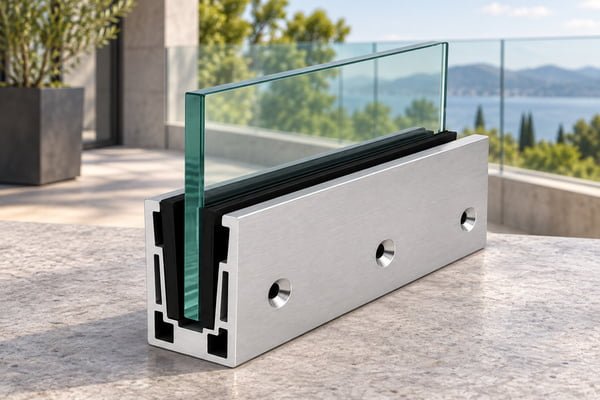
Catalogue illustration: Side-fixing Glass Railing Base Shoe. Shown as a component reference, not an installation drawing or test result.
An example that exposes hidden costs
Suppose a hypothetical project needs eight pieces at 1.2 metres and four at 1.8 metres. The finished requirement is 16.8 metres. That total is not automatically the purchasing quantity: saw kerf, end trimming, damaged ends and the available stock length affect the cutting plan.
Ask each bidder to return a proposed cutting schedule. Compare the usable residual pieces, not an unexplained waste percentage. The Aluminum Association standards resource supports material terminology, while NIST measurement guidance helps frame the dimensional acceptance discussion.
| Cost item | Stock lengths | Cut-to-size supply |
|---|---|---|
| Material | Include cutting yield | Confirm finished-piece quantities |
| Labour | Allow site cutting and identification | Allow unpacking and position checks |
| Protection | Protect freshly prepared areas as specified | Check factory finish and edge protection |
| Changes | Some flexibility remains | Revised dimensions may require replacements |
Decide when dimensions become final
A factory-cut order needs a clear release point. Record the approved drawing revision and the party responsible for dimensions. Mark provisional lengths rather than allowing them to look like final instructions.
Coordinate base shoe drainage with cutting and preparation. Do not place a field cut through a feature that the approved detail requires. The Hilti technical guide collection offers anchoring context; the project fixing layout still has to match the selected system and substrate.
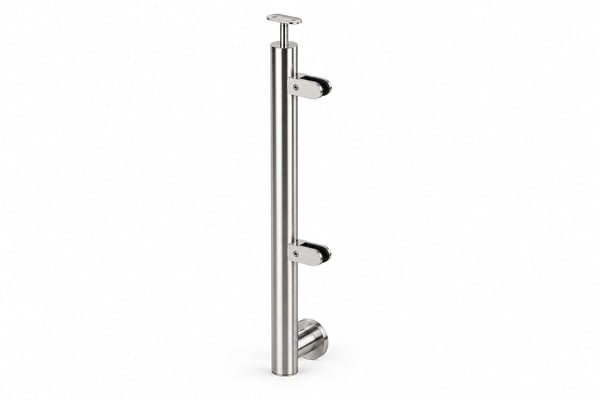
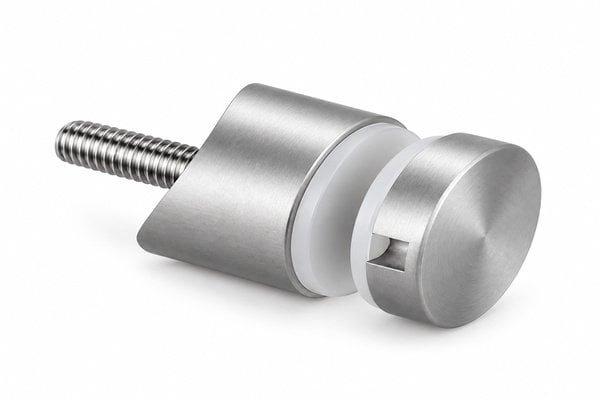
Catalogue illustration: Reflective Silver Side-mounted Glass Railing End Post. Shown as a component reference, not an installation drawing or test result.
Finish and identification belong in the price
Use the anodized-versus-powder-coated guide when defining how cut ends and visible faces are handled. AAC anodized-finish guidance and QUALICOAT specifications distinguish finish systems; neither reference proves that a quoted component holds a particular approval.
For cut pieces, put the location identifier on protective packaging or another agreed position. Check whether the label survives delivery and can be read before unpacking the entire load. For stock lengths, define who creates the final piece labels after cutting.
Make the packing plan match the site
Long stock can be difficult to unload, store or move through a finished building. Cut pieces can arrive in many similar sizes, creating a picking risk. Specify bundle lengths, protection and a packing list organized around the installation sequence.
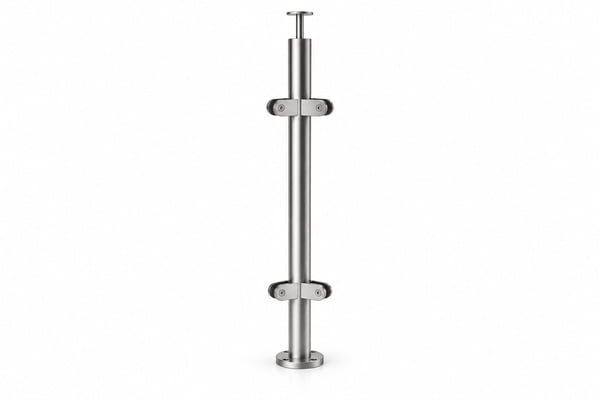
Catalogue illustration: Round Corner Glass Railing Post. Shown as a component reference, not an installation drawing or test result.
Keep commercial quantities and finished-piece quantities separate in the comparison. A bundle priced by purchased length may include offcuts that have no immediate use, while a finished-piece offer may include preparation that another supplier excludes. Ask for both totals and a clear explanation of the assumptions. This makes later variations easier to price and prevents a change in packing or cutting scope from appearing as an unexplained material-price increase.
ISTA procedures provide a framework for discussing transport tests. GS1 traceability guidance helps connect piece identifiers and delivery records. Do not call a packaging plan tested unless the relevant test record exists.
A purchasing release checklist
Before approval, reconcile the number of pieces, total finished length, cutting allowance, finish treatment and included accessories. Identify who owns leftover stock and whether it can be used for later approved work. Agree how damaged or incorrect pieces will be replaced, including their identifiers. If the drawing changes after release, record the affected pieces rather than cancelling an entire schedule without tracing what has already been made.
Which option is cheaper? It depends on the cutting yield, site labour, logistics and likelihood of dimensional changes.
Can an offcut be used anywhere? Only where its length, condition and preparation satisfy the approved detail.
What should a cut-to-size quote include? Finished lengths, tolerances, preparation, finish, labels, packing and replacement terms.
Send the schedule for an OEM supply review, check the relevant manufacturing capabilities, and request both supply options against the same profile and drawing revision. That produces a defensible purchasing comparison instead of two unrelated metre prices.