Compare solid and tubular shower door pulls by their complete construction, fixing design, ergonomics and finish—not weight alone. Either description is incomplete without dimensions and the supplied mounting components. This commercial comparison helps hotel buyers and distributors build a useful product specification.
Translate the catalogue description
Ask which parts are solid or tubular: the grip, legs, fixing bosses or the whole assembly. A handle may combine several constructions. Identify the exact product in the shower hardware collection, then request a drawing and component description.
The CRL pull-handle range and shower hardware catalogue provide external examples of varied handle arrangements. They do not prove the construction of another supplier’s product. A polished photograph can conceal the differences a purchasing team needs to understand.
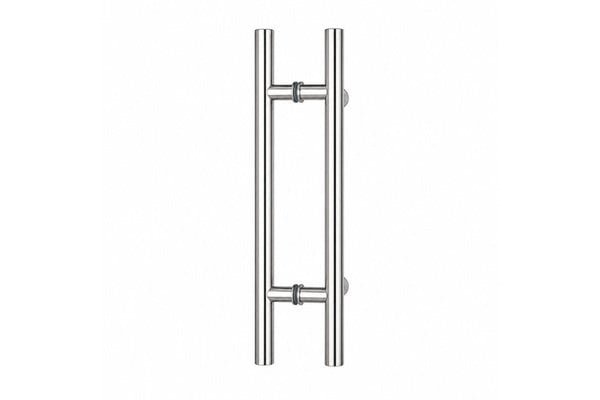
Catalogue illustration: Complete ladder-style shower door handle. Shown as a component reference, not an installation drawing or test result.
Compare the factors that affect the order
| Factor | What to establish for either construction |
|---|---|
| Grip geometry | Diameter or section, length and usable clearance |
| Construction | Which elements are solid, hollow or assembled |
| Fixings | Fastener, bush, gasket and mating-part arrangement |
| Finish | Material identity and approved surface reference |
| Maintenance | Access to fixings and replacement components |
Weight can help identify a change between agreed samples, but it is not a universal quality rating. Two handles with different dimensions cannot be fairly compared by weight alone. Likewise, a hollow grip does not establish that its fixing arrangement is inadequate.
Freeze the glass preparation early
Our handle hole-centre guide explains the dimensions needed before glass fabrication. Confirm the hole centres, hole sizes, glass thickness range and required protective components against the selected model. Do not let the word “standard” replace a dimensioned drawing.
The CPSC tempered-glass alert provides safety context. Preparation and assembly must follow the approved system. The handle fixing guide is useful when comparing access and retention details across two quotations.
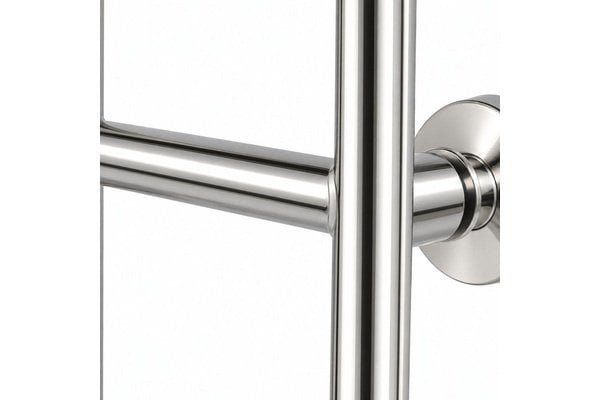
Catalogue illustration: Ladder-style shower handle cross-fixing detail. Shown as a component reference, not an installation drawing or test result.
Review the user experience
Ask the buyer to handle a representative sample, preferably in a suitable mock-up. Check grip clearance, edges, wet-hand use and the available space around adjacent walls or fittings. The U.S. Access Board bathing-room guide and door guidance are jurisdiction-specific resources for the responsible design team.
Do not treat those references as approval of a particular pull. Where accessibility requirements apply, the complete installation must be reviewed against the governing provisions. A attractive handle on a sample board does not show every clearance condition in the finished room.
Cost should include the service package
Compare the same quantity, material, finish, mounting set and packaging scope. Identify whether spare bushes, gaskets or fixing screws are available. Use the handles-versus-knobs comparison if the procurement brief still permits a different grip format.
For a hypothetical 80-room order, create a schedule for each door type rather than assuming all rooms use one drilling pattern. The room count is an example of order organization, not an Elim project claim. Label variants clearly so similar-looking handles do not reach the wrong installation.
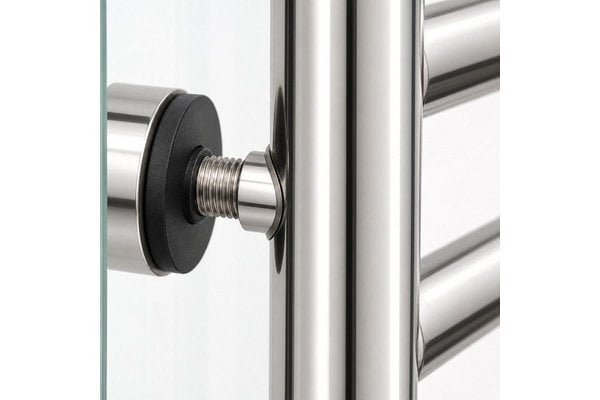
Catalogue illustration: Shower handle glass-contact fixing detail. Shown as a component reference, not an installation drawing or test result.
Compare the assembly on the same basis
Ask both suppliers to identify everything included for one complete door, rather than comparing a single pull with a back-to-back pair. Confirm whether decorative caps, protective bushes and installation instructions are supplied. Where several finishes are ordered, give each variant a distinct reference and packing label. A sample that has the correct feel but a different fixing set is not a complete approval sample; review the mounting package with the handle before releasing the production order.
ASSDA cleaning guidance provides stainless-care context. Match the final instructions to the finish and adjacent materials, and ask how cleaning access works around the mounting points. Maintenance should not require removing parts in a way the approved system does not permit.
Approve a representative sample
Record the sample identifier, drawing revision, construction description, finish and mounting components. Use ISTA packaging procedures to frame transport protection where appropriate. NIST conformity assessment guidance helps define the evidence supporting product claims without confusing inspection with certification.
Is a heavier pull always stronger? No. Geometry, material and the complete fixing arrangement matter; use applicable evidence.
Can solid and tubular models share the same holes? Only if the drawings and approved mounting requirements match.
What should a repeat order reference? The controlled product code, drawing revision and approved finish, not just “same as last time.”
For OEM handle options, send the door schedule and sample requirements. Review manufacturing capabilities and request an itemized quotation identifying construction, mounting set, packing and replacement-part scope. This makes price comparison useful to both purchasing and maintenance teams.