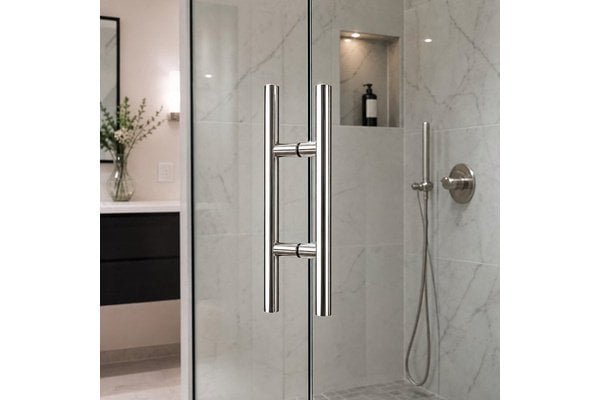
Choose a shower door bottom seal by matching the glass attachment, floor gap, door movement and water-directing profile. A drip rail and a flexible sweep perform different functions, and neither can correct every enclosure or drainage problem. This selection guide is for distributors and hotel maintenance buyers.
Identify the cross-section first
Photograph and measure the profile, not just its length. Identify the glass thickness, attachment shape, flexible portions and direction of the drip feature. Review the shower hardware range against the complete door arrangement.
CRL’s water-seal catalogue and wipes-and-seals range show why profiles are selected by their geometry and intended application. Those references describe particular products, not interchangeable replacements for every door.

Catalogue illustration: Heavy-Duty Shower Door Hinge. Shown as a component reference, not an installation drawing or test result.
Separate the two functions
| Feature | Selection question |
|---|---|
| Glass attachment | Does it suit the specified glass and edge arrangement? |
| Drip rail | Does its orientation direct water as intended? |
| Flexible sweep | Does it suit the gap and door travel? |
| End treatment | How does it meet adjacent seals or fittings? |
| Replacement length | What finished length and trimming instruction apply? |
The glass-thickness and seal-gap guide helps build the basic enquiry. Avoid ordering by “clear bottom seal” alone; two profiles with the same colour may have very different functions.
Check the entire door movement
Measure the relevant gap along the door’s travel, not only when it is closed. Identify floor slopes, thresholds and nearby obstructions. Do not choose a longer flexible portion solely to cover the largest observed gap without considering movement and the manufacturer’s instructions.
Our shower mock-up checklist helps organize a representative fit review. The CRL shower hardware FAQ provides further product-specific context. Check the profile with the actual door and adjacent fittings before approving a bulk order.
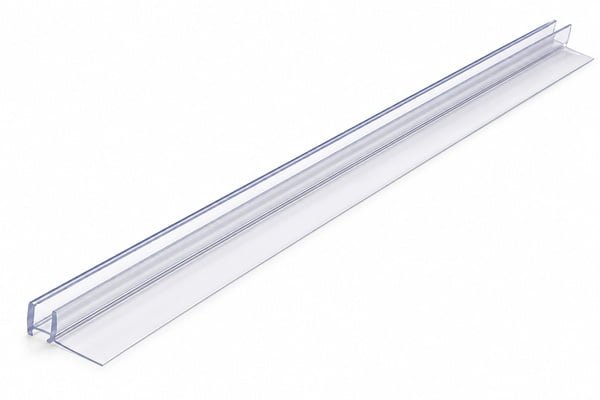
Catalogue illustration: Shower Door Side Seal Strip. Shown as a component reference, not an installation drawing or test result.
Review water direction without promising waterproofing
A seal can help manage water in its intended arrangement, but the enclosure layout, water source and drainage remain relevant. Record where leakage is observed before replacing parts. A new sweep may not solve a threshold or drainage issue.
The U.S. Access Board bathing-room guide is a jurisdiction-specific reference where accessibility requirements apply. Do not add an obstruction or change an approved threshold arrangement simply to stop water without the appropriate project review.
Keep glass and hardware protected
Follow the specified attachment and replacement instructions. The CPSC tempered-glass alert provides safety context. Do not improvise glass alterations to fit a different profile. The shower hardware care guide helps coordinate maintenance instructions with adjacent finishes.
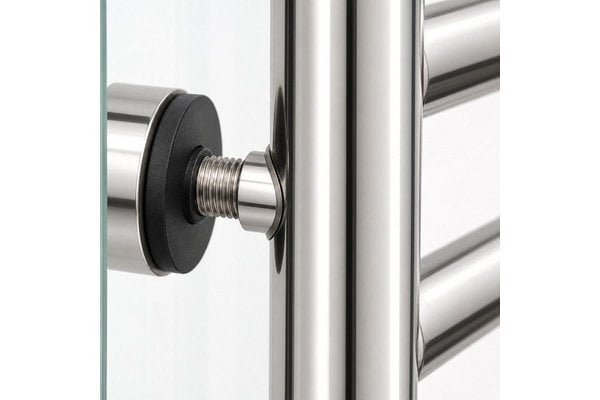
Catalogue illustration: Shower handle glass-contact fixing detail. Shown as a component reference, not an installation drawing or test result.
Retain a short labelled profile sample where practical. A photograph can lose the detail of a transparent flexible edge, making later identification difficult. Record the intended orientation and the corresponding door type alongside the sample. If an alternative profile is introduced, update the maintenance reference rather than leaving two visually similar versions under one description. This reduces repeat-order mistakes without requiring technicians to remember an old supplier catalogue.
Make a replacement schedule useful
Record door location, profile reference, glass thickness, finished length, orientation and any special end condition. For a hypothetical hotel with three door configurations, create three defined replacement entries rather than ordering one oversized profile for every room.
Use NIST measurement guidance to support repeatable dimensions and GS1 traceability guidance to connect stock references to purchase records. Keep a labelled sample or cross-section drawing so a later buyer can identify the same profile after packaging is discarded.
Before accepting a substitute, compare the attachment geometry, flexible shape, intended orientation and operating clearance. Colour and overall height alone are insufficient. Record the approved alternative explicitly so maintenance staff do not continue mixing old and new assumptions.
Approve supply and storage requirements
Ask how the profiles should be packed, stored and handled so they arrive without avoidable deformation. Confirm the supplied lengths and whether cutting is performed at the factory or under the installer’s approved procedure. NIST conformity assessment guidance helps define evidence for claims without mistaking a catalogue description for a test of the complete enclosure.
Will a bottom seal make any shower watertight? No universal guarantee follows from adding a seal.
Can a seal be reversed? Use the intended orientation and instructions for the chosen profile.
What should a sample check include? Fit, door travel, adjoining parts and the intended water-management arrangement.
For OEM profile enquiries, provide the cross-section and door schedule. Review manufacturing capabilities and request a matched replacement quote with lengths, orientation, packing and care information defined.