Write care instructions for the supplied finish: A useful shower-hardware care sheet identifies the product, permitted cleaning method, prohibited treatments and the route for reporting a problem. “Clean regularly” is not enough, and a generic stainless-steel instruction should not automatically be applied to coated hardware, seals or adjacent glass treatments.
For brands and distributors selling shower hardware, a short, accurate care sheet can reduce misunderstandings after installation. This article uses an editor’s checklist: what to include, what to remove and how to keep the instruction tied to the actual order.
Replace vague labels with a finish record
Start with the product and finish references on the accepted order. Identify which visible parts have different materials or surface treatments. A shower hinge and a glass clamp may look similar in colour but still require separately confirmed care information.
Use the shower finish selection guide to distinguish appearance choices from the underlying finish specification. The words “black,” “brushed” or “silver” alone do not identify every coating, substrate or cleaning limitation. Keep the approved sample reference with the commercial product record.

Product reference: Matte Silver 90 Degree Glass-to-Glass Shower Door Hinge — Finish Concept. Match the supplied configuration to the approved drawing.
Edit the care sheet into actions a customer can follow
| Weak instruction | Better information to supply |
|---|---|
| Clean regularly | Supplier-approved method and application guidance |
| Use a mild product | Identified permitted cleaner or documented criteria |
| Avoid damage | Specific prohibited tools and treatments |
| Dry after cleaning | Clear rinsing and drying instructions where required |
| Contact us if necessary | Required photographs, order reference and contact route |
Ask the hardware and finish supplier to approve the final wording. If a cleaning chemical is named, check its current product instructions and compatibility with the complete assembly. Do not recommend a household mixture simply because it is familiar or marketed as natural.
Keep technical references in their proper scope
ASSDA’s stainless cleaning guidance supports care discussions for stainless surfaces. Its tea-staining guidance explains environmental and maintenance factors, while IMOA’s coastal guidance addresses chloride exposure. These references provide context; they are not evidence that one cleaning method suits every decorative coating.
Pickling and passivation are fabrication-related technical treatments and should not be casually presented as homeowner cleaning instructions. Similarly, grade-confirmation guidance addresses material identification, not approval of a consumer cleaner. Clear boundaries prevent an apparently detailed article from giving inappropriate maintenance advice.

Product reference: 135 Degree Glass-to-Glass Shower Door Hinge. Match the supplied configuration to the approved drawing.
Explain what cleaning cannot repair
Separate deposits, staining, scratches, coating damage and mechanical problems in the service form. A photograph may help triage a complaint, but it rarely proves the cause by itself. Ask for the location, cleaning-product name, method, exposure history and when the symptom first appeared.
Do not tell a customer to polish a suspect coating before the supplier has reviewed it. Preserve evidence and obtain advice for the identified finish. Likewise, a loose or malfunctioning fitting should follow the product’s service process rather than being treated as a cosmetic cleaning issue.
The warranty evidence guide provides a practical record structure. Use neutral language: “surface mark reported after cleaning” is more accurate than an unsupported claim that either the product or the customer caused the defect.
Test whether the instruction is understandable
Give the draft to someone unfamiliar with the product. Ask them to identify the approved method, the restrictions and the reporting route without further explanation. If they cannot, shorten the wording or add a clear illustration. A document can be technically accurate yet operationally unusable.
For an illustrative support review, ten enquiries might include four requests for cleaning guidance, three finish-identification questions, two mechanical faults and one unresolved surface complaint. Those categories suggest different improvements. These example numbers are not Elim complaint statistics or evidence of a reduction in claims.
Review complementary enclosure components through the CRL catalogue library, keeping any manufacturer instructions tied to its own products. Glass-related limitations remain separate; the CPSC tempered-glass alert is relevant when a service proposal would alter a completed panel.

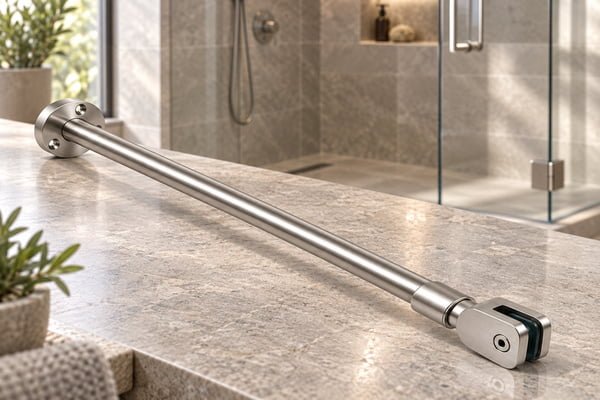
Product reference: Polished Silver Square Wall-to-Glass Shower Clamp — Finish Concept. Match the supplied configuration to the approved drawing.
Make revision control part of the product
Put a revision date and product scope on the care sheet. If the finish or approved cleaner changes, review the instructions and update the packing inserts. Use GS1 traceability principles to connect the document version with the supplied item or batch where appropriate.
Can one care sheet cover a whole range? Yes, only when the approved methods and restrictions genuinely apply to every listed finish.
Does a care sheet eliminate warranty obligations? No. It communicates product care; commercial terms and legal obligations require separate treatment.
Discuss finish and packaging documentation through Elim’s capabilities, then request a product-specific care sheet with your order. Keep it concise, approved and accessible to the person who will use it.