Specify shower hinge gasket hardness together with the gasket material, profile, thickness and approved hinge-and-glass combination. A Shore hardness number alone cannot establish grip, compression behaviour or suitability. This supplier-question guide is intended for importers comparing original and replacement gasket sets.
Ask what the hardness value describes
Identify the test scale and the material to which the value applies. “Hard rubber” is not a useful specification, but a number without a scale or test context is incomplete too. Begin with the exact hinge in the shower hardware range.
The Parker O-Ring Handbook provides elastomer terminology and property context. It is not a shower-hinge design manual. The CRL shower hardware catalogue offers examples of model-specific hardware, reinforcing the need to identify the actual system rather than treating every black gasket as equivalent.
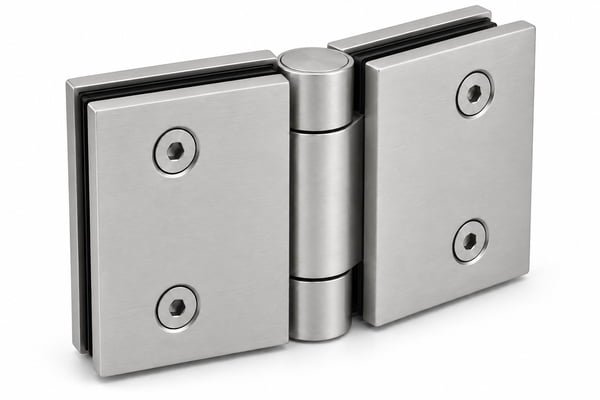
Catalogue illustration: Matte Silver 90 Degree Glass-to-Glass Shower Door Hinge — Finish Concept. Shown as a component reference, not an installation drawing or test result.
Hardness is one row in the specification
| Property or detail | Question for the supplier |
|---|---|
| Material | What compound or controlled material designation is used? |
| Hardness | What scale, target and acceptance tolerance apply? |
| Geometry | Which profile and thickness suit this hinge? |
| Glass interface | Which glass thickness and preparation are covered? |
| Replacement | Is the set approved for the stated hinge revision? |
Our hinge replacement gasket guide explains the identity checks. Do not substitute a softer or harder sheet simply because the thickness seems close. The CRL shower hardware FAQ gives further manufacturer-specific context; use the instructions for the actual hinge supplied.
What can go wrong in a comparison?
One quotation might specify a material and hardness, while another supplies only a colour and nominal thickness. The prices are not yet comparable. Ask both suppliers to complete the same specification fields before deciding that one offer is equivalent.
A hypothetical comparison of 60 Shore A and 70 Shore A illustrates two distinct hardness descriptions, not two recommended values for a shower hinge. No universal “best hardness” is supplied here. Selection must follow the approved design and the compound’s relevant properties.

Catalogue illustration: 135 Degree Glass-to-Glass Shower Door Hinge. Shown as a component reference, not an installation drawing or test result.
Check the assembly, not just a loose sample
Review the gasket with the correct hinge and prepared glass. The shower hardware mock-up checklist helps organize a representative fit review. Do not infer a safe door capacity from a gasket sample or an informal bench demonstration.
The CPSC tempered-glass safety alert supplies relevant handling context. Glass preparation must match the approved hardware detail. If gasket changes are proposed, refer them to the responsible supplier and project team before release.
The hinge cycle-test checklist helps buyers request applicable evidence. A report for another hinge, compound or assembly does not automatically validate the proposed substitution. NIST conformity assessment guidance clarifies the distinction between declarations, testing and certification.
Define how the batch will be accepted
Agree identification, dimensions and any material-property checks before shipment. NIST measurement traceability guidance supports the measurement discussion. Define test methods and acceptance criteria with the supplier instead of asking the receiving team to invent a threshold after the goods arrive.

Catalogue illustration: Heavy-Duty Shower Door Hinge. Shown as a component reference, not an installation drawing or test result.
Control the approved replacement set
Retain a photograph and drawing of the complete gasket set, including the number of pieces and their positions. Similar-looking front and rear pieces should not be mixed if the design distinguishes them. Ask how the supplier identifies compound or profile changes between revisions. If the hinge model changes, review the replacement stock at the same time. A distributor can otherwise retain correctly labelled old gaskets that no longer belong with the hinge revision currently being sold.
Use the NIST sampling overview when considering an inspection plan. Sampling and design validation are different activities. Link the batch to its records using a scheme informed by GS1 traceability guidance, especially when several gasket variants share similar packaging.
Storage and repeat orders
Obtain the compound-specific storage and handling instructions. Keep the parts identified and protected from conditions the supplier excludes. Record the approved revision so a repeat order does not silently introduce a different profile or material.
Can hardness be judged by touch? Touch may reveal an obvious difference but does not replace the agreed property measurement.
Does harder mean safer? No. The appropriate behaviour depends on the complete approved assembly.
Can the gasket be trimmed on site? Follow the hinge manufacturer’s instructions; do not assume field modification is permitted.
For an OEM gasket discussion, provide the hinge reference and controlled requirements. Review manufacturing capabilities, then request a matched-set quotation specifying the gasket identity, supporting evidence and packaging required for the order.