Maintenance answer: Do not apply a generic wire rope lubricant to every architectural cable. Establish the rope construction, supplied condition and manufacturer’s care instructions first. Rope lubrication, terminal maintenance and anti-galling treatment on threads are different tasks and may require different products.
Facilities teams maintaining architectural wire rope systems often want one simple maintenance product. That is convenient for purchasing, but a moving mechanical cable and a largely static facade cable can have different requirements. This guide helps turn that distinction into a usable maintenance schedule.
First identify what is actually installed
Record cable diameter, construction, coating, terminal type and installation location. A smooth outside appearance does not identify the internal construction or original treatment. Read the wire rope bend-radius guide alongside the delivery records before choosing a maintenance method.
Sava’s cable information discusses construction-dependent cable characteristics, including specific lubricated products. Bergen’s cable reference provides additional construction terminology. These are manufacturer references, not permission to transfer one product’s maintenance instructions to another cable.
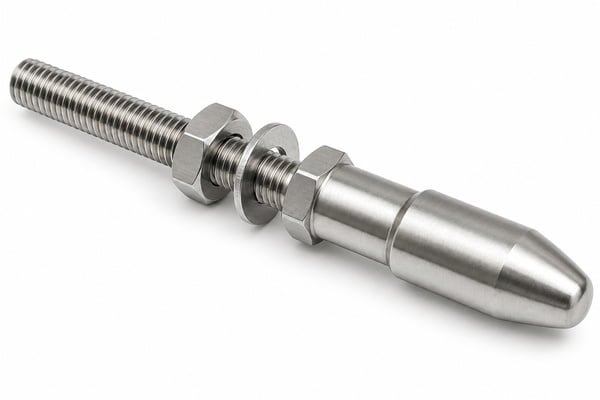
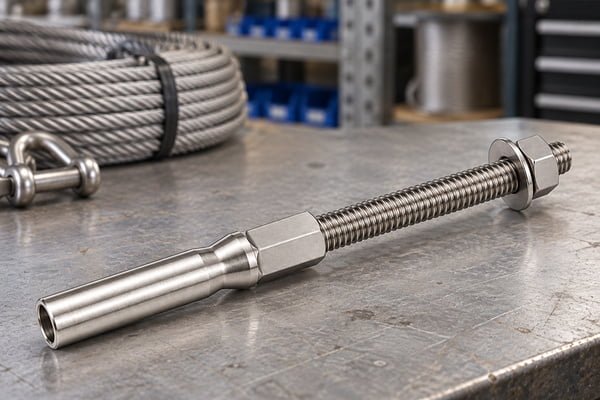
Catalogue illustration: Swage Stud Cable Terminal — WR096. Shown as a component reference, not an installation drawing or test result.
Divide the assembly into three zones
| Zone | Main question | Maintenance record |
|---|---|---|
| Exposed rope | What cleaning or lubrication is approved? | Product and application method |
| Terminal body | Can water or debris collect at the entry? | Inspection findings |
| Adjustment thread | What treatment matches tightening instructions? | Thread condition and treatment |
A lubricant intended for a thread should not automatically be spread along the exposed rope. Likewise, cleaning a visible cable does not inspect the hidden part of a terminal. Keep the tasks separate on the work order so maintenance completion has a clear meaning.
Protect appearance without hiding defects
Architectural assemblies are visible to users. Ask whether a proposed product leaves residue, attracts dirt or can stain nearby stone, glass or planting. Test appearance on an approved sample or inconspicuous trial area according to the product instructions.
Feeney’s care guidance is an example of system-specific care documentation. The Jakob architectural cable catalogue illustrates another supplier’s component range. Use the instructions belonging to the installed system; do not combine convenient fragments from unrelated manuals into an unofficial procedure.
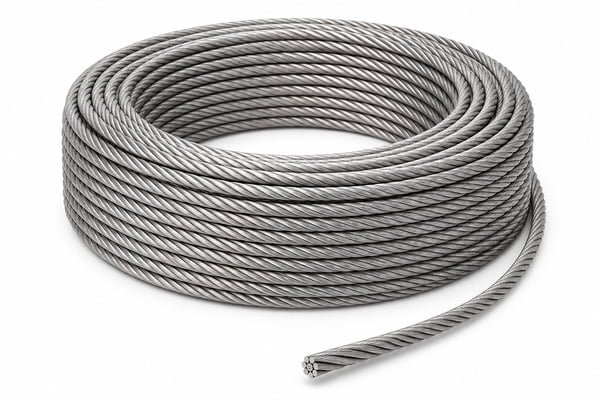
Catalogue illustration: 1×19 Stainless Steel Wire Rope — WR001. Shown as a component reference, not an installation drawing or test result.
What about stainless thread galling?
Thread seizure during adjustment is a fastening issue. Review the thread galling article and ASSDA’s technical explanation before specifying treatment. Lubrication can change friction and therefore the relationship between tightening torque and preload.
If adjustment is required, establish the approved unloading and retensioning method before touching the connection. Do not release a tensioned cable merely to make lubrication easier. The responsible installer or engineer should define how the assembly remains supported.
For new OEM cable orders, ask the supplier to state the delivered condition and include care instructions in the quotation. This is easier than reconstructing the information after installation.
Create a condition-based service record
Use the wire rope inspection checklist to record corrosion, damaged wires, terminal movement and contamination. Add location photographs so repeat inspections examine the same interfaces. A calendar entry saying “cables serviced” cannot show whether a deteriorating terminal was identified.
Store spare assemblies using the supplier’s instructions. Bekaert’s rope storage guidance provides general storage considerations; a spare that has been exposed to dirt or unsuitable conditions may not be equivalent to a protected spare from the same order.
A useful maintenance handover identifies who may perform each task. Routine cleaning may belong to the facilities team, while retensioning or terminal replacement may require a specialist. State where the approved instructions are stored and how changes will be communicated. Also record products that were actually used during installation. This prevents a later technician from choosing a treatment solely because an unlabelled container was left in the maintenance cupboard, and gives the supplier a clearer starting point if staining or seizure develops.
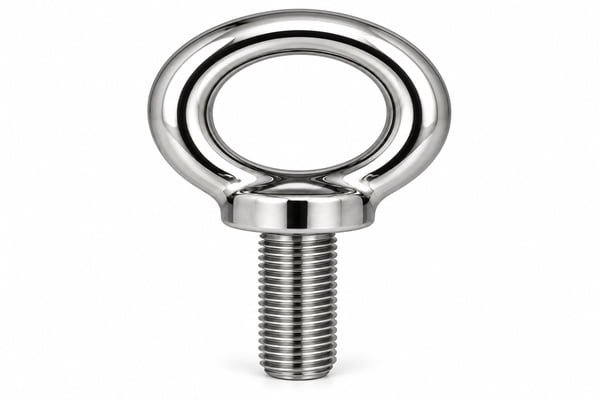
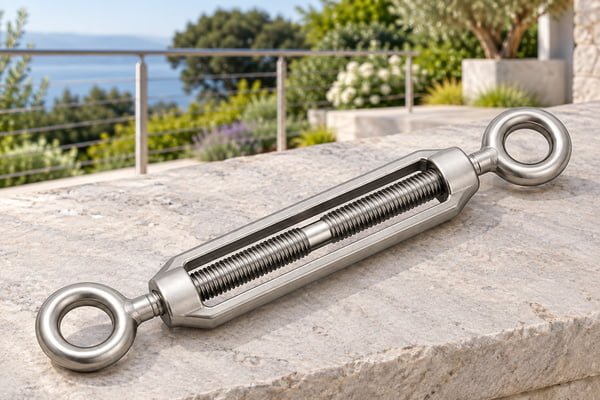
Catalogue illustration: Stainless Steel Wire Rope Eye Bolt — WR086. Shown as a component reference, not an installation drawing or test result.
Questions to send with an enquiry
Is lubrication required for this exact cable? Request a written answer naming the cable construction and service conditions.
Can a sealed terminal be opened? Only where its design and service procedure allow it. Sava’s fitting design information shows why termination details deserve separate attention.
Does lubrication restore a damaged cable? No. It cannot establish the remaining capacity of a corroded or damaged assembly. Conformity assessment guidance helps distinguish maintenance activity from performance evidence.
Review the published manufacturing capabilities, then request cable and maintenance documentation. Include the exposure, adjacent finishes and access limitations so the proposed supply package covers both appearance and future care.