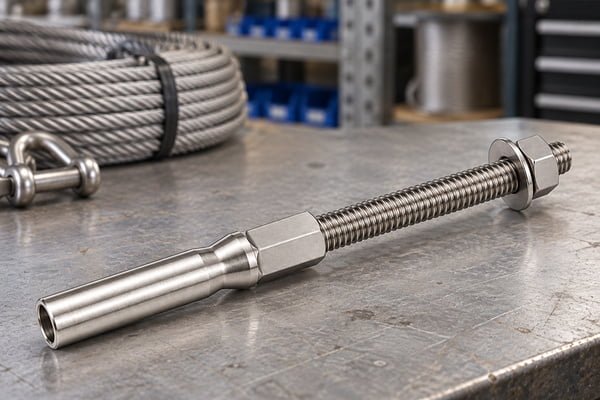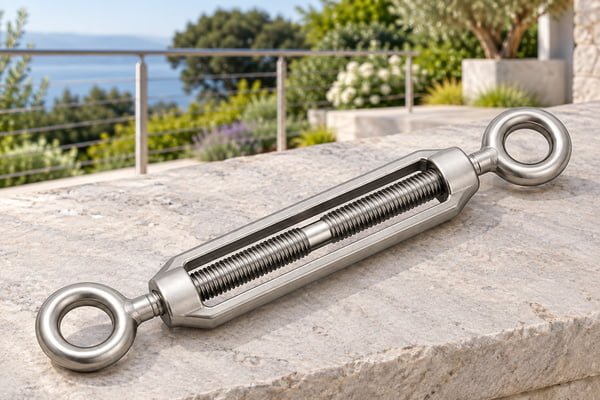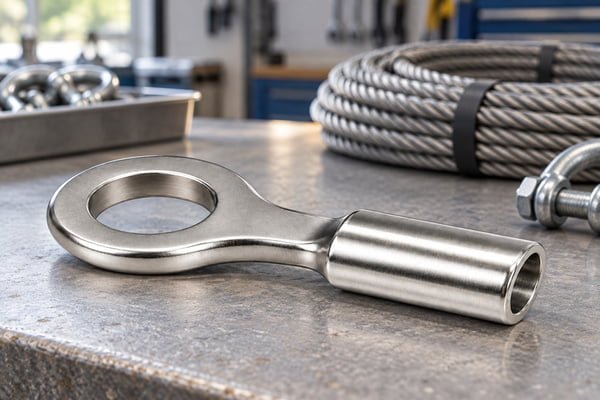
Replace wire rope according to the relevant manufacturer’s criteria and the actual application, not a universal calendar interval. Inspection should consider the cable, terminals, supports and service history. If damage raises a safety concern, restrict use and obtain competent assessment before returning the assembly to service. This guide concerns architectural cable systems, not a substitute inspection standard for lifting equipment.
Begin with the system record
Identify the installed cable, terminal and support arrangement. Our wire rope system overview helps locate the component family. Feeney’s care information provides a manufacturer-specific example of maintenance documentation. Its CableRail product guide links care requirements to the supplied system and exposure.
Use the instructions for the actual installed product. Do not transfer a cleaning interval or replacement rule from a different system merely because both use stainless cable. Note any changes made since the original installation.
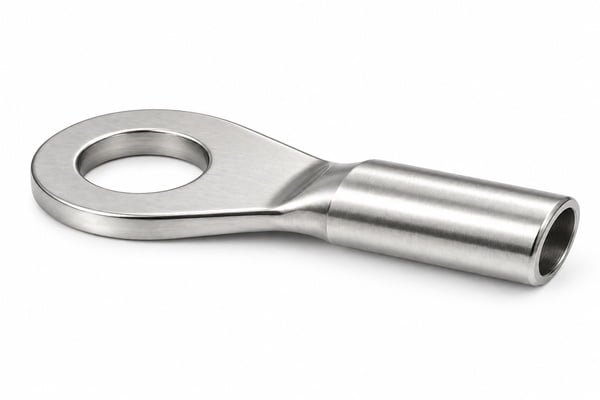
Catalogue illustration: Wire Rope Eye Terminal — WR075. Shown as a component reference, not an installation drawing or test result.
What should an inspection look for?
| Area | Observation to record | Follow-up question |
|---|---|---|
| Cable surface | Visible corrosion, broken wires or distortion | Does the condition meet the product’s rejection criteria? |
| Termination | Movement, damage or loss of engagement | Is the connection still in its specified condition? |
| Support | Displacement, contact damage or looseness | Has the supporting arrangement changed? |
| Service history | Impact, repairs or altered exposure | Is additional assessment required? |
Do not use this table as a numerical discard standard. The applicable manufacturer and project criteria determine the decision. Record observations clearly enough that a qualified reviewer can identify the affected location.
Understand what the cable has experienced
Bergen’s cable information explains construction differences that matter when identifying the product. Our bend-radius guide distinguishes static and repeated bending conditions. A cable that has been forced around an unintended contact point may need a different review from one installed straight as designed.
Look beyond the visible middle of the span. Inspect accessible areas near terminations and guides according to the system’s instructions. Do not dismantle a loaded or tensioned component without the approved procedure and appropriate competence.
Separate staining from a replacement decision
IMOA’s coastal guidance helps frame exposure questions. ASSDA cleaning information offers stainless surface-care context. Neither a clean appearance nor the presence of staining alone establishes the complete cable’s fitness for service.
Document the condition before cleaning where deterioration is being investigated. A cleaning operation can make a surface easier to inspect, but it cannot restore lost material or repair damaged wires. Avoid presenting routine maintenance as a remedy for structural damage.
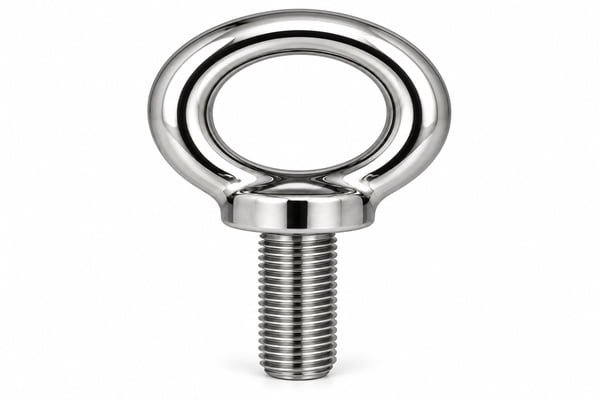
Catalogue illustration: Stainless Steel Wire Rope Eye Bolt — WR086. Shown as a component reference, not an installation drawing or test result.
Use location-based records
Create an inspection schedule that identifies each run and the relevant components. For illustration, a balcony with 12 cable runs can use labels R01 through R12, with photographs and findings linked to those labels. This is a recordkeeping example, not a prescribed inspection frequency or sample size.
Our batch-traceability guide helps connect replacement parts to the original supply. The Jakob architectural cable catalogue provides external system context, but the actual installed system remains the reference. Keep part numbers and drawing revisions available to the maintenance team.
Check adjustments and locking
A loose-looking cable is not an instruction to turn the nearest tensioner. First identify the cause and the permitted adjustment method. Our tensioner-locking comparison explains why the locking arrangement belongs in the system record.
Where measurements are required, use a suitable method and metrological traceability. Do not infer a specified tension from visual straightness alone. Record any approved adjustment and recheck the assembly as directed by the manufacturer or responsible professional.
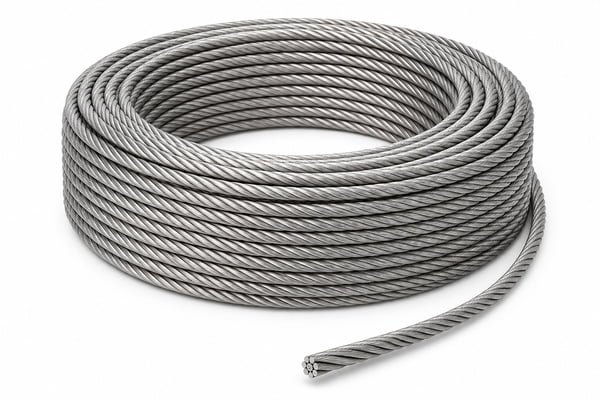
Catalogue illustration: 1×19 Stainless Steel Wire Rope — WR001. Shown as a component reference, not an installation drawing or test result.
Decide and document the outcome
An inspection can lead to continued service, specified maintenance, further assessment or replacement. Record who made the decision and which criteria were used. NIST conformity-assessment guidance helps distinguish observation, testing and certification; an inspection photograph is not a load test.
Is there a universal replacement age? No. Application, exposure, condition and the relevant instructions determine the review.
Can only the visibly damaged section be replaced? Confirm compatibility and the replacement procedure for the complete assembly, including terminals and adjacent components.
For replacement supply, discuss OEM assembly requirements, review manufacturing capabilities, and send an identified replacement enquiry. Include the system record and assessment findings so the quotation addresses the required assembly rather than a visually similar cable.