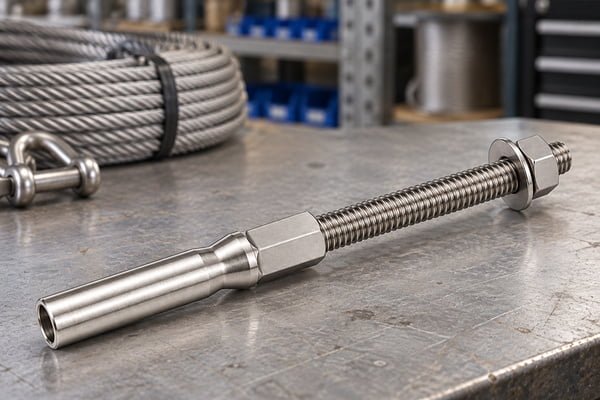
Wire rope traceability should connect the supplier’s reel identity to each finished cable assembly and its shipment record. A material certificate stored in a folder is not enough if nobody can identify which delivered kits came from that reel. This records-first guide is written for importers and distributor quality teams.
The traceability chain
Think of the record as a sequence: incoming reel, cutting job, terminal batches, assembly inspection, packing group and customer shipment. Each step must preserve a link to the previous one. The GS1 traceability standard provides a general framework; your hardware records must still reflect the actual production and packing process.
Begin with the relevant wire rope components. Distinguish cable identity from terminal identity. A completed assembly can contain materials from several sources, and its traceability record needs to preserve those relationships without pretending they are one common material batch.
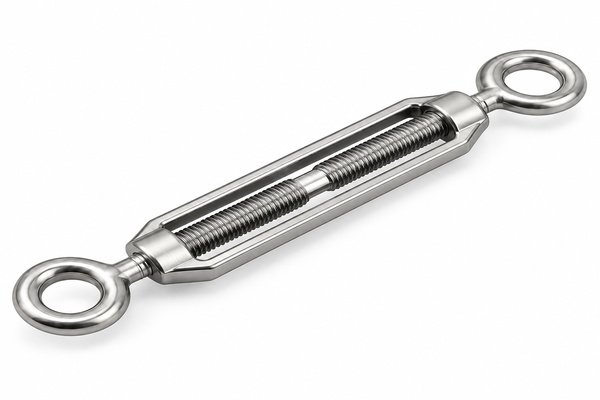
Catalogue illustration: Eye To Eye Turnbuckle — WR032. Shown as a component reference, not an installation drawing or test result.
A compact record template
| Record | Example field | Why it matters |
|---|---|---|
| Incoming reel | Supplier reel ID and receiving date | Locates the starting material |
| Cable specification | Diameter, construction and grade designation | Prevents mixing similar-looking rope |
| Cutting job | Work order and length schedule revision | Connects the reel to finished lengths |
| Terminals | Part codes and component batches | Identifies the end fittings |
| Inspection | Procedure, instrument and result record | Shows what was checked |
| Packing | Assembly ID, carton and shipment | Enables targeted investigation |
The Bergen cable reference is useful background for cable construction terminology. The Bekaert diameter-measurement resource supports a discussion of measurement method. Neither substitutes for the supplier’s records for your specific lot.
Worked example: a split reel
Suppose reel R-021 supplies 60 assemblies for order A and 40 for order B. The cutting record should show both work orders and the reel reference. If the remaining rope is transferred to another holder, retain the original reel relationship under a new controlled inventory ID.
Those quantities and codes are illustrative. The important question is whether a complaint about one assembly can be traced back without unnecessarily quarantining every cable ever sold. Also record mixed terminal batches: an order may use one cable reel but two batches of fork ends.
Link inspection to the actual assembly
Keep measured finished length and the agreed datum with the assembly or batch record. Our length-tolerance guide explains why different measurement endpoints can produce incompatible reports. NIST traceability guidance addresses measurement traceability, which is distinct from product-batch traceability. Both may be required, but one does not establish the other.
Where a pull test is specified, identify the tested specimen and its relationship to production. Our terminal pull-test checklist describes the necessary report questions. A generic strength table or another customer’s result cannot establish the performance of an undocumented assembly.
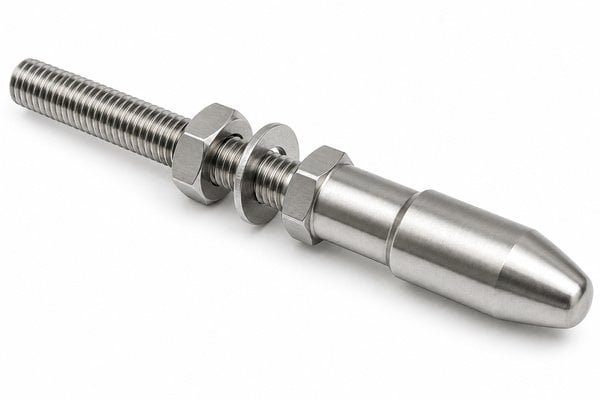
Catalogue illustration: Swage Stud Cable Terminal — WR096. Shown as a component reference, not an installation drawing or test result.
Make labels useful on site
For cut-to-length kits, pair the assembly code with an installation-location reference when the buyer provides a schedule. A durable bag label may be preferable to marking a working cable surface; approve the marking method with the manufacturer.
For custom traceability arrangements, discuss the record fields through OEM development. The manufacturing capabilities overview provides process context. Ask which party creates each record, how revisions are controlled and how long the information is retained. Do not assume every catalogue fitting automatically includes an individually serialized certificate.
Documents that support shipment
Use the Trade.gov export-document overview to distinguish commercial shipping records from technical evidence. The invoice should identify the order, but it is not a replacement for a component-batch map. ISTA’s packaging procedures can inform how labels and assemblies are protected during distribution.
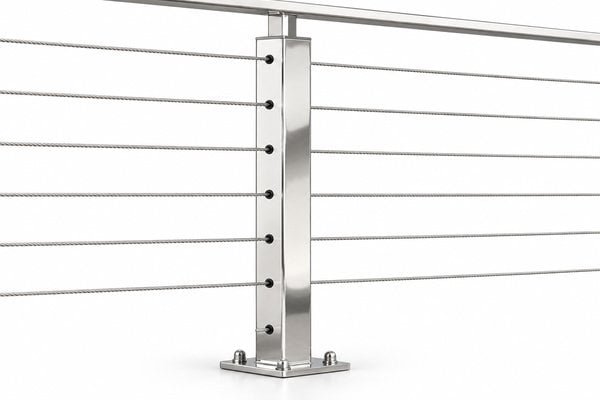
Catalogue illustration: Square cable railing post – installation context illustration. Shown as a component reference, not an installation drawing or test result.
The Sava industrial assembly overview is an external example of application-specific cable assembly supply. It is not evidence that Elim uses the same process or holds the same approvals. NIST’s conformity-assessment resource helps buyers define whether they need inspection, testing or independent certification for a particular claim.
Must every assembly carry a unique serial number? Not necessarily. The required granularity should follow the contract and investigation needs. A controlled batch can work where individual identity is unnecessary.
What if the supplier cannot trace a split reel? Record the limitation before release and agree a corrective recordkeeping process. Do not invent a retrospective connection.
To request a traceable cable-kit quotation, send the assembly schedule, required identification level, inspection records, retention period and packing-label format. This makes traceability an explicit deliverable rather than an expectation discovered after shipment.