Short answer: Request a pull-test report for the defined cable-and-terminal assembly, with traceable samples, a stated procedure, recorded results and a clear acceptance criterion. A breaking-force figure for bare cable does not establish the performance of a finished terminal connection.
Start with the buyer’s actual question
“Has this been tested?” often produces a yes-or-no answer that cannot support purchasing. A better question is: “Which assembly was tested, how was it loaded, and how does the tested sample relate to the goods we will receive?”
Select the relevant items from the architectural wire rope range, then define the complete assembly. The swage-terminal guide and cable-construction comparison explain interfaces that should appear in the request.
Build the evidence chain
List cable diameter, construction, material specification, terminal drawing, attachment method and production lot. Record whether the specimen includes one terminal, both ends or a complete installed arrangement. Include a photograph labelled with the specimen identifier, not an unconnected catalogue image.
Bergen Cable’s construction guidance explains why wire arrangement matters. Jakob’s architectural cable documentation provides examples of system-specific components. Use these references to ask precise questions, not to transfer another manufacturer’s ratings to the offered assembly.
| Report item | Useful evidence | Reason to ask again |
|---|---|---|
| Sample identity | Drawing and lot linked to specimen | Product family only |
| Loading procedure | Method, setup and test endpoint | “Pull tested” alone |
| Measurement | Force units and instrument records | Unlabelled chart |
| Result | Individual specimen data | Average without sample count |
| Failure or stop | Location and observed condition | Pass mark without explanation |
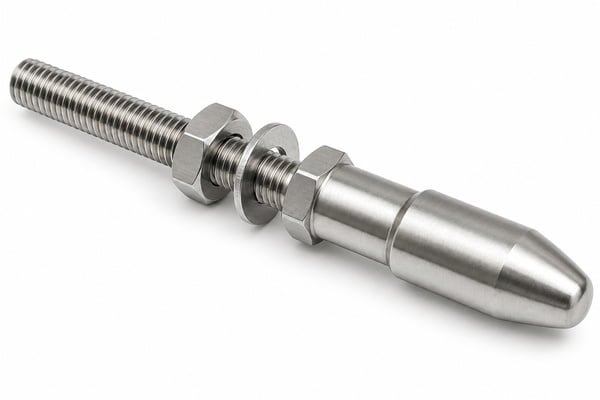
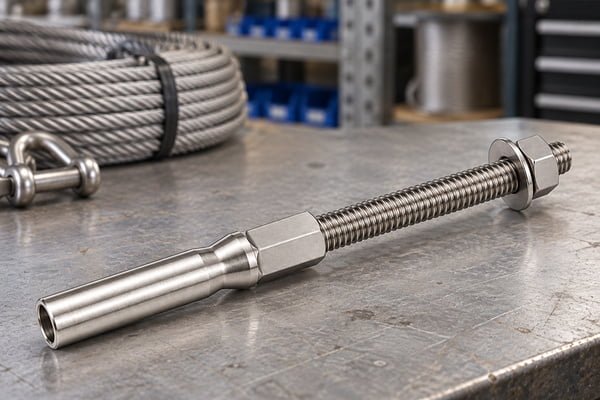
Catalogue illustration: Swage Stud Cable Terminal — WR096. Shown as a component reference, not an installation drawing or test result.
Distinguish three different requests
Destructive testing investigates behaviour through the specified endpoint, which may include failure. Proof testing applies a defined load under an agreed procedure without intending to destroy a conforming part. Routine inspection checks production attributes and may not include mechanical loading at all.
These terms are not interchangeable. Agree the purpose, sampling basis and acceptance rule before a laboratory or supplier prepares the specimens. Sava’s industrial cable-assembly information is an example of a manufacturer describing its own testing services; it is not evidence of testing by Elim.
For example, a request for “three identified specimens with individual results” is a proposed documentation scope, not a universal sampling standard. The responsible designer or test authority must decide whether the plan suits the application.
What makes the numbers usable?
Require consistent units and the load history needed by the selected procedure. Record slippage, permanent movement and the location of any failure where relevant. A high peak number can hide an unacceptable failure mode or a mismatch between the specimen and supplied goods.
NIST’s traceability explanation supports asking how force measurements connect to reference standards. Bekaert’s rope-diameter guidance helps frame the separate dimensional check. A diameter measurement and a force measurement answer different questions.
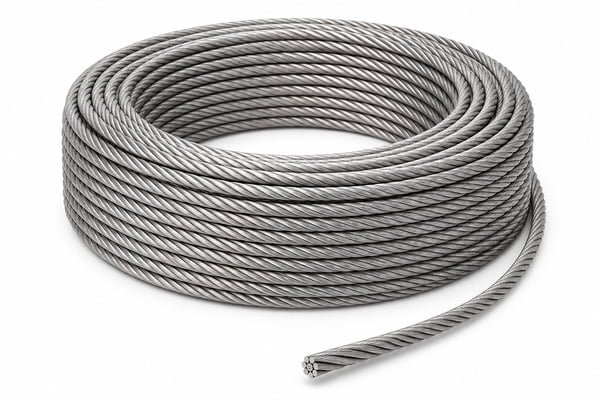
Catalogue illustration: 1×19 Stainless Steel Wire Rope — WR001. Shown as a component reference, not an installation drawing or test result.
Material identification is another independent issue. ASSDA’s grade-confirmation guidance explains useful distinctions between identification methods. A material result does not replace an assembly pull test, and a pull test does not establish long-term corrosion resistance. For exposed locations, consult IMOA’s coastal guidance when defining the environment.
Tie the report to the purchase order
Use the terminal-interface comparison to flag geometry changes that may need review. Changes in cable construction, terminal dimensions, tooling or assembly process should be evaluated against the approved evidence rather than accepted because the part number looks familiar.
The order should identify who approves substitutions, which documents accompany shipment and how rejected lots are handled. GS1’s traceability framework offers a useful vocabulary for linking records and physical goods; the actual lot-identification process still needs agreement.
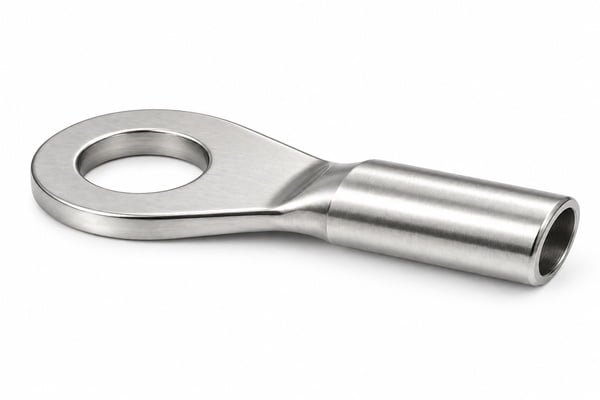
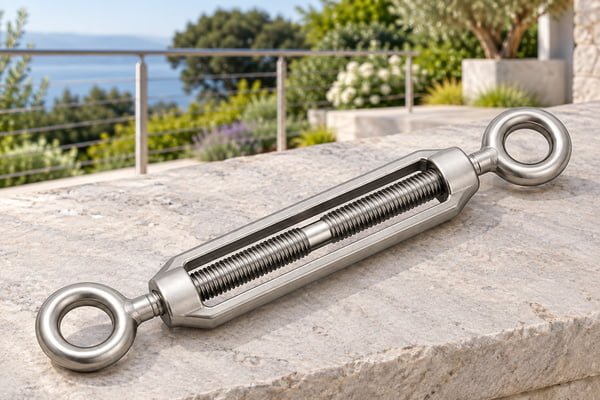
Catalogue illustration: Wire Rope Eye Terminal — WR075. Shown as a component reference, not an installation drawing or test result.
Keep the commercial hold point visible
State whether test evidence is required before sample approval, production release or shipment. Assign a reviewer and a response deadline. If evidence is incomplete, record the missing item against the order instead of treating an unanswered email as approval. This makes the test request part of the purchasing process rather than an optional attachment.
Release checklist
- Does the report identify the same assembly as the order?
- Are sample count, procedure and acceptance criteria explicit?
- Are individual results and observations available?
- Can the supplied lot be traced to the approved manufacturing route?
- Have deviations been reviewed before shipment?
Review the required evidence against Elim’s published capabilities. Submit custom assembly details through OEM/ODM review, and include the intended use and required test documentation in your quotation request. This creates a testable purchasing requirement without inventing a load rating.