Define length before quoting it: A cable assembly length is meaningful only when the measurement points, terminal condition, tensioner position and measurement load are stated. “Two metres of cable” can describe the cut rope, the finished assembly or the installed span, and those are not interchangeable dimensions.
This workshop-style guide helps buyers of wire rope systems create repeatable orders. It separates the geometry of the supplied assembly from the engineer’s installation and tensioning requirements. Neither a length calculation nor a correctly fitted terminal establishes the system’s allowable load.
Draw the complete length chain
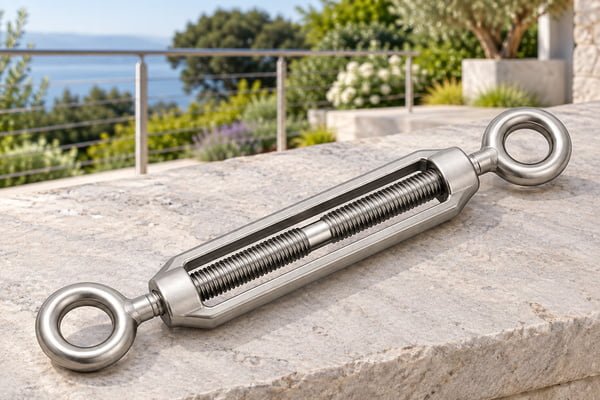
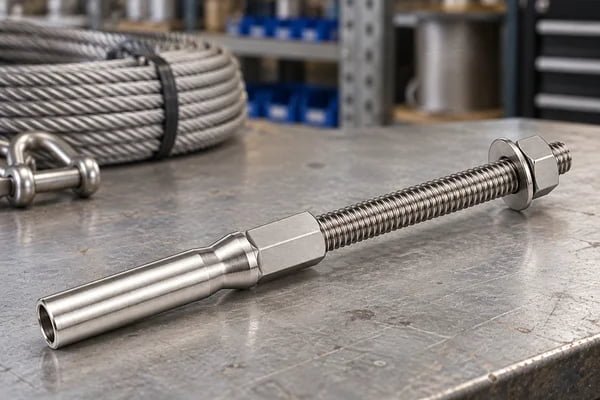
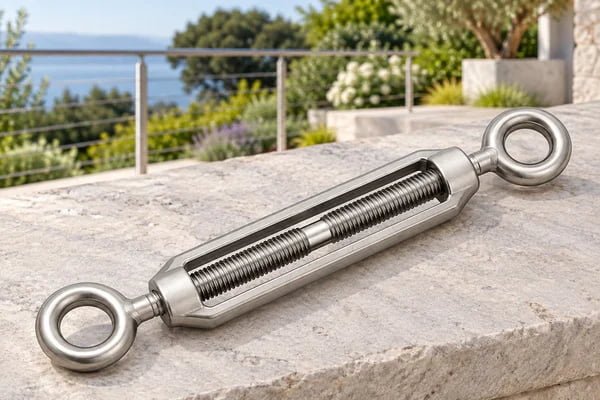
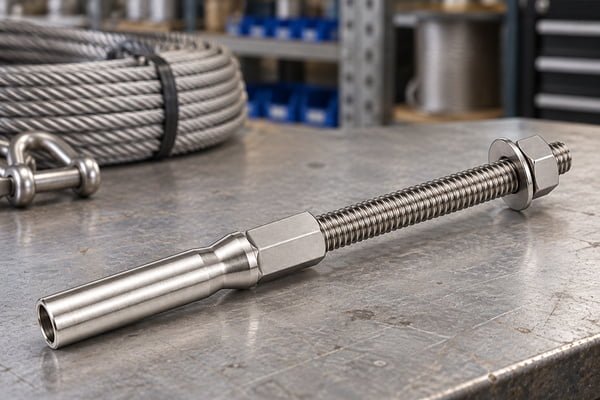
Show the receiving interfaces at both ends. Identify whether the required dimension is between pin centres, bearing faces or another defined datum. Include the terminal type and the orientation of any asymmetric fitting. A swage stud terminal creates a different measurement chain from an eye-to-eye turnbuckle.
Use the terminal procurement guide to collect the rope and fitting references. Then mark the condition in which length is measured: loose on a bench, under an agreed measuring load, or installed. Do not compare measurements taken under different conditions as if they describe the same acceptance criterion.
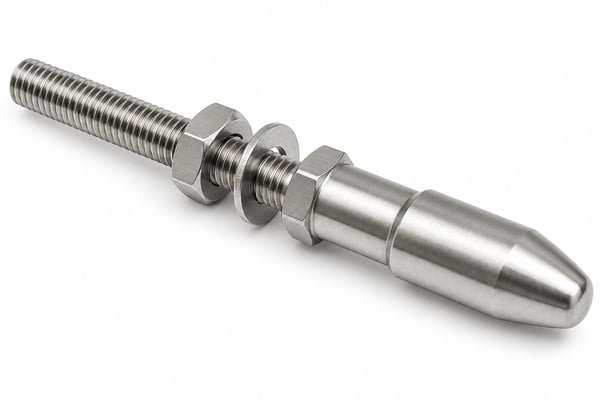
Product reference: Swage Stud Cable Terminal — WR096. Match the supplied configuration to the approved drawing.
Reserve adjustment deliberately
| Dimension or condition | State in the order |
|---|---|
| Finished length | Named datum to named datum |
| Tensioner position | Defined setup position, not “half open” alone |
| Thread engagement | Manufacturer-approved limits |
| Measurement condition | Agreed load, orientation and method |
| Tolerance | Permitted variation for that condition |
| End orientation | Relationship of eyes, forks or other fittings |
An illustrative geometry exercise begins with a 2,000 mm datum-to-datum target. If the approved end fittings contribute 120 mm and 80 mm at their specified setup positions, the remaining effective rope contribution is 1,800 mm. This is not automatically the cut length: terminal insertion and the approved manufacturing process still need to be accounted for.
Do not consume all available adjustment during initial assembly. Ask the system designer and fitting supplier to define the setup position and usable adjustment limits. The left- and right-hand thread guide explains another reason the complete tensioner must be identified rather than selected by body length alone.
Control rope and terminal identity
Record rope diameter, construction, material and supplier reference. Bergen Cable’s cable overview explains basic construction terminology; Bekaert’s diameter-measurement guidance addresses a separate measuring task. Correct terminology helps prevent substitutions that look similar but require different terminals or processing.
For manufactured railing systems, consult the relevant manufacturer’s instructions, such as Feeney’s technical information and installation resources. Those instructions apply to the identified system; they are not universal approval for mixed-source fittings.
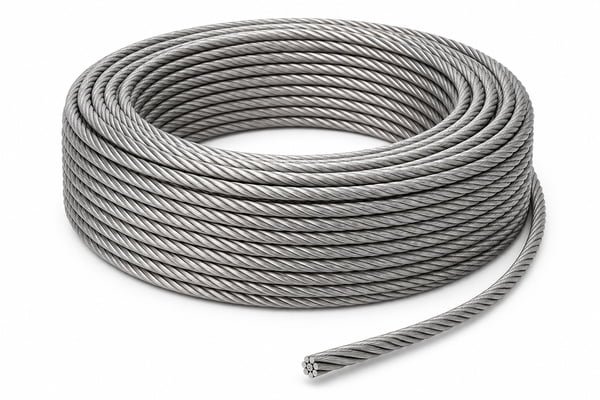
Product reference: 1×19 Stainless Steel Wire Rope — WR001. Match the supplied configuration to the approved drawing.
Make the first article a measuring exercise
Ask the supplier to submit one representative completed assembly with its drawing revision and inspection readings. Check the same datums using the agreed method. Photograph the measuring setup so a second operator can reproduce it. General principles of measurement traceability help structure the equipment records without implying that a photograph establishes calibration.
Measure the assembly before packing and record any condition that changes how it lies on the bench. Identify terminal orientation and mark the assembly reference on a tag that will survive handling. If the first article is outside tolerance, establish the cause before adjusting the manufacturing cut list.
Separate delivery variation from installation error
When a cable does not fit, compare the delivered assembly with its recorded dimensions before blaming the span survey. Then check the receiving-point locations and whether the tensioner was set as specified. Record each discrepancy separately. Changing a terminal to recover length can introduce a new compatibility problem.
Material identity can be reviewed using ASSDA’s grade-confirmation guidance. Protect threaded ends and address stainless galling during approved assembly. These controls complement dimensional inspection; they do not replace it.
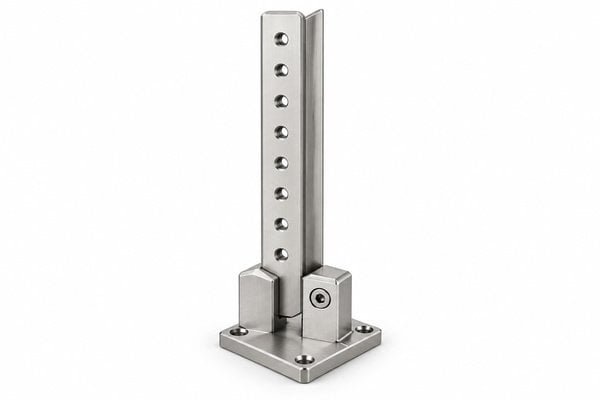
Product reference: Cable railing intermediate post – reference configuration diagram. Match the supplied configuration to the approved drawing.
Pack so the identification survives
Label assemblies by location and length reference, and avoid mixing visually similar sizes in one unmarked coil. Agree bend and handling requirements with the rope supplier. Use the ISTA procedure overview when discussing packaging tests for the intended shipping route.
Can site adjustment absorb every manufacturing error? No. Usable travel and engagement limits are finite and must remain within the approved arrangement.
Should replacement cables be copied from a stretched or damaged sample? Record its condition and recover the original specification where possible before treating its length as the target.
Review production options through Elim’s manufacturing capabilities, then submit a dimensioned assembly schedule with end references, quantities, tolerances and the measurement condition. This makes quotations and receiving checks comparable.