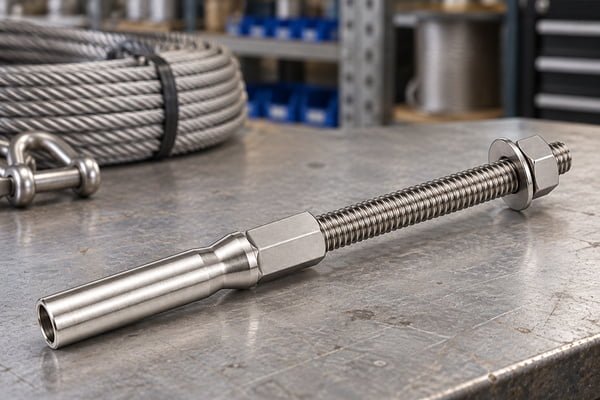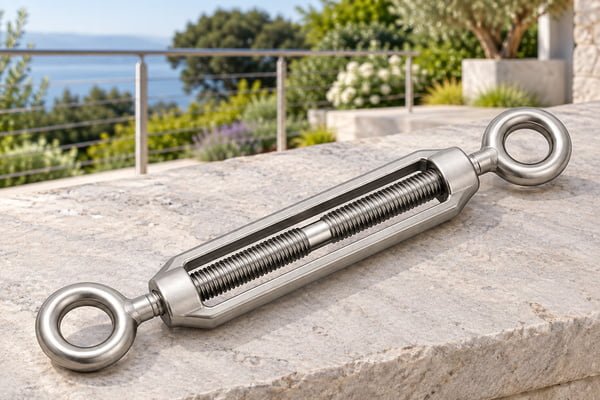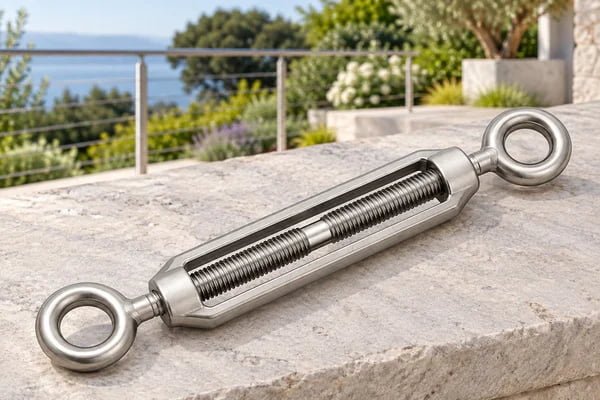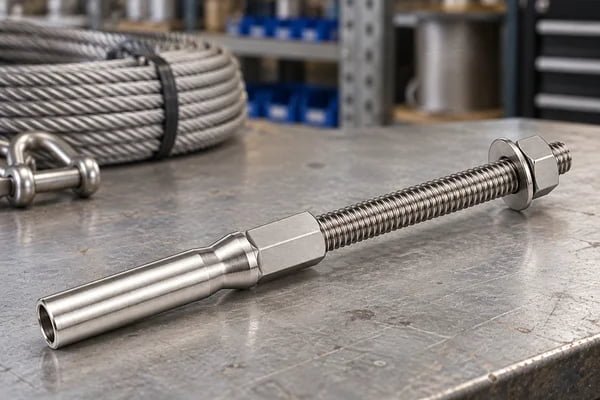
Stocking rule: Identify thread diameter, pitch and handedness separately, then define the approved mating pair. Left-hand and right-hand components are different stock items even when their finish and outer shape match. A turnbuckle arrangement must be purchased as a compatible mechanism, not assembled from lookalike ends.
This warehouse-focused guide is for distributors supplying wire rope fittings. It turns a small technical distinction into a practical purchasing, labelling and returns-control system.
Why the two directions matter
In a conventional opposite-thread turnbuckle, rotating the body changes the relative position of the two ends. The actual operation depends on the product’s arrangement and instructions. Do not assume every closed tensioner has the same internal layout simply because it resembles an eye-to-eye turnbuckle or a closed-body cable tensioner.
The turnbuckle specification guide provides a starting checklist. For assembly examples and product-specific limits, consult the selected manufacturer’s documents; Feeney technical resources and installation information illustrate the level of detail buyers should request.
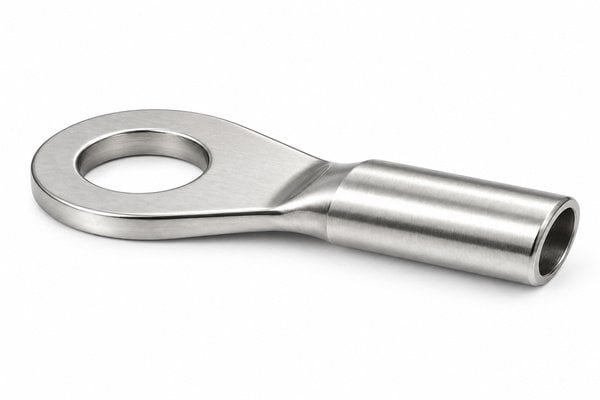
Product reference: Wire Rope Eye Terminal — WR075. Confirm the ordered configuration against its drawing.
Use a label that cannot be shortened into ambiguity
| Field | Illustrative entry | Avoid |
|---|---|---|
| Thread system | Metric | “Standard thread” |
| Diameter and pitch | M8 × 1.25 | “8 mm” alone |
| Hand | LH or RH | Colour mark alone |
| End connection | Eye, jaw or stud reference | “Cable end” |
| Mating part | Approved body reference | “Fits similar bodies” |
M8 × 1.25 is an illustrative label, not a declaration of Elim’s available dimensions. Use the approved drawing and supplier identification. Colour coding can help picking, but readable LH/RH text and a unique part number should carry the essential information.
Keep packaging labels consistent with your trade-item rules. GS1’s GTIN Management Standard explains when changes to a trade item require new identification. Your internal SKU and a globally managed identifier serve different functions; document the relationship instead of using them interchangeably.
Build paired stock without hiding component demand
Sell a complete kit where your customers normally need a matched pair, but retain component-level stock records. If repairs consume more right-hand ends than left-hand ends, a simple count of complete kits can hide a growing imbalance.
For example, 120 bodies, 100 LH ends and 80 RH ends support only 80 complete one-body/two-end kits. The remaining parts are not another 40 sellable kits. This arithmetic assumes one of each component per approved assembly; adapt it to the real bill of materials.
Create a separate reorder signal for the limiting component. Record whether the supplier quotes individual ends, pairs or completed assemblies, and make that selling unit visible on both purchase and sales orders.
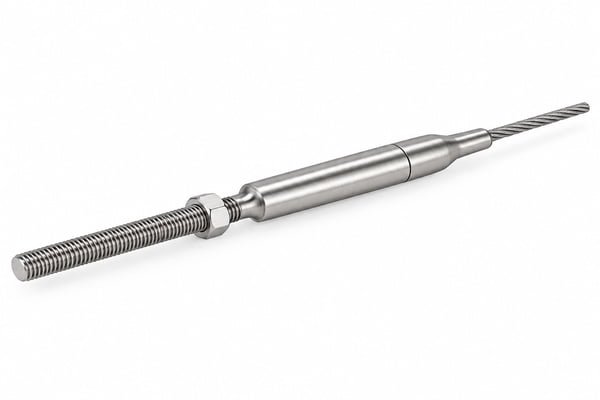
Product reference: Closed Body Cable Tensioner — WR011. Illustrative hardware reference; match the ordered configuration to its approved drawing.
Inspect identity without forcing a fit
Use the approved inspection method and the correct gauges or reference components. Do not force a questionable thread together to decide its handedness. Quarantine an unidentified part until its specification is established, especially when returned loose from a customer.
A matching thread does not establish compatibility with every rope. Bergen’s wire rope overview and Bekaert’s rope-diameter guidance support the separate rope-identification step. The cable-terminal buying checklist adds the termination information needed for a complete assembly.
Ask Elim’s manufacturing team which thread and identification details can be documented for the proposed order. ASSDA’s grade-confirmation guidance addresses material evidence; it does not verify thread geometry or completed assembly performance.
Make returns a controlled entry point
Require the original order reference, part label and reason for return. Photograph the item before repacking. Keep used, damaged and unidentified components separate from saleable stock. A bright surface and clean-looking thread are not proof that a returned fitting is unused.
Record the batch and the mating part involved in any fit complaint. If several complaints concern one combination, review the pairing rule before issuing more replacements. Preserve the evidence instead of mixing disputed pieces into a general spare-parts box.
Protect threads during shipment and discuss distribution-appropriate testing using ISTA’s procedure overview. Make the commercial description and quantities consistent with export-document guidance, including whether a “set” contains one or two ends.
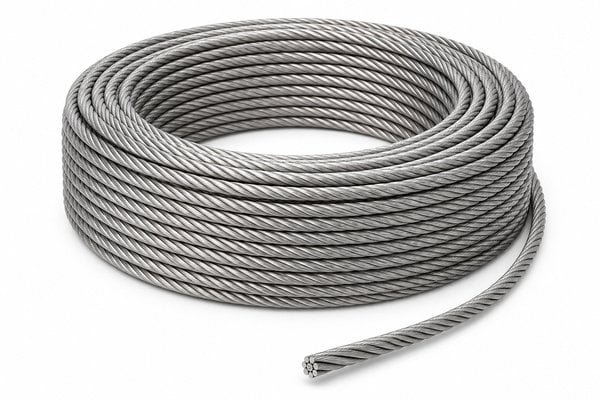
Product reference: 1×19 Stainless Steel Wire Rope — WR001. Confirm the ordered configuration against its drawing.
Quick answers for the sales desk
Can LH and RH ends share a bin? Separate them or use controlled compartments with unmistakable identification.
Does the same nominal diameter guarantee a match? No. Pitch, thread system, hand, usable engagement and product design all matter.
What should a reorder specify? The complete approved part reference, revision, thread designation, selling unit and quantity.
Send Elim your paired stock list and ask for a quotation that identifies each end and body separately. Clear stock records are cheaper than solving mismatches on site.