Which terminal should a buyer choose? Compare the complete approved cable assembly and its installation method. Swaged terminals use a specified deformation process; swageless terminals use a product-specific mechanical grip. Neither label alone proves capacity, reusability or suitability for a particular rope construction.
For buyers developing a wire rope system, the purchase includes tooling, operator capability and inspection access as well as metal fittings. This comparison is a commercial decision aid, not an installation procedure or a substitute for the chosen manufacturer’s instructions.
Begin with the rope and application
State the rope diameter, construction, material and intended service. A 1×19 wire rope catalogue entry identifies a construction family, but the termination must still be approved for that rope and application. Bergen Cable’s construction overview and Bekaert’s diameter-measurement guidance help explain why nominal diameter is only one part of identification.
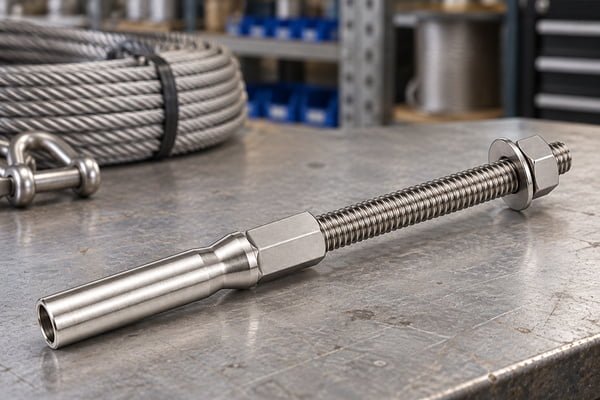
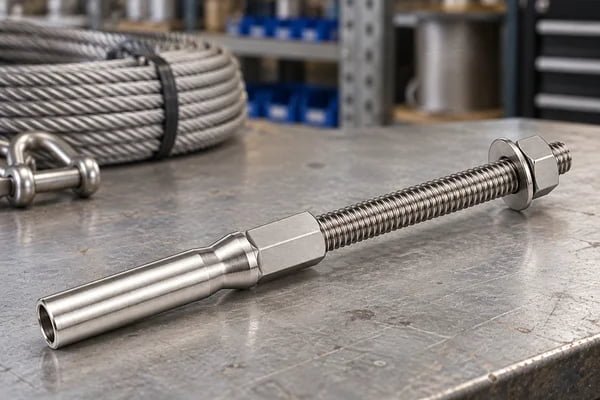
List the required end connection, completed length datum, adjustment range and evidence requirements. Elim’s swage stud terminal reference shows a terminal family; ask for the actual compatible rope, process and assembly documentation rather than assigning performance from the image.
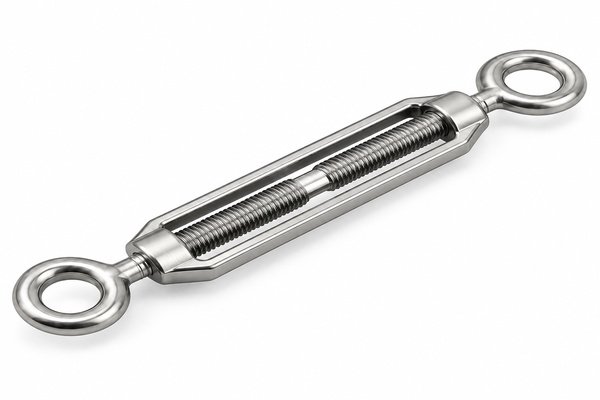
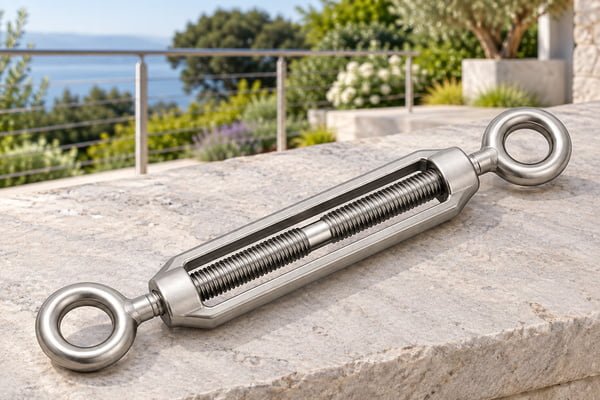
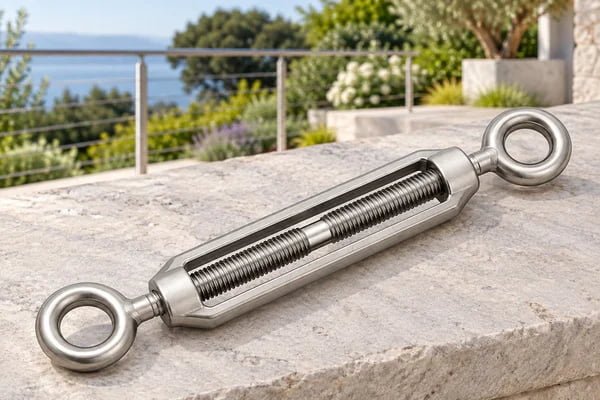
Product reference: Eye To Eye Turnbuckle — WR032. Confirm the ordered configuration against its drawing.
Compare the work your team will perform
| Decision | Swaged approach | Swageless approach |
|---|---|---|
| Equipment | Specified machine, dies and setup | Product-specific hand tools and grip components |
| Operator control | Process settings and inspection records | Correct preparation, assembly and inspection |
| Field flexibility | Depends on equipment access | Depends on the approved fitting method |
| Reuse | Must not be assumed | Must not be assumed |
| Acceptance | Evidence for the completed assembly | Evidence for the completed assembly |
Ask who is responsible for producing and checking the termination. A factory-made cable may simplify the buyer’s site scope, but only if the length schedule is correct. A site-assembled fitting may accommodate field measurement, but that does not remove the need for trained installation and documented acceptance.
Use manufacturer resources such as Feeney technical information and its installation hub as examples of the model-specific instructions a buyer should seek. Their instructions apply to their products, not automatically to Elim components.
Put numbers around the commercial comparison
Consider an illustrative order of 200 assemblies. If method A adds five currency units per assembly but avoids 600 units of tooling expense, the extra component cost is 1,000 units and the net difference before labour is 400. This arithmetic is a purchasing example, not a supplier quote.
Add labour, setup, scrap allowance, inspection, freight and tool maintenance using quotations or your own measured records. Compare the same accepted assembly count in both options. A cheap fitting that requires unplanned equipment is not directly comparable with a finished, inspected cable.
The swage terminal ordering guide can support scope definition. Discuss custom lengths and end details through Elim’s manufacturing capabilities, and request a sample assembly before releasing a repeated production order.
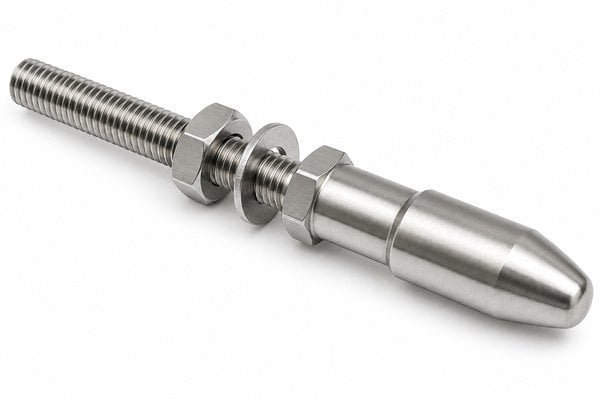
Product reference: Swage Stud Cable Terminal — WR096. Confirm the ordered configuration against its drawing.
Test the assumptions in a small pilot
Run a controlled sample batch using the intended rope, terminals, tools and operators. Record preparation time, assembly time, rejected pieces and inspection time separately. Do not invent a productivity saving from a catalogue description.
Agree the required mechanical verification with the responsible designer or specification authority. Supplier proof testing, where required, needs a defined method, acceptance criterion and traceable result. This article does not prescribe a universal pull-test load or tension value.
Material verification can be discussed with reference to ASSDA’s grade-confirmation guidance. Exposure planning should consider tea-staining prevention; a stainless fitting still needs appropriate selection, finishing and care.
Plan service before choosing the end fitting
Can an installer reach the terminal after adjacent panels are installed? Is there enough space to inspect it? If replacement is needed, can the rope be removed without dismantling unrelated work? Record these access questions on the project drawing.
Consult the turnbuckle specification guide when adjustment is part of the assembly. Protect finished terminals and prevent cable kinking during shipment; ISTA’s packaging overview supports packaging discussions, while export-document guidance helps define the shipment record.
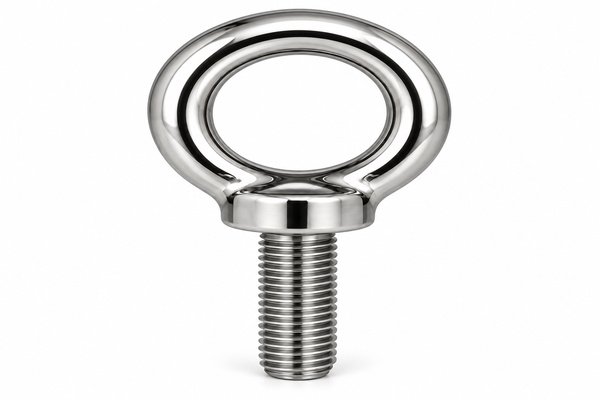
Product reference: Stainless Steel Wire Rope Eye Bolt — WR086. Confirm the ordered configuration against its drawing.
Buyer FAQ
Is swageless always reusable? No. Reuse is a product-specific instruction, not a category promise.
Is a swaged terminal automatically stronger? No. Evaluate documented performance for the particular complete assembly.
What should I send for a comparison quote? Rope identification, application, end connections, length schedule, quantities, installation location and required evidence.
Ask Elim for a defined terminal-and-rope proposal. Compare documented complete assemblies before choosing the lowest fitting price.