Wire rope packaging must preserve the cable’s geometry while keeping its identity and end fittings protected. Buyers should specify the handling format, restraints and receiving checks rather than asking only for stronger cartons. This logistics guide focuses on preventable kinks, crushed coils and mixed cable kits.
Decide between a reel and a prepared coil
The appropriate format depends on rope construction, length, assembly geometry and the manufacturer’s handling instructions. Do not publish one universal coil diameter for every wire rope. Obtain the permitted handling arrangement for the actual product.
The Bergen cable reference and Jakob architectural cable catalogue provide external background for discussing cable construction and assemblies. Start from the selected wire rope system components, then include the packaging method in the quotation. A fully terminated assembly can require a different pack from an uncut reel of the same nominal cable diameter.
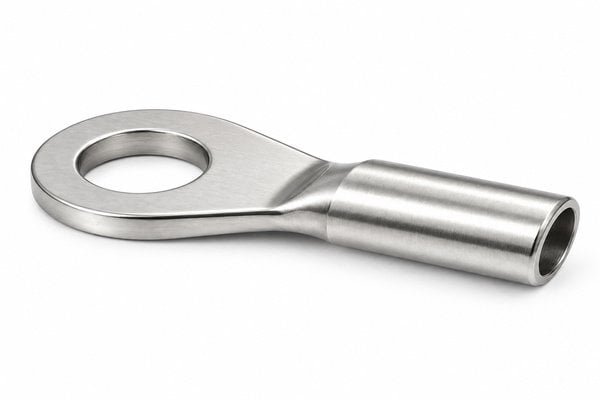
Catalogue illustration: Wire Rope Eye Terminal — WR075. Shown as a component reference, not an installation drawing or test result.
Write a packaging specification that can be checked
| Risk | Purchasing requirement | Receiving observation |
|---|---|---|
| Coil opens in transit | Approved restraints and handling instructions | Restraints present and coil stable |
| Cable is trapped under fittings | Separate fitting protection and suitable supports | No concentrated contact damage |
| Ends catch on adjacent items | Identified end protection | Caps or sleeves remain in place |
| Different lengths are mixed | Kit and location labels | Labels match the packing schedule |
| Reel flange is damaged | Appropriate support and shipment protection | Flanges, hub and outer layers intact |
Define what is photographed before dispatch: overall pack, labels, restrained cable and protected terminals. Avoid a checklist that merely says “good packing,” because it gives the inspector no reproducible acceptance point.
Handling instructions belong inside the shipment
A coil should not be pulled into service by a method that twists or distorts it. The supplier’s instructions should explain how the packed product is released and paid out. The warehouse team needs those instructions before opening the first pack, especially for long terminated assemblies.
Our cut-to-length kit guide explains how site schedules reduce unnecessary cutting and repacking. The swaged versus swageless comparison helps identify whether the supplied ends are already assembled or require a later operation. Protect both the fitting body and any exposed threads according to the product instructions.

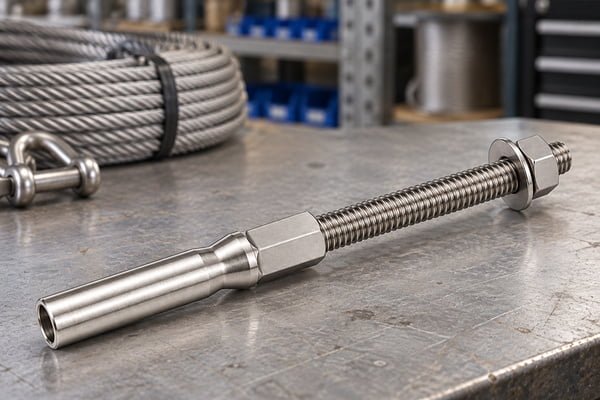
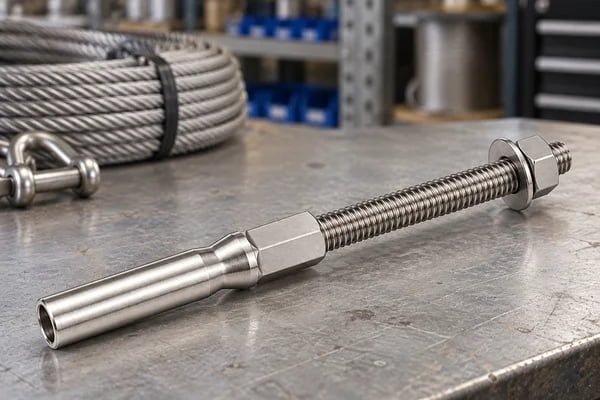
Catalogue illustration: Stainless Steel Wire Rope Eye Bolt — WR086. Shown as a component reference, not an installation drawing or test result.
A realistic transit evaluation
Do not choose a packaging test by name alone. Match the evaluation to the actual distribution route, unit load and handling hazards. ISTA procedures provide a structured starting point. Record the tested packing configuration so a successful trial is not applied to a different carton or a heavier mix of fittings.
For example, if an approved carton contains ten individually restrained assemblies, changing it to twenty loose assemblies creates a different arrangement. This is a packing-control example, not a specified limit. Reassess the changed configuration before shipment rather than relying on the earlier result.
Inspect without hiding the evidence
At receipt, photograph the unopened package if there is visible damage. Record the carton and assembly IDs before separating contents. Look for sharp bends, crushed areas, displaced wires and damaged terminals; route questionable assemblies for the manufacturer’s disposition instead of straightening them and calling them acceptable.
Use the Bekaert measurement resource where diameter inspection is part of the agreed procedure. A diameter check alone cannot establish that a damaged rope is fit for service. Our terminal test-report guide similarly distinguishes performance evidence from a visual receiving check.
Keep moisture and contamination in the discussion
Packing should also address the storage and transport environment. Review any cleaners, protective materials and residues with the supplier. ASSDA’s cleaning guidance offers stainless-steel context, but the exact cable and terminal instructions take priority for the supplied assembly.
The GS1 traceability framework can support label and batch relationships. Trade.gov’s shipping-document guide is useful for the commercial documentation accompanying the consignment. Maintain the technical inspection record separately from the freight paperwork.
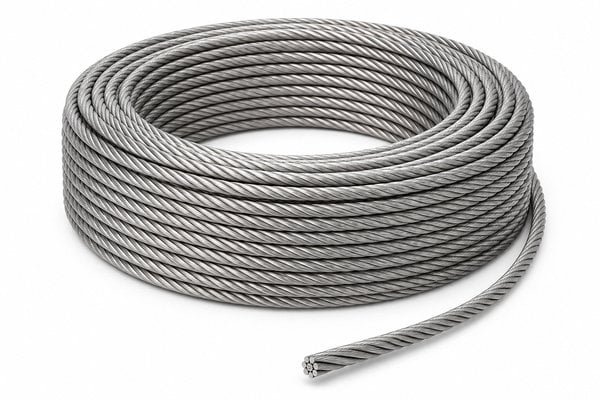
Catalogue illustration: 1×19 Stainless Steel Wire Rope — WR001. Shown as a component reference, not an installation drawing or test result.
Agree the packing before production
Discuss custom labels and kit layouts through OEM development, and review the relevant manufacturing scope. NIST’s conformity-assessment overview helps distinguish a packing inspection from a broader product certification claim.
Can a kink be corrected during unloading? Do not assume so. Isolate the item and obtain a documented technical decision for that rope and its intended service.
To request a shipment-ready quotation, provide cable lengths, terminal combinations, delivery route, storage conditions, unloading facilities and labelling requirements. Ask for photographs of the proposed pack so the purchase order describes the arrangement that will actually arrive.