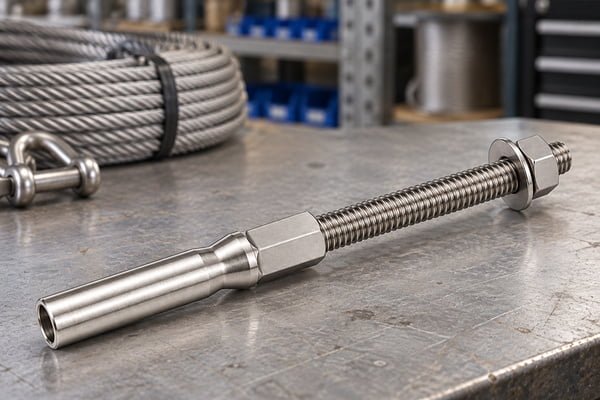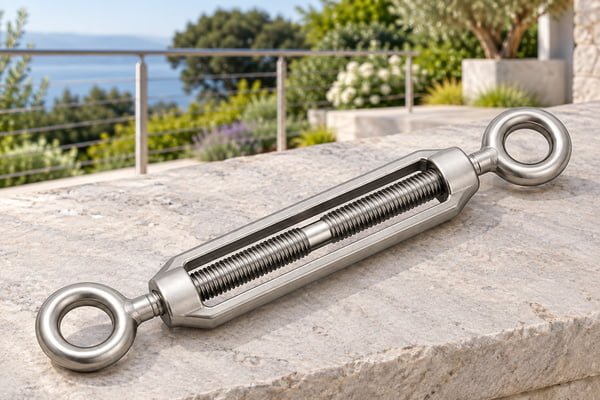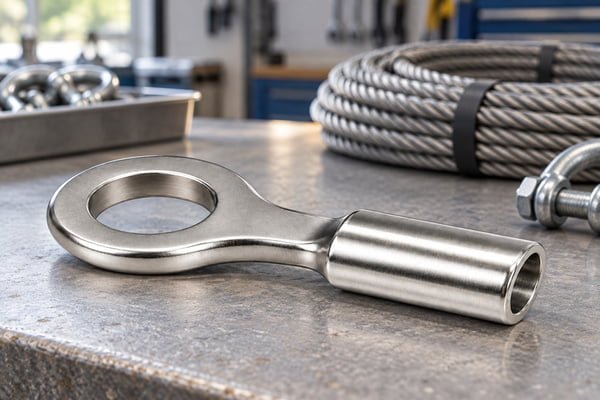
Match a wire rope thimble to the cable, the eye termination and the connecting hardware as one assembly. Rope diameter alone does not establish that a thimble will seat correctly or that a shackle will fit its opening. This dimensional guide is for buyers preparing architectural cable kits.
Separate the three interfaces
The rope follows the thimble groove, the termination retains the eye, and the connecting pin or component passes through the opening. Each interface needs its own documented match. A loose collection of nominally similar parts is not a complete specification.
The Crosby thimble catalogue illustrates product-specific dimensions and types. Its information applies to the identified products; it does not approve another manufacturer’s substitute. Browse our wire rope system range, then request the proposed assembly drawing and confirmation of component availability.
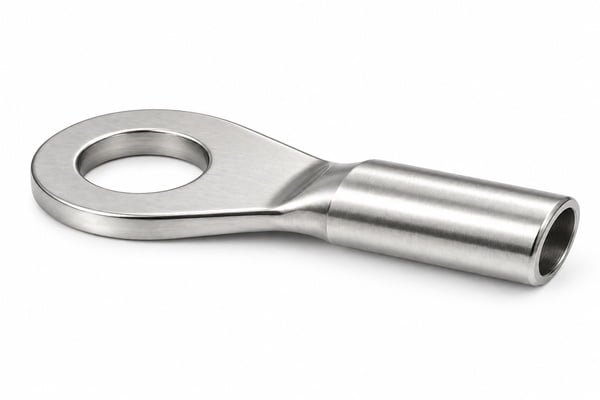
Catalogue illustration: Wire Rope Eye Terminal — WR075. Shown as a component reference, not an installation drawing or test result.
What should the buyer put on the schedule?
| Interface | Information to provide |
|---|---|
| Rope to thimble | Rope diameter, construction and specified thimble code |
| Eye termination | Approved termination method and component identity |
| Thimble to connector | Opening geometry, pin size and permitted articulation |
| Environment | Material and exposure requirements |
| Inspection | Approved dimensions and assembly acceptance procedure |
The Bergen cable reference gives cable terminology context. The Bekaert diameter-measurement resource is useful where the receiving plan includes diameter verification. A nominal designation should be supported by the actual supplier specification and appropriate measuring method.
Geometry example: fit is more than clearance
Suppose a drawing shows a 10 mm connecting pin and a 12 mm clear opening in the proposed thimble. The arithmetic difference is 2 mm, but that does not prove suitability. The contact shape, permitted movement, assembly route and load direction still need review.
Those numbers are illustrative, not a recommended pairing. Do not enlarge or reshape a thimble in the workshop to fit a pin. Select a documented combination or obtain a reviewed change from the relevant supplier and designer.
Keep solid eye terminals separate
A machined or formed eye terminal is not the same termination as a rope eye containing a thimble. Our eye-terminal and eye-bolt guide helps distinguish those product families. The Jakob architectural cable catalogue is an external reference for cable-end configurations.
If the quotation proposes an alternative terminal, compare its geometry, assembly method and evidence. Do not accept it as equivalent solely because both options end in a circular opening.
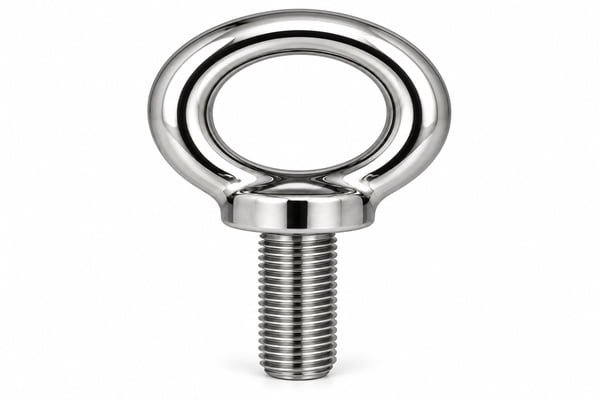
Catalogue illustration: Stainless Steel Wire Rope Eye Bolt — WR086. Shown as a component reference, not an installation drawing or test result.
Define the intended service
Architectural cable infill, facade supports and lifting equipment have different requirements. This article does not provide rigging instructions or working-load limits. Use the component manufacturer’s documentation and the responsible designer’s requirements for the actual service.
The Sava industrial assembly overview illustrates application-specific supply. It is not evidence that an Elim catalogue item is certified for a particular use. Our terminal pull-test checklist helps identify what an assembly report must describe when such testing is required by the contract.
Approve one complete sample
Request the rope, thimble, termination and mating connector together. Check component identities and the approved geometry before releasing the bulk order. Record inspection results with the measurement method; NIST traceability guidance explains the measurement principle.
For a custom kit, use OEM development with the interface drawing and application. The manufacturing capabilities page describes process scope, but the quotation should explicitly state which assembly operations and inspection records are included.
Preserve identity through packing
Use a kit code that distinguishes rope size, end configuration and connector combination. Our wire rope batch-record guide connects incoming materials with finished assemblies. The GS1 traceability standard provides a broader recordkeeping framework.
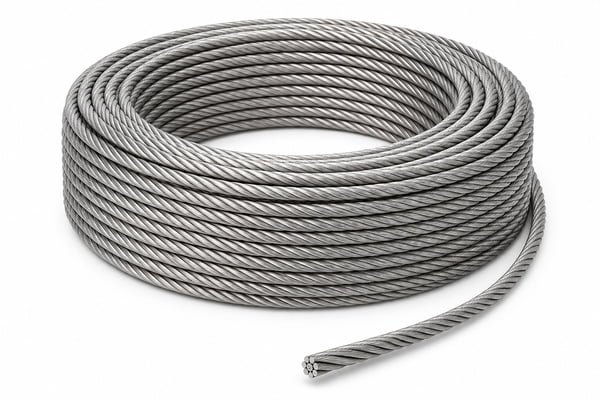
Catalogue illustration: 1×19 Stainless Steel Wire Rope — WR001. Shown as a component reference, not an installation drawing or test result.
Protect finished terminations and keep small mating components labelled. ISTA procedures can inform the distribution-package evaluation. A bag containing all the right parts still needs instructions that identify the correct combination and assembly responsibility.
Can any shackle of the same nominal size be substituted? No. Confirm the exact geometry, component documentation and permitted service. Nominal names do not ensure interchangeability.
What should trigger a hold? An unidentified thimble, incompatible pin fit, unapproved deformation or missing assembly evidence should be resolved before release.
To request a matched cable-eye quotation, send the rope specification, eye drawing, mating connector details, application, quantities and required inspection documents. This turns a collection of fitting names into an order that can be assembled and checked consistently.