Brushed stainless handrails should be approved as an assembled visual sequence, not only as isolated finish coupons. Grain direction at sleeves, elbows and returns can change the appearance of a joint even when every component carries the same finish name.
This guide is for architects, distributors and procurement teams ordering stainless railing systems. The objective is a finish schedule that a factory can reproduce and an inspector can assess consistently.
Begin with the viewing direction
Mark the principal viewing surfaces and the intended grain direction on elevations or photographs. On straight tube, a longitudinal appearance may be intended; around a bend, the finishing process and joint arrangement require separate discussion.
ASSDA’s No. 4 finish article provides useful context for directional finishes. A finish label alone is not a complete appearance specification. Our finish-sample approval guide explains why a physical reference should accompany the purchase order.
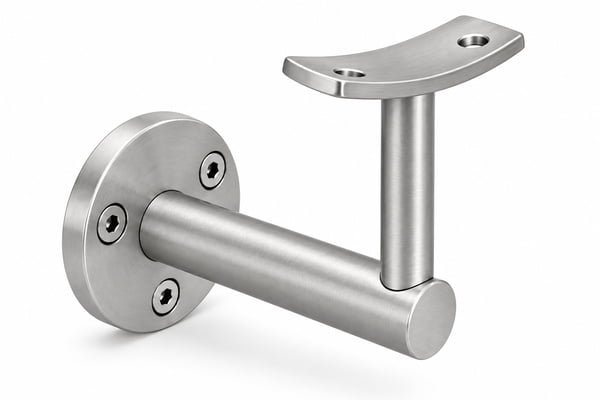
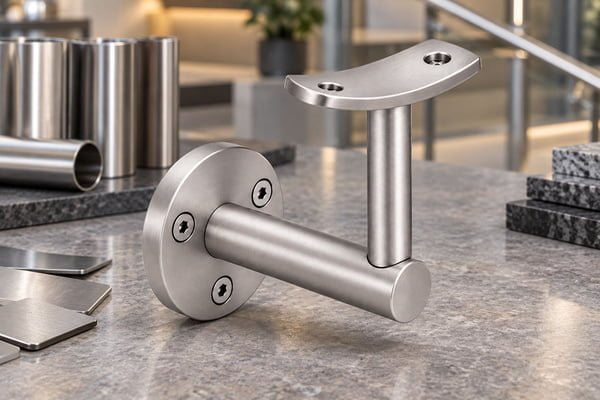
Catalogue illustration: Curved Saddle Wall Handrail Bracket — Matte silver appearance concept. Shown as a component reference, not an installation drawing or test result.
Build a joint sample, not just a coupon
A sample set should include a straight section, one representative connector and the visible joint between them. Add a bend where the project uses one. Review the assembly in its intended orientation under agreed lighting and viewing conditions.
| Sample feature | Question to resolve |
|---|---|
| Straight tube | Is the grain consistent along the visible face? |
| Sleeve joint | Does the finishing direction change at the connection? |
| Bend or elbow | Is the transition visually acceptable? |
| Welded junction | What area may be blended after fabrication? |
| Protective film | Is orientation identifiable before removal? |
Do not make approval dependent on a camera filter or a single compressed image. Keep the accepted sample and record its revision, component codes and inspection conditions.
Separate appearance from material performance
A directional finish is not a stainless grade. ASSDA’s surface-finish resources describe finishes, while Worldstainless corrosion information addresses another aspect of material selection. Buyers should specify both the required material and the agreed appearance.
A more reflective patch at a joint may be an aesthetic mismatch without proving a grade substitution. Conversely, a visually consistent assembly does not establish composition. Ask different questions and request appropriate evidence for each.
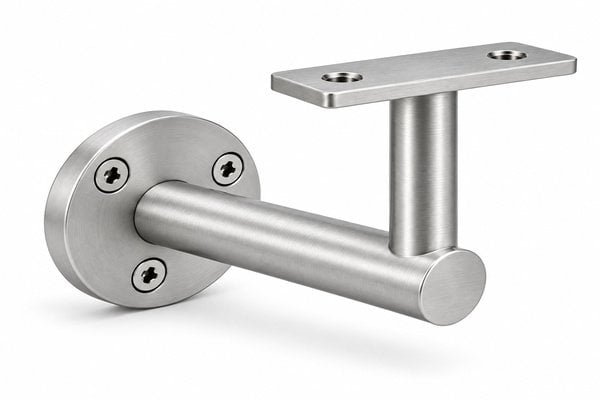
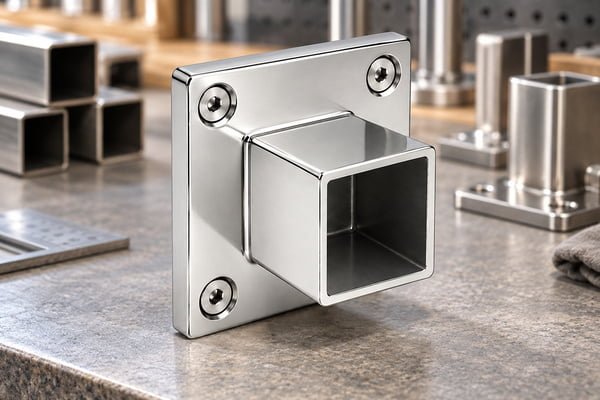
Catalogue illustration: Rectangular Flat Saddle Handrail Bracket — Matte silver appearance concept. Shown as a component reference, not an installation drawing or test result.
Decide where blending is permitted
Post-weld finishing can change the visible grain near a junction. The weld-seam positioning guide helps coordinate which areas remain prominent. Define the acceptable extent of local blending before production, including where a transition may occur.
Pickling and passivation guidance addresses surface treatment but does not provide a universal visual recipe. Agree the process sequence with the fabricator so that the accepted appearance represents the final supplied condition.
For specified tube products, ASTM A554 provides a relevant specification reference. Use the applicable order requirements and producer product information to distinguish tube specification from the appearance of the complete fabricated handrail.
Make batch approval reproducible
Number the reference samples and identify which one governs each component family. Record the abrasive or finishing specification where the supplier’s controlled process requires it, without assuming that grit number alone determines an identical appearance.
When production changes, compare a first-off assembly to the accepted reference. For routine receiving, agree a sampling approach and inspect both individual components and a representative assembled joint. Mixed batches should remain identifiable until their finish relationship has been accepted.
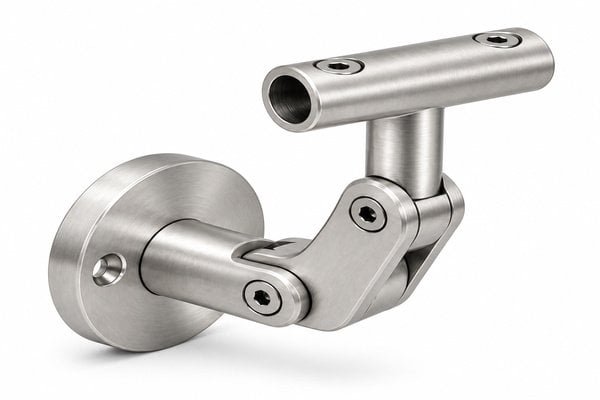
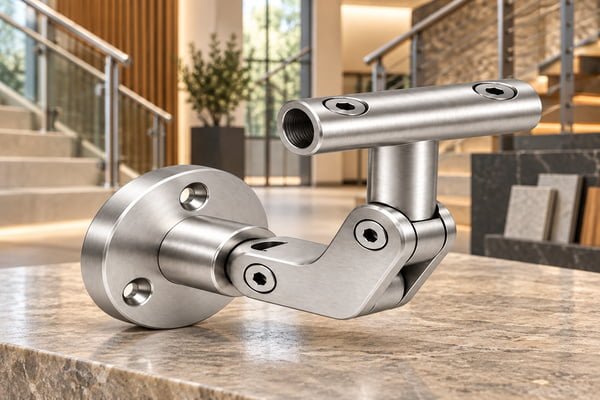
Catalogue illustration: Articulated Wall Handrail Sleeve Bracket — Satin silver appearance concept. Shown as a component reference, not an installation drawing or test result.
Protect the result during delivery
Specify separators, wrapping and identification that do not damage the visible surfaces. Review the package against the intended distribution hazards using ISTA procedure information. A finish specification has little value if transport rubbing creates a different appearance before installation.
Our installation protection guide continues that process on site. Mark where labels may be placed and how protective materials are removed. Avoid an undocumented cleaning or polishing step that changes the accepted grain.
Can two suppliers match one finish? They can work toward the same approved assembled reference, but the matching process must be evaluated. A common marketing name is not sufficient evidence.
Should every joint look invisible? Only promise that result if the chosen construction and approved sample support it. Otherwise specify an intentional, consistent transition.
Use OEM development for unusual junctions, review the relevant finishing capabilities, and send the sample schedule with your enquiry. This gives the quotation a defined visual target rather than an ambiguous request for brushed silver.