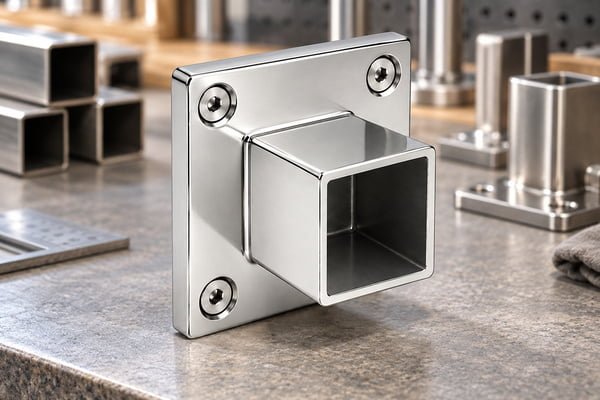
Protect a stainless railing finish from delivery until the final clean. Use compatible coverings, separate it from dirty work and define who records damage at each handover. A finish approved at the factory can still be spoiled during storage, adjacent construction or careless cleaning.
This site checklist is for contractors handling stainless steel railing components. It organizes protection around four practical hold points rather than treating the last cleaning visit as the whole plan.
Hold point one: receiving the delivery
Inspect the packages and visible surfaces before signing away the opportunity to record transit damage. Photograph the affected item and its identifier, then distinguish packaging damage from damage to the component itself. Keep the agreed sample available for comparison.
The ASSDA cleaning guidance provides general stainless care advice. Start with the actual supplier’s handling instructions, including the permitted protection materials and removal method. A covering suitable for transport may not be suitable for extended outdoor exposure on site.
| Hold point | Responsible record |
|---|---|
| Delivery | Package condition and component IDs |
| Storage | Location, separation and protection condition |
| Installation | New damage and nearby contamination risks |
| Handover | Final clean, appearance check and care instructions |
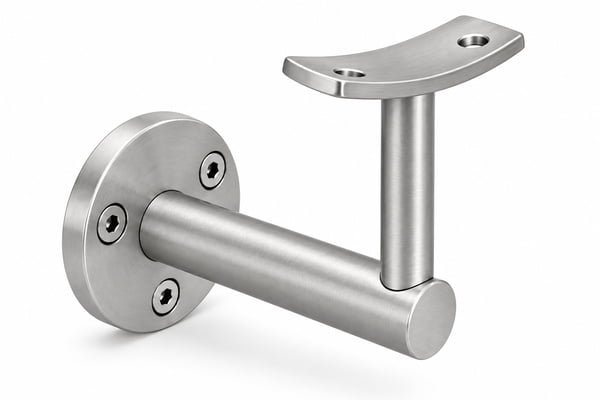
Catalogue illustration: Curved Saddle Wall Handrail Bracket — Matte silver appearance concept. Shown as a component reference, not an installation drawing or test result.
Hold point two: storage before installation
Choose a clean storage area and prevent contact with debris or incompatible materials. Keep components supported so they do not scrape against each other when moved. Do not use a finished handrail as a convenient bench for other trades.
Our iron contamination guide explains why stainless can be affected by material introduced during fabrication or site work. ASSDA pickling and passivation information describes specialist surface-treatment concepts, not a general instruction to treat installed hardware with chemicals.
Set an inspection interval appropriate to the storage conditions. If covers become torn, wet or heavily soiled, inspect the protected surface using the agreed method. Avoid leaving an unknown condition hidden until the building is ready for handover.
Hold point three: work around the installed railing
Coordinate grinding, masonry cleaning, painting and other nearby activities. Protective measures should cover the likely exposure without trapping contaminants against the finish. Ask the covering supplier and hardware supplier about compatibility and removal timing.
Use the finish matching guide and ASSDA surface finish resources when deciding how the final appearance will be judged. A brushed direction, texture or gloss difference can be more visible under the completed building’s lighting than under workshop lighting.
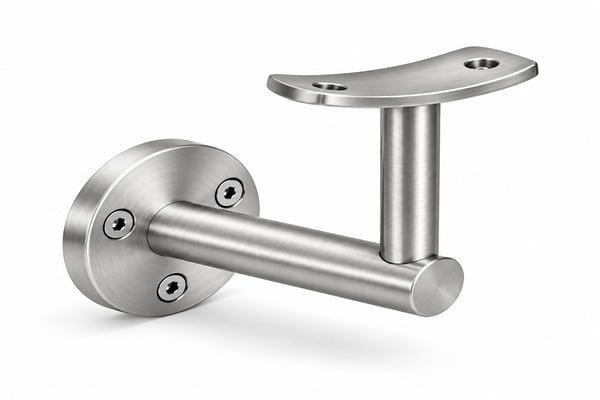
Catalogue illustration: Curved Saddle Wall Handrail Bracket — Fine-brushed silver appearance concept. Shown as a component reference, not an installation drawing or test result.
The worldstainless corrosion information offers background on material behaviour, while IMOA coastal guidance addresses salt exposure. These resources explain why protection and cleaning remain relevant even for stainless steel. They do not establish that every mark is harmless or that every cleaning product is suitable.
Do not turn a small mark into a larger repair
If damage appears, identify the finish and obtain the appropriate remedy before polishing or using a chemical cleaner. Uncontrolled local treatment can change the visible texture and create a larger mismatch. Our weld treatment guide explains the distinction between specialist treatment and routine cleaning.
For replacement or special protection packaging, discuss OEM/ODM supply and review the relevant manufacturing capabilities. Keep the original finish reference and part code with the request. Otherwise a correctly sized replacement may arrive with a different appearance.
Hold point four: final inspection and handover
Agree the lighting, viewing conditions and acceptance criteria before the final inspection. Separate removable contamination from scratches or finish variation. ISTA procedures can inform transport-protection discussions, but they do not prove a package was tested unless a relevant report exists.
Assign a named receiving and handover role for each stage, even when several subcontractors share the area. A short condition record with item identifiers is more useful than a general statement that the railing looked acceptable. When a protection layer is removed and replaced, record the reason and the surface condition observed so later defects can be investigated fairly.
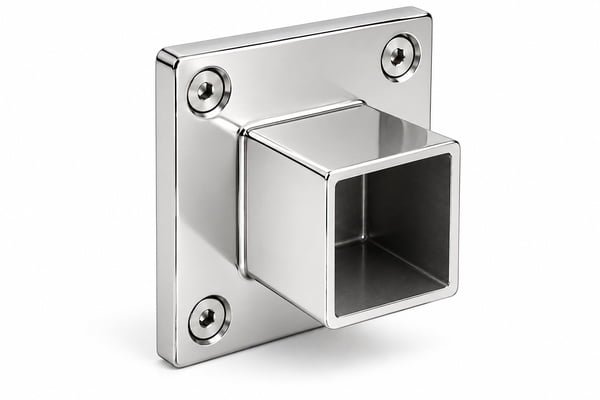
Catalogue illustration: Square Tube Wall Flange Connector — Reflective silver appearance concept. Shown as a component reference, not an installation drawing or test result.
The NIST conformity assessment overview helps describe inspection evidence accurately. GS1 traceability guidance supports keeping item identities connected to delivery and replacement records. Record the final condition and provide the owner with compatible care instructions.
Who owns the protection plan? Assign responsibility explicitly in the project scope. It should not disappear between the supplier, installer and cleaning contractor.
What should an enquiry include? Finish, exposure, storage duration, handling sequence and quantities. Request the required protection scope with the hardware quotation so packaging and site responsibilities are visible before delivery.