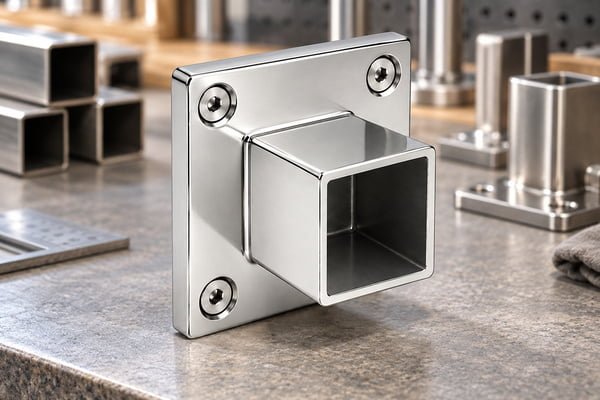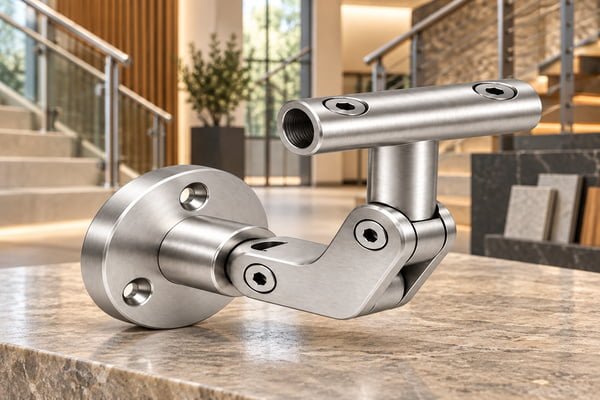
A flat handrail bracket saddle suits a compatible flat underside; a curved saddle must match the intended rail profile. Buyers should specify the contact surface and fixing interface together. A bracket described as suitable for a round rail is not automatically suitable for every tube diameter.
For distributors building a stainless railing hardware range, saddle geometry is a useful SKU distinction because small interface differences can create installation complaints across a large order.
Three questions at the sample bench
Does the seat fit? Place the intended rail sample against the saddle and check the designed contact arrangement. A curved seat that is too tight or too open may sit differently from the approved assembly. Do not machine or force it into conformity without a reviewed design change.
Do the fixings fit? Compare hole spacing, hole type, screw head seating and access. The saddle-to-rail connection is separate from the bracket’s wall connection.
Is the grip position correct? The rail must sit where the project requires it. Review bracket projection and clearance, including the finished wall surface rather than only the structural face.
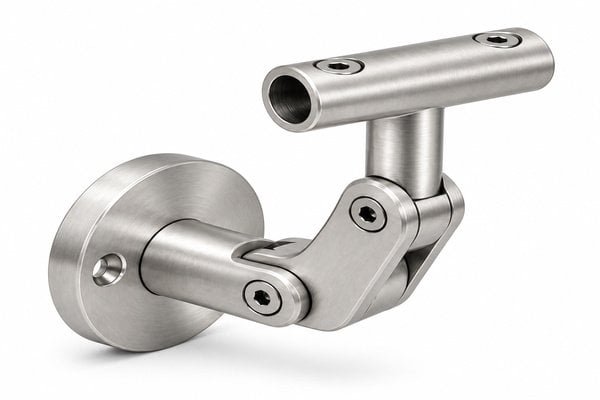
Catalogue illustration: Articulated Wall Handrail Sleeve Bracket — Satin silver appearance concept. Shown as a component reference, not an installation drawing or test result.
A compact selection matrix
| Rail underside | Candidate seat | Purchasing check |
|---|---|---|
| Flat face | Flat saddle | Width, screw pattern and edge clearance |
| Circular tube | Matched curved saddle | Tube outside diameter and seat geometry |
| Special profile | Designed adaptor or seat | Approved section drawing and assembly evidence |
The CRL hardware catalogue offers examples of different connection formats. Use a current part drawing for selection. ASTM A554 is a reference for welded stainless mechanical tubing, but a tube standard alone does not define the saddle interface.
Nominal size is not the entire specification
An illustrative order might distinguish a 42.4 mm tube from a 48.3 mm tube. Those are example purchasing dimensions, not a statement that every saddle is supplied in those sizes. Record the actual outside diameter, wall thickness and tolerances from the chosen rail specification.
Tube ovality can affect the assembled fit even when the nominal diameter is correct. A useful inspection sample includes a real section of the intended tube, not only a drawing or a gauge representing an ideal circle.
Accessibility requirements are another separate check. The U.S. Access Board stairway guide provides an example of jurisdiction-specific handrail guidance. Apply the requirements for the actual project location; do not turn an example from one jurisdiction into a global catalogue claim.
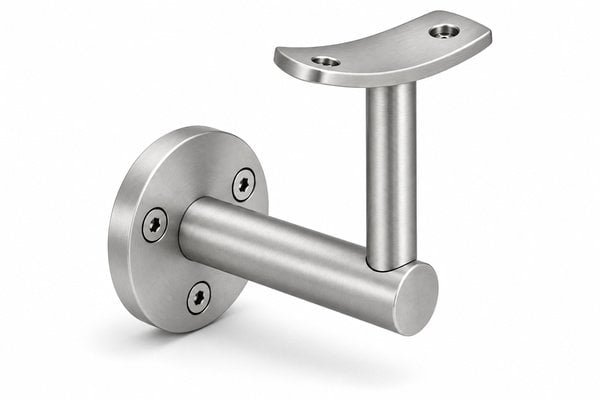
Catalogue illustration: Curved Saddle Wall Handrail Bracket — Matte silver appearance concept. Shown as a component reference, not an installation drawing or test result.
Avoid the hidden fastener mismatch
Use the bracket fastener matching guide to list thread size, screw type and receiving material. Bossard’s thread engagement tool demonstrates that engagement depends on more than diameter. A generic screw length cannot be selected without the joint geometry.
For stainless connections, ASSDA’s galling guidance is relevant when agreeing the assembly method. Do not solve a poor saddle fit by tightening the screw more aggressively. That changes the joint condition without fixing the underlying mismatch.
Ask for a dimensioned saddle drawing, a complete fixing list and a sample assembly. Record what the inspection actually measured. NIST’s traceability guidance helps structure measurement records when dimensional acceptance is important.
Separate cosmetic and functional acceptance
Finish matching matters to buyers, but a visually consistent bracket can still have the wrong seat. Specify appearance separately using a named finish and approved sample; ASSDA’s surface finish information provides useful terminology.
Functional acceptance should cover fit, fixing and the required performance evidence. Conformity assessment guidance helps distinguish those records from a general claim that a component is suitable for commercial projects.
Receiving checks for mixed orders
Where a shipment contains several saddle sizes, separate cartons by exact interface code. Use a receiving sample from each identified type rather than testing one bracket against one rail and accepting the entire shipment. Keep the approved sample available to resolve disputes about seat geometry. Labels should describe the receiving rail profile as well as the finish, so similar-looking parts remain distinguishable during installation.
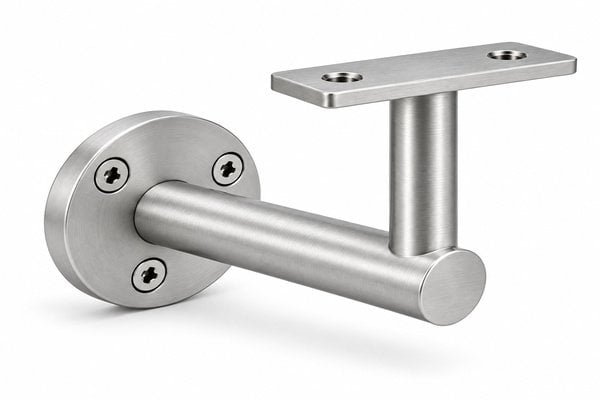
Catalogue illustration: Rectangular Flat Saddle Handrail Bracket — Matte silver appearance concept. Shown as a component reference, not an installation drawing or test result.
A practical purchase-order line
Include rail profile, outside dimensions, saddle geometry, bracket projection, screw interface, material, finish and drawing revision. State whether screws are included and whether pricing is per bracket or per complete assembly.
For unusual sections, submit the drawing through OEM development. Review manufacturing capabilities before specifying inspection documents, then request a sample quotation that identifies the exact rail sample used for fit acceptance. This gives purchasing and quality teams a shared reference instead of relying on the word universal.