Prevent iron contamination by controlling the tools, surfaces and handling that contact stainless railing components. Rust-coloured staining does not automatically prove the wrong stainless grade, and polishing the stain away does not identify its cause. This prevention plan is for fabricators, importers and installation supervisors.
Follow the contact path
Trace a component through cutting, forming, finishing, storage, transport and installation. Identify where it can contact carbon-steel swarf, shared abrasives, dirty benches or contaminated handling equipment. Review parts from the stainless railing range at each stage, including hidden faces and recesses.
ASSDA’s pickling and passivation guidance gives relevant surface-treatment context. Its tea-staining guidance also shows why exposure and surface condition belong in the investigation. Do not assume that every brown mark has the same origin or requires the same corrective process.
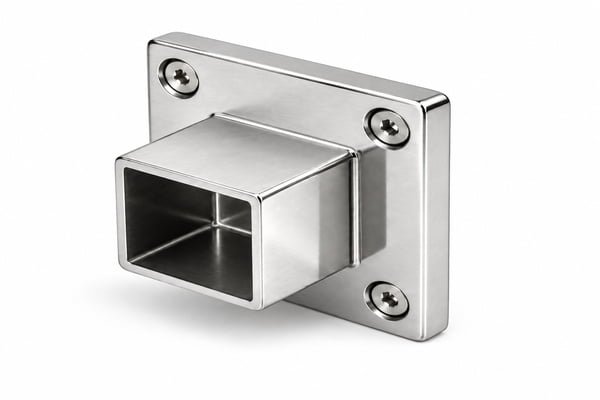
Catalogue illustration: Square Tube Wall Flange Connector — Reflective silver appearance concept. Shown as a component reference, not an installation drawing or test result.
Four controls that belong in the purchase brief
| Stage | Control to agree | Record to retain |
|---|---|---|
| Fabrication | Suitable, controlled contact tools and work areas | Process or handling instruction |
| Finishing | Approved sequence and protected clean surfaces | Finish reference and treatment scope |
| Packing | Clean protective materials and separated parts | Packing specification |
| Site work | Protection from nearby cutting and grinding | Installation and handover checks |
Specify the outcome and reviewable controls without prescribing an unverified chemical recipe. Our weld-treatment comparison helps distinguish processes that are often grouped together under the word “cleaning.” Chemical treatment should follow the competent supplier’s procedure and the relevant safety requirements.
Diagnose before choosing a remedy
Record where the stain occurs, when it appeared and what work took place nearby. Photograph the area before treatment. Look for a pattern: isolated handling marks, widespread exposure, weld-adjacent discolouration and trapped deposits suggest different lines of investigation.
ASSDA cleaning guidance and the worldstainless surface-treatment publication offer external context. Neither is a reason to apply an aggressive treatment indiscriminately to a finished assembly. Consider adjacent glass, coatings, seals and plants, and obtain a method appropriate to the complete installation.
Keep material identity separate
Our material-certificate checklist explains how to link records to the delivered batch. Outokumpu’s product information provides alloy and product-form context. If grade verification is necessary, use an appropriate method; ASSDA’s grade-confirmation guidance describes the subject more reliably than judging a part by colour or magnet response alone.
A material identity check and a contamination investigation answer different questions. Retain both sets of findings rather than allowing one to replace the other. Avoid a supplier dispute based solely on a photograph of staining after unknown site exposure.
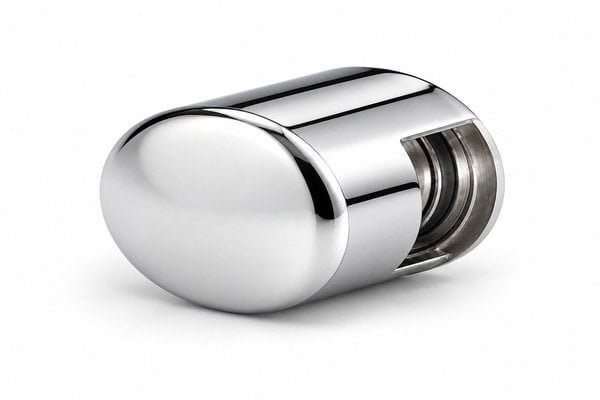
Catalogue illustration: Cable Railing End Cap — WR064. Shown as a component reference, not an installation drawing or test result.
Use a practical receiving record
For an illustrative delivery of 200 brackets, record the batch references and inspect according to the agreed plan before releasing cartons to several floors. If a problem emerges later, knowing which cartons went to which zone helps isolate the cause. The number is a logistics example, not a sampling rule or an Elim minimum order.
Approve appearance using the finish sample guide. Consistent viewing and cleaning conditions make comparisons more useful. Photograph the supplied state before unpacked components are stored beside unrelated metalwork or installed in an active construction area.
Protect clean parts through delivery
A controlled finishing process can be undermined by contaminated packaging or site storage. Agree protective materials, separation and unpacking instructions. Use suitable ISTA procedures where transport testing is required; a packaging test should represent the actual distribution route and hazards.
Maintain identity through the supply chain using relevant GS1 traceability principles. A label should connect the component to a batch and order, not merely display the finish name. Store replacement parts under the same controlled conditions as the initial delivery.
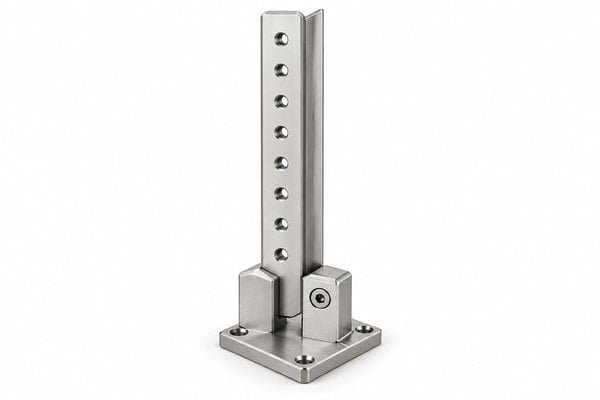
Catalogue illustration: Cable railing intermediate post – reference configuration diagram. Shown as a component reference, not an installation drawing or test result.
Before closing a corrective action
Should every stained item be rejected as the wrong grade? No. Establish material identity and investigate the surface condition separately.
Does repolishing prevent recurrence? Not necessarily. The contamination source, exposure and approved surface treatment also need attention.
What makes the correction useful? A documented cause, an appropriate remedy and a change that prevents the same contact or handling problem from recurring.
For a repeat programme, discuss OEM finishing requirements, review manufacturing capabilities, and send a prevention-focused enquiry. Include the finish reference, exposure, packaging and site-handling conditions so the quotation covers the complete supply route.